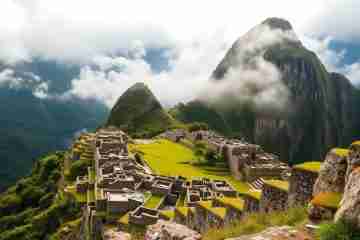
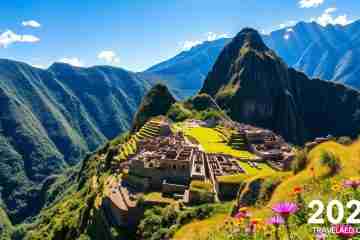
Machu Picchu sits high on the Andes Mountains in Peru. It’s a mysterious archaeological site. Built in the 15th century, it was hidden until 1911 when American explorer Hiram Bingham found it.
Pachacuti, a powerful Inca ruler, built it. Since then, it has fascinated scholars and travelers for over a century.
The name Machu Picchu means “Old Peak” in Quechua. It’s located on a mountaintop. The Inca built it with amazing engineering and architecture, without the wheel.
Its location, design, and purpose are still debated. This has made it even more mysterious.
Key Takeaways
- Machu Picchu is an ancient Inca city in Peru, constructed in the 15th century during the height of the Inca Empire.
- The site was rediscovered in 1911 by American explorer Hiram Bingham, having remained hidden from the broader world for centuries.
- Machu Picchu’s intricate stonework, agricultural terraces, and religious structures showcase the Inca’s advanced engineering and architectural skills.
- The city’s purpose and significance remain debated, with theories ranging from a royal retreat to a ceremonial center.
- Machu Picchu’s remote location and preservation over centuries have contributed to its status as a UNESCO World Heritage Site and one of the New Seven Wonders of the World.
The Discovery and Historical Significance of Machu Picchu
Machu Picchu, the famous Inca citadel in Peru’s Andes, was hidden for centuries. It was found in 1911 by Hiram Bingham, an American explorer from Yale University. He was backed by the National Geographic Society to explore the Inca Empire’s secrets.
Hiram Bingham’s Expedition in 1911
On July 24th, 1911, Bingham found Machu Picchu. He thought it was the “Lost City of the Incas,” Vilcabamba. It took until after his death in 1956 to understand its true importance.
Local Knowledge Before Discovery
Local farmers were already living at Machu Picchu when Bingham arrived. This showed that the site wasn’t completely forgotten. The discovery brought global attention, making it a key Inca site.
| Fact | Value |
|---|---|
| Machu Picchu construction timeline | Built between 1400 AD and 1500 AD by Inca “Pachacuti” and his son Túpac Inca Yupanqui |
| Hiram Bingham’s arrival at Machu Picchu | July 24th, 1911 |
| Artifacts excavated by Bingham | Returned to Peru after a lawsuit against Yale University in 2012 |
The 1911 discovery by Hiram Bingham sparked a new interest in Machu Picchu. It opened up the site’s history, making it a top archaeological discovery of the 20th century.
Understanding the Sacred Geography and Location
Machu Picchu sits high on the Andes Mountains, not by chance. The Inca architects chose this spot with great care. They knew the land and its sacred peaks well.
It’s near the Andes Mountains and looks over the Urubamba River. This place was special to the Inca, thanks to its natural beauty and spiritual value.
An arrow-shaped stone on Huayna Picchu points to the Intihuatana Stone. This shows the Inca’s skill in astronomy and their bond with nature. Machu Picchu’s spot shows the Inca’s love for the land and their ability to blend architecture with nature.
“Machu Picchu’s location was not just a practical choice, but a reflection of the Inca’s deep spiritual connection to the land and their sophisticated understanding of the cosmos.”
Machu Picchu is on a narrow ridge at 2,430 meters (7,970 feet). It offers stunning views of the Andes Mountains and the Urubamba River. This spot helped the Inca defend their city and connect with the sky and mountains.
| Fact | Value |
|---|---|
| Total Area of Machu Picchu | 35,592 hectares |
| Altitude of Machu Picchu | 2,430 meters (7,970 feet) |
| Estimated Construction Time | Over 50 years |
| Estimated Number of Residents | Up to 1,000 people |
30 Facts About Machu Picchu: From Architecture to Astronomy
Machu Picchu, the famous Inca citadel, sits high in the Andes Mountains. It shows the ancient Inca’s engineering and astronomy skills. Rediscovered in 1911 by Hiram Bingham, it’s a UNESCO World Heritage site. It draws visitors with its amazing architecture and cultural importance.
Ancient Construction Techniques
The Inca’s skill in dry-stone masonry is clear in Machu Picchu. They cut stones to fit together without mortar. This method, called ashlar masonry, has made their structures last for centuries. Not even a blade of grass can fit between the stones.
Religious and Ceremonial Significance
Machu Picchu was a royal estate and religious site for Inca leaders. It has places like the Temple of the Sun and the Room of the Three Windows. These were for ceremonies and rituals. The Intihuatana Stone, or “Hitching Post of the Sun,” shows their advanced astronomy. It aligns with the sun and marks time.
Scientific and Astronomical Knowledge
Machu Picchu’s design shows the Inca’s knowledge in planning, agriculture, and sustainability. Its terraces stopped soil erosion and created good growing areas. The Intihuatana Stone is a sundial or calendar, showing their astronomy skills.
“The logistics of moving massive stones from quarries several kilometers away to Machu Picchu baffles researchers, showcasing the engineering prowess of the Inca civilization.”
Machu Picchu’s beauty is enhanced by its high location. It’s almost 8,000 feet up between Machu Picchu Mountain and Huayna Picchu. This spot adds to its natural beauty and helped with defense in the Inca era.
| Fact | Value |
|---|---|
| Coordinates | 13°09′48″S 72°32′44″W |
| Altitude | 2,430 meters (7,972 feet) above sea level |
| Area of the UNESCO World Heritage Site | 38,160.87 hectares |
| Estimated population during the use as an estate | Around 750 people |
| Terrace farming area | Approximately 4.9 hectares (12 acres) |
| Average annual rainfall since AD 1450 | Over 1,800 mm (71 inches) |
Machu Picchu’s lasting impact and efforts to protect it make it a must-see. It’s a place where travelers can explore the Inca’s mysteries and wonders.
Engineering Marvel: Construction Without Modern Tools
The construction of Machu Picchu is a stunning example of the Inca civilization’s engineering skills. They built this architectural wonder without modern tools. Instead, they used clever techniques and careful planning.
The Inca were amazing at quarrying, shaping, and moving huge stone blocks. They did this without wheels, iron tools, or mortar. Using bronze tools and hard rocks, they moved stones up to 15 tons. They built the city’s buildings, terraces, and irrigation systems with incredible precision.
The Inca’s skill in seismic engineering is truly impressive. Machu Picchu’s buildings are designed to “dance” during earthquakes. The stones are cut and fitted to fall back into place after the shaking stops. This design has helped the site survive centuries of earthquakes, keeping it standing strong.
The Inca’s ways of moving heavy stones without wheels are also noteworthy. They used a mix of manpower, inclined planes, and rope systems. This shows their amazing problem-solving skills and deep understanding of nature.
| Inca Engineering Feat | Description |
|---|---|
| Stone Cutting and Shaping | The Inca were able to quarry, shape, and fit massive stones weighing up to 15 tons using only bronze tools and harder rocks. |
| Seismic Resistance | Machu Picchu’s buildings are designed to “dance” during earthquakes, with stones carefully cut and fitted to fall back into place, allowing the site to withstand centuries of seismic activity. |
| Transportation Methods | Without the wheel, the Inca used a combination of manpower, inclined planes, and sophisticated rope systems to move the heavy stones over long distances. |
The Inca’s engineering at Machu Picchu is a testament to their creativity, problem-solving, and understanding of nature. This incredible construction, done without modern tools, still amazes and inspires visitors today.

The Royal Estate: Life in Ancient Machu Picchu
Machu Picchu, the legendary Inca citadel, was home to 750 to 1,000 people at its peak. This ancient royal estate showed the complex social hierarchy and advanced practices of the Inca civilization. The city’s design and infrastructure catered to the needs of its Inca nobility inhabitants.
Daily Life and Social Structure
Machu Picchu’s residential areas, agricultural terraces, and religious structures reflect its complex social hierarchy. The Inca nobility, who likely resided in the city, oversaw administrative and ceremonial functions. A diverse population of skilled artisans, farmers, and laborers supported the city’s operations through their expertise in terraced farming and water management.
Agricultural Practices
The Inca’s advanced agricultural techniques allowed for year-round crop cultivation at Machu Picchu. The city’s terraced farming system maximized land use, enabling the production of staple crops like maize, potatoes, and quinoa. Sophisticated water management systems also ensured a steady supply of water for both the inhabitants and their agricultural endeavors.
Religious and Administrative Functions
Religious and administrative activities were central to life in Machu Picchu. The site features numerous temples, ceremonial spaces, and structures dedicated to the Inca nobility and their social hierarchy. These religious and administrative functions helped maintain the city’s spiritual, cultural, and political significance within the broader Inca Empire.
“The Inca civilization, builders of Machu Picchu, were known for their exceptional architecture, medicine, and astronomy knowledge, showcasing their mastery in various fields.”
Hidden Temples and Architectural Wonders
Machu Picchu, the ancient Inca citadel, is full of architectural marvels. One standout is the Temple of the Moon on Huayna Picchu’s far side. It boasts intricate stone masonry and sacred niches, possibly for Incan shrines. Visitors can explore a network of trails to find these hidden spots, some opened to the public in 2011.
The Inca’s stone masonry skills are evident in these hidden gems. They built about 60% of Machu Picchu underground, using stones over 50 tons. Their ashlar technique allowed for blocks to fit perfectly without mortar, showing their engineering skill.
“The Inca Empire flourished around the years 1503-1506, coinciding with Leonardo da Vinci’s work on the Mona Lisa.”
Exploring Machu Picchu’s trails reveals many hidden structures and terraces. These were only opened to the public in 2011. They show the Inca’s ability to blend buildings with nature.

The Temple of the Moon is a marvel of stonework and sacred niches. It reflects the Inca’s respect for the sky and their understanding of nature. As visitors explore Machu Picchu’s hidden trails, they discover architectural treasures. Each one offers a unique look at the ancient Inca’s ingenuity and craftsmanship.
Natural Defense Systems and Seismic Engineering
Machu Picchu sits on a mountain ridge, giving the Inca civilization a natural defense. The site’s buildings, with walls leaning inward and stones fitting perfectly, can handle earthquakes. This shows the Inca’s smart use of their environment and their skill in building.
Earthquake-Resistant Architecture
The Inca built Machu Picchu with special masonry. They used walls that lean inward and stones that fit together perfectly. This design, along with the mountain location, made the buildings strong against earthquakes.
Strategic Mountain Location
Machu Picchu is on a narrow mountain ridge, making it hard to reach. The steep terrain around it also helps protect it. This shows the Inca’s smart use of their environment for defense.
Water Management Systems
The site’s hydraulic engineering is impressive. It includes aqueducts and drainage channels. These systems keep the site safe from erosion and flooding, thanks to the Andean rain.
Machu Picchu’s defenses and engineering show the Inca’s cleverness. They built strong buildings, chose a safe location, and managed water well. These efforts show their deep understanding of their environment and their goal of creating a lasting home.
Sacred Stones and Astronomical Alignments
Machu Picchu is more than just an ancient wonder. It shows the Inca’s deep understanding of the stars. The site’s layout is designed to align with celestial events.
The Intihuatana, or “hitching post of the sun,” is a key feature. It acts as a solar calendar. During the winter solstice, it casts no shadow, a fact that was crucial for Inca rituals and planning.
Other parts of Machu Picchu, like the Temple of the Sun and the Temple of the Three Windows, also follow solstices and equinoxes. This shows the Inca’s vast knowledge of the sky. Their studies of the heavens were not just for fun. They were deeply connected to their society, influencing their rituals and the design of their spaces.
“Machu Picchu is not just a relic of the past; it is a testament to the Inca’s mastery of both the physical and the celestial realms.”
The Inca’s love for the universe is clear in Machu Picchu’s design. The site’s buildings and plazas are carefully placed. This suggests it was a center for Inca astronomy, celestial observations, and ritual spaces focused on the sun, moon, and stars.
Today, explorers are still discovering Machu Picchu’s secrets. Its solstice alignments and astronomical significance are fascinating. The Inca’s ability to blend their buildings with the cosmos shows their deep respect for nature and their quest for knowledge.
Agricultural Innovation and Sustainability
Machu Picchu’s farming system is a marvel of innovation and sustainability. The site’s terraced fields, called andenes, date back to around 4,500 years ago. The Inca civilization, which started in the 12th century, made these terraces work well in tough environments.
The andenes created special climates for growing different crops at various heights. This allowed food to be grown all year, feeding the people living there. The Inca’s smart farming and water use made Machu Picchu almost self-sufficient.
At Moray, Peru, the temperature difference between the top and bottom terraces is about 15 degrees Celsius. This shows the Inca’s skill in making microclimates. The Inca Empire, known as Tawantinsuyu, was huge, covering parts of Peru, Bolivia, Ecuador, Colombia, Argentina, and Chile. It had 12 million people and grew lots of food using andenes.
But, the Inca’s farming was ruined by colonial violence, diseases, and forced moves. Yet, now, there’s a comeback of traditional Andean farming, including andenes. They’re seen as good for the environment and can handle climate changes.
| Sustainable Agriculture Practices in Peru | Key Statistics |
|---|---|
| Andenes (Terraced Fields) | – First constructed around 4,500 years ago – Perfected by the Inca civilization in the 12th century – Allowed Andean communities to overcome challenging environments |
| Crop Diversity and Microclimate Creation | – Temperature differential of up to 15°C between highest and lowest terraces – Enabled year-round food production at Machu Picchu |
| Inca Empire’s Sustainable Practices | – Spanned 12 million people at its peak – Amassed large food surpluses using techniques like andenes |
| Reviving Traditional Andean Farming | – Recognized for environmental and climate-resilient benefits – Supported by initiatives like USAID’s natural infrastructure and climate-smart agriculture projects |
The UN’s Food and Agriculture Organization sees traditional Andean culture as a model for living with the environment. Peru is facing challenges like climate change, deforestation, and natural disasters. So, bringing back the Inca farming techniques, crop diversity, and microclimate creation is key for sustainable agriculture.
Modern Tourism and Conservation Efforts
Machu Picchu, the famous Inca citadel, faces big challenges because of its popularity. It gets hundreds of thousands of visitors every year. This worries people about the damage to its old buildings. Efforts to save this UNESCO World Heritage site aim to keep tourism sustainable while protecting its culture and archaeological heritage.
Preservation Challenges
The many visitors to Machu Picchu put a lot of pressure on the site. It’s hard to keep the place safe while still letting people visit. There are ongoing efforts to protect the site and keep it open for learning and culture.
Visitor Impact Management
- The Machu Picchu trail is a 1.24-mile path for 800 visitors daily from 7:00 to 8:00 AM. It takes 3 hours to climb and reaches 10,112 feet.
- The Huayna Picchu trail is a 1.24-mile path, but it’s harder. It reaches 8,835 feet and allows 400 visitors daily from 7:00 to 10:00 AM. It takes 2.5 hours to finish.
- Rules have been set to limit the impact of tourism. This includes visitor limits and specific paths to follow.
UNESCO World Heritage Status
Machu Picchu’s UNESCO World Heritage status, given in 1983, highlights the need for conservation. This recognition has helped get more resources and support for heritage management.
Despite the problems, saving Machu Picchu is a key goal. It’s important to keep this amazing Inca site inspiring visitors from all over for many years to come.
Conclusion
Machu Picchu is a symbol of the Inca’s genius, skill, and rich culture. It began in the 15th century under Pachacuti Inca Yupanqui. Rediscovered in 1911 by Hiram Bingham, it still amazes and inspires everyone. Efforts to study and protect it keep its secrets alive for future explorers.
The Inca built Machu Picchu without modern tools. Its stones fit together perfectly, showing the Inca’s engineering skills. The site’s design reflects their deep knowledge of the land and their spiritual beliefs.
Today, Machu Picchu is a major tourist spot. It’s crucial to keep its history and environment safe. UNESCO and conservation groups work hard to preserve it. This way, Machu Picchu will continue to inspire and educate people for years to come.