Nestled high in the Andes Mountains, Cusco captivates travelers with its rare fusion of ancient wonders and modern energy. Once the heart of the Inca Empire, this UNESCO World Heritage Site offers more than historic ruins—it’s a launchpad for unforgettable journeys. The cobblestone streets whisper tales of empires past, while the surrounding valleys hum with opportunities for discovery.
The city’s unique landscape bridges misty cloud forests, rugged peaks, and vibrant Quechua communities. Visitors can walk paths once trodden by Inca rulers or gaze at constellations mirrored in sacred terraces. Beyond its archaeological treasures, Cusco thrives as a dynamic hub where tradition meets adrenaline-fueled exploration.
This guide unlocks the best ways to experience the region’s magic. Whether scaling mountain trails, savoring Andean cuisine, or connecting with local artisans, every moment here tells a story. We’ve crafted insider tips to help travelers design a personalized itinerary that balances excitement with cultural depth.
Key Takeaways
- Cusco blends 3,000-year-old history with modern outdoor thrills
- Strategic location provides access to Machu Picchu and the Sacred Valley
- Diverse landscapes support hiking, cultural tours, and immersive encounters
- Expert-curated advice ensures seamless trip planning
- Local traditions enrich every travel experience
Introduction: Exploring the Thrill of Cusco
At 11,152 feet above sea level, Cusco’s thin air carries whispers of empires and echoes of geological drama. The region’s sacred valley cradles terraced slopes that glow emerald in rainy seasons, while snow-dusted peaks pierce cobalt skies. This isn’t just scenery—it’s a living map where Inca engineering meets Andean wilderness.
Understanding Cusco’s Unique Landscape
The city sits like a jewel box between jagged cordilleras and subtropical cloud forests. Travelers feel the altitude in their breath as they navigate cobblestone streets flanked by Spanish-colonial arches and Quechua markets. Beyond urban limits, the sacred valley unfolds—a 60-mile corridor of Inca ruins, maize fields, and villages where weaving traditions thrive.
Why Adventure in Cusco?
Every mountain here tells two stories: tectonic shifts that shaped the Andes and human ingenuity that carved Qhapaq Ñan trails. Modern explorers walk paths designed for royal processions, their boots crunching volcanic gravel once trodden by messengers of the Sapa Inca. This blend of history and raw geography transforms hiking into time travel.
To maximize your journey, review our Cusco vacation tips for altitude strategies and hidden gems. Whether marveling at Moray’s circular terraces or catching your breath atop Rainbow Mountain, preparation unlocks the region’s full potential.
Inca Trail Trek to Machu Picchu: A Historic Journey
The Inca Trail to Machu Picchu isn’t just a hike—it’s a pilgrimage through living history. This 26-mile stone pathway, built 500 years ago, winds through mist-shrouded mountains and past archaeological wonders. Travelers follow routes once reserved for Inca nobility, ending at the Sun Gate’s panoramic view of the Machu Picchu citadel.
Key Highlights of the Inca Trail
Four days of hiking reveal the trail’s layered history. Walkers encounter:
- Inca ruins like Wiñay Wayna, a terraced complex clinging to cliffs
- Cloud forests alive with orchids and hummingbirds
- Dead Woman’s Pass (13,828 ft), the route’s highest challenge
Each campsite offers starry skies unmatched by urban light pollution. Guides share stories of the trail’s role in connecting the empire, turning every step into a lesson.
Tips for Acclimatization and Preparation
Altitude impacts even seasoned hikers. Claire Dean, author of Andean Adventures, advises:
- Arrive 2-3 days early to adjust to thin air
- Hydrate with coca tea—a local remedy
- Pack layers for freezing nights and sunny days
Permits sell out months ahead—book early. Combine physical training with cultural research to fully appreciate the Machu Picchu finale. This trail rewards preparation with transformative moments where past and present collide.
Adrenaline Rush: Adventure Activities in Cusco
Cusco’s jagged topography creates natural obstacle courses where thrill-seekers test their limits. Dramatic elevation shifts—from 9,000-foot valleys to 16,000-foot peaks—demand physical grit and reward with unmatched vistas. This terrain isn’t merely scenic; it’s engineered by nature for pulse-quickening challenges.
Experience the Best of Outdoor Thrills
Vertical enthusiasts scale volcanic cliffs near Sacred Valley, fingers gripping pockmarked rock shaped by ancient eruptions. Multi-pitch routes like Via Ferrata’s iron rungs offer beginner-friendly ascents with 1,000-foot exposure. For airborne excitement, paragliders catch thermals above patchwork farmlands, soaring alongside Andean condors.
Rapid weather shifts demand smart timing. Dry months (May-September) provide stable conditions for rock climbing and canyon swings. Local operators recommend sunrise starts to avoid afternoon storms. “The mountains dictate your schedule,” notes Quechua guide Ronaldo Quispe. “Respect their rhythm, and they’ll share secrets few travelers see.”
Diverse landscapes enable varied activities within hours:
- Zip-line through cloud forests dripping with orchids
- Navigate Class III-IV rapids in the Urubamba River’s gorges
- Mountain bike down Inca-era pathways edged by sheer drops
Strategic planning amplifies experiences. Pair high-altitude pursuits with cultural immersion—rest days exploring salt mines or textile markets. This balance lets travelers push boundaries while honoring the region’s layered heritage.
Ziplining and Mountain Biking in the Sacred Valley
The Sacred Valley’s dramatic elevation shifts create ideal conditions for heart-pounding pursuits paired with awe-inspiring views. Soaring over gorges or pedaling through ancient farmland, travelers discover perspectives inaccessible by foot.
Flight Over Andean Abysses
Six steel cables stretch across the valley’s deepest chasms, including a 1.2-mile route near Ollantaytambo. Harnessed participants reach speeds of 45 mph while suspended 1,500 feet above terraced quinoa fields. Guides share Quechua legends about the cliffs below as wind whips past helmets.
Pedal-Powered Exploration
Mountain biking routes wind through microclimates where snowmelt feeds tropical orchids. The Maras-Moray circuit offers 15 miles of downhill trails passing salt pans used since pre-Inca times. Riders navigate switchbacks beside 18,000-foot peaks, pausing at lakes mirroring Nevado Veronica’s glaciers.
High-altitude biking demands preparation. Local outfitters recommend:
- Half-day rides for initial altitude adjustment
- Electrolyte-enhanced hydration packs
- Full-suspension mountain bikes for rocky descents
Options range from gentle rides through cornfields to technical single-track challenges. Two-wheeled journeys reveal hidden waterfalls and weavers demonstrating backstrap looms—proof that speed and cultural immersion coexist in these landscapes.
White Water Rafting Down the Vilcanota River
The Vilcanota River carves through the Andes with untamed energy, offering rafting enthusiasts a thrilling dance between frothy rapids and serene stretches. Known locally as the Urubamba’s wild sibling, this waterway combines Class II-IV challenges with canyon vistas where condors glide above turquoise currents.
Safety and Rapids: What to Expect
Guides classify the river’s personality by rapid intensity. Novices tackle playful Class II waves near Ollantaytambo, while seasoned paddlers test skills in “The Devil’s Cauldron”—a technical Class IV section requiring precise maneuvers. All trips include:
| Rapid Class | Description | Experience Level |
|---|---|---|
| II | Moderate waves, clear channels | Beginner-friendly |
| III | Powerful currents, complex routes | Intermediate skills |
| IV | Intense drops, precise teamwork | Advanced paddlers |
Safety protocols prioritize protection without diluting excitement. Outfitters provide helmets, life jackets, and wetsuits rated for Andean water temperatures. Guides trained in swiftwater rescue lead briefings on paddle commands and emergency procedures.
Lush cliffs framing the river reveal hidden waterfalls and pre-Columbian terraces mid-descent. Dry season (May-October) delivers optimal water levels, while rainy months swell currents for adrenaline junkies. Reputable operators like Río Bravo Rafting combine white water rafting expertise with ecological stewardship.
Book early for peak-season slots and confirm guides hold International Rafting Federation certifications. Pack quick-dry clothing and waterproof cameras—you’ll want to capture the moment your crew conquers the river’s roaring heart.
Stand-Up Paddleboarding on Piuray Lagoon
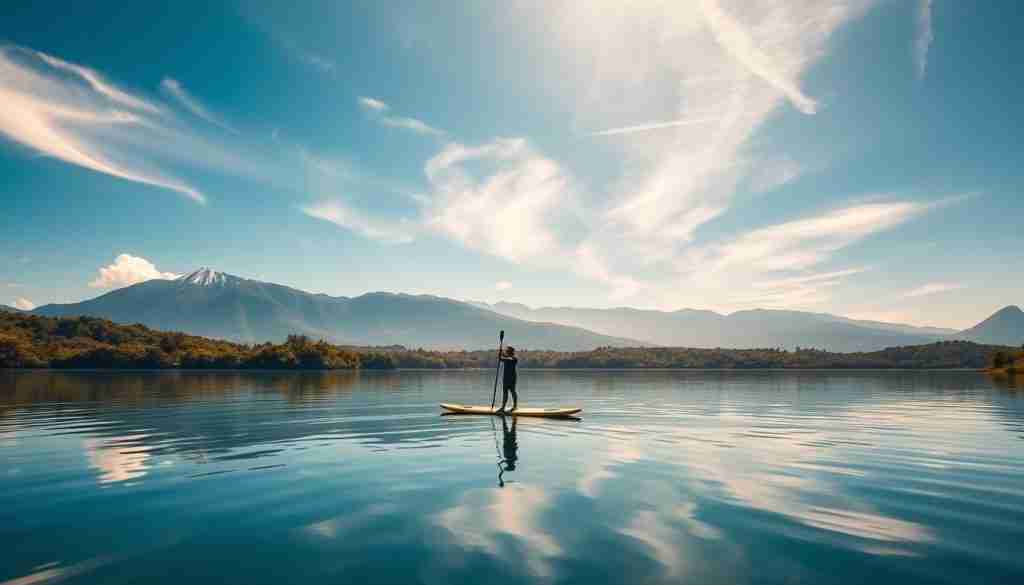
At 11,500 feet, Piuray Lagoon’s calm waters reflect the Andes like a natural mirror. This alpine gem in the Sacred Valley offers paddleboarders a surreal blend of tranquility and exhilaration. Glide across glassy surfaces where snow-capped peaks and cotton-cloud skies merge seamlessly below your board.
High-Altitude SUP: A Unique Perspective
The lagoon’s elevation amplifies every sensation. Thin air sharpens focus as paddlers balance atop 3500m-high waters clearer than polished quartz. Local guides describe it as “walking on liquid sky”—a view few places on Earth can match.
Unlike choppy coastal SUP, Piuray’s stillness allows beginners to master strokes quickly while advanced paddlers meditate on mirrored horizons. The experience blends gentle core workouts with moments of profound stillness, interrupted only by distant llamas grazing on emerald slopes.
| Aspect | Detail |
|---|---|
| Elevation | 11,500 ft (3,500m) |
| Water Clarity | Visibility exceeds 30 ft |
| Skill Level | Novice-friendly |
| Best Time | April-October (calm winds) |
Proper acclimatization is crucial—most operators require 48 hours in the Sacred Valley before boarding. Morning sessions avoid afternoon breezes, ensuring optimal conditions to absorb 360-degree views of Veronica Mountain’s glaciers.
This activity attracts people seeking mindful movement rather than adrenaline spikes. As paddleboards drift past reeds sheltering Andean teal ducks, visitors often describe feeling part of the landscape rather than mere observers.
Cultural Explorations and Local Experiences
Cusco’s markets burst with colors that tell stories older than the Spanish conquest. Woven textiles in kaleidoscopic patterns drape over stalls selling Sacred Valley potatoes and dried ají amarillo peppers. These spaces serve as living museums where Quechua vendors share ancestral knowledge through spices, ceramics, and whispered legends.
Where Flavors Meet Tradition
San Pedro Market’s labyrinthine aisles offer edible anthropology. Sample these authentic finds:
- Chicha morada – purple corn drink brewed with pineapple and cloves
- Rocoto relleno – stuffed spicy peppers showcasing Spanish-Inca fusion
- Hand-spun alpaca wool dyed with cochineal insects
Guided tours decode ingredients’ cultural significance, connecting dishes to Inca agricultural innovations. Many include cooking classes using pre-Columbian tools like batán grinding stones.
Stones That Speak
The city’s foundations rest on walls built by the Killke people centuries before Inca rule. Expert-led tours reveal how later civilizations incorporated these ruins into their architecture. Key sites include:
| Site | Era | Highlight |
|---|---|---|
| Sacsayhuamán | Inca | 300-ton stone blocks |
| Qorikancha | Pre-Inca/Inca | Golden temple foundations |
| Tipón | Inca | Working aqueducts |
These ruins provide views into engineering marvels that still influence Andean communities. Evening walks through illuminated Inca ruins juxtapose ancient history with the city’s modern energy.
Practical Tips for Planning Your Cusco Adventure
Smart preparation transforms a journey through the Andes from memorable to extraordinary. Navigating permits, altitude adjustments, and operator selection requires strategic thinking. These steps ensure travelers maximize their time while respecting local ecosystems and traditions.

Navigating Permits and Expert Guidance
Secure the Cusco Tourist Ticket (Boleto Turístico) for access to 16 archaeological sites. Inca Trail permits sell out 6-8 months ahead—book through authorized agencies. Certified guides fluent in Quechua and Spanish unlock deeper insights at mountain ruins like Pisac.
| Permit Type | Issuing Authority | Validity |
|---|---|---|
| Sacred Valley Circuit | Local Tourism Office | 2 days |
| Inca Trail Machu Picchu | MINCETUR | Fixed dates |
Mastering High-Altitude Adjustment
Arrive 48 hours early to adapt to thin air. Drink muña tea and avoid heavy meals initially. Mild headaches are normal, but persistent dizziness warrants medical checks. Many hiking trails start lower, letting visitors gauge their level gradually.
Selecting Trusted Activity Providers
Prioritize operators with:
- International Mountain Guide Association certifications
- Transparent safety protocols
- Small group tours (max 8 people)
Cross-reference reviews on platforms like TripAdvisor and Andes Adventures. Reliable companies tailor options to fitness levels, ensuring enjoyable experiences across places like Humantay Lake.
Conclusion
Where ancient stones meet mountain peaks, every path in this Andean realm invites discovery. The Sacred Valley reveals its treasures through ruins whispering Inca secrets, trails scaling 16,000-foot summits, and rivers carving through emerald gorges. At its heart lies Machu Picchu—a South American icon where history pulses through mortarless walls.
Smart planning elevates these experiences. Prioritize operators with certified guides who navigate altitude challenges and hidden rock formations. Whether pedaling past terraced farmlands or tracing royal Inca Trail routes, preparation unlocks moments where time collapses—modern boots echoing on stones laid five centuries ago.
Let this landscape rewrite your definition of travel. Sunrise views from mountain passes. The adrenaline of conquering Class IV rapids. Quiet awe before archaeological marvels. These threads weave a journey that transcends typical vacations.
Your trip begins now. Consult our expert-curated guides to craft an itinerary blending heart-racing biking descents with cultural immersion. The Sacred Valley awaits—where every meter climbed rewards with perspectives that linger long after departure.


