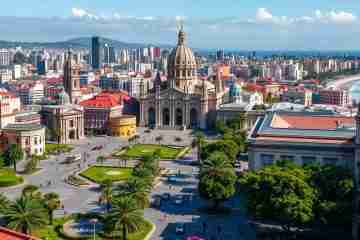
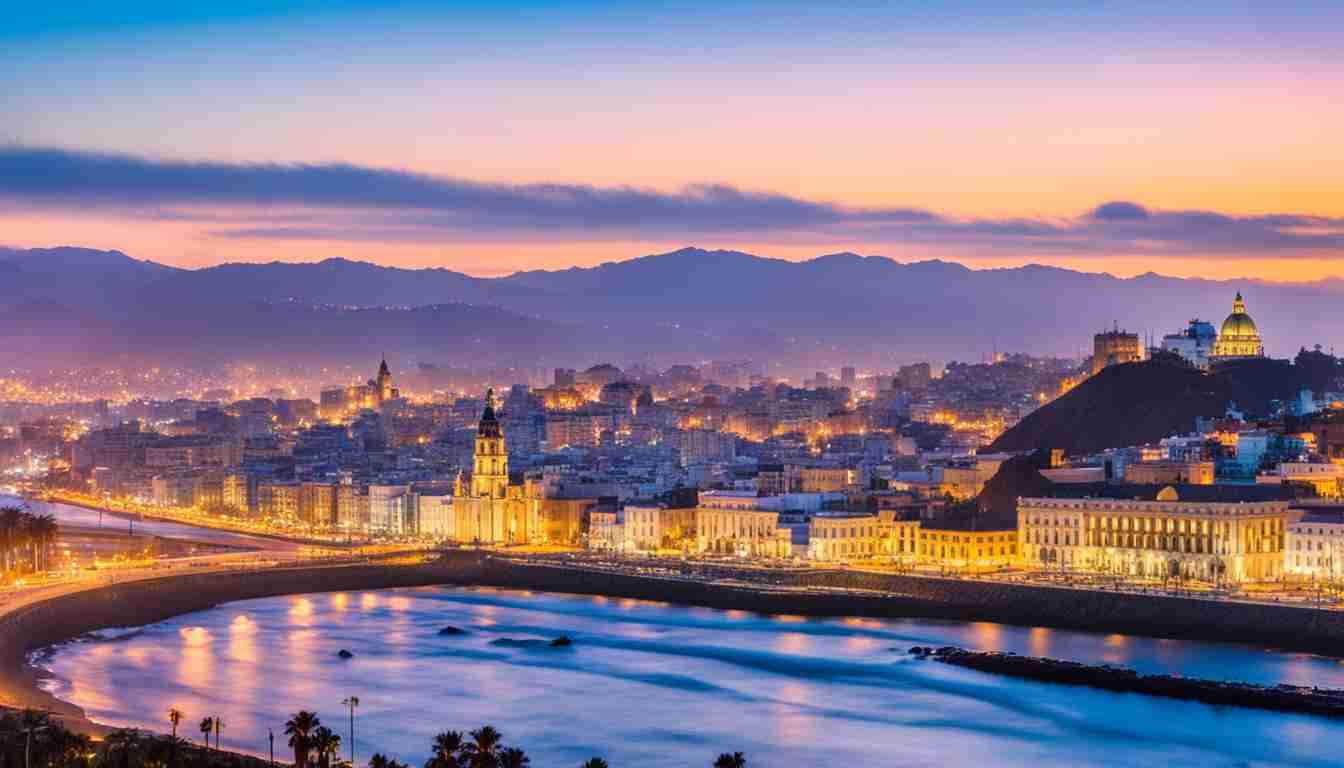
Lima’s historic center goes from the Plaza de Armas to Plaza San Martín. It shows off Peru’s colonial past. Founded by Francisco Pizarro in 1535, it was once called the “City of Kings”. It was a key spot for politics, economy, and culture in Spanish South America.
Visitors see a mix of indigenous and European styles. They can dive into the city’s deep history through its famous landmarks and buildings.
Key Takeaways








- Lima’s historic center, founded in 1535, is a UNESCO World Heritage site
- The city was once known as the “City of Kings” and was a crucial center of Spanish colonial power
- Visitors can explore a blend of indigenous and European influences in the city’s architecture and landmarks
- Top attractions include the Plaza de Armas, Convent of San Francisco, Cathedral of Lima, and Larco Museum
- Lima’s historic center offers a glimpse into the country’s rich colonial heritage
Lima’s Colonial Heritage
The story of Lima is closely linked to Spanish colonization in Peru. Founded in the 16th century by Francisco Pizarro, it became the heart of the Spanish empire. This empire stretched to parts of today’s Chile, Bolivia, Ecuador, and Peru. The city’s buildings show a unique Andean Baroque style, mixing local, Moorish, Spanish Baroque, and Renaissance styles.
Architectural Influences from the Colonial Era
The colonial architecture in Lima is a sight to behold. It features stunning facades, grand churches, and lovely balconies. Builders used local materials like brick, wood, and stone to adapt European styles to the area.
Key Landmarks and Buildings Representing Colonial Heritage
- The Basilica Cathedral of Lima, from 1535, shows off Spanish Renaissance beauty.
- The Monastery of San Francisco highlights Lima’s colonial religious life with its detailed catacombs and Baroque chapels.
- The Colonial and Historic Center of Lima has landmarks like the Government Palace, Archbishop’s Palace, and Municipal Palace. Each one shows off the unique colonial architectural style.
The colonial landmarks in Lima prove the city’s rich historic buildings and the lasting impact of Spanish colonization in Peru.
Plaza de Armas: Heart of Lima
The Plaza de Armas, also known as the “Plaza Mayor,” is the historic center of Lima, Peru. Founded in 1535, it’s one of the oldest squares in the Americas. It’s a lively spot, surrounded by beautiful colonial buildings and landmarks.
A 17th-century fountain stands at the plaza’s center, one of the few original structures left from the founding days. The Government Palace, Peru’s oldest palace, is nearby. It has been the seat of power since 1535. Next to it is the Casa Aliaga, the oldest house in the Americas, built by the Aliaga family.
The Lima Cathedral is another key landmark, known for its stunning colonial architecture. It’s where Francisco Pizarro, the founder of Lima, is buried. The Municipal Palace and the neo-colonial Archbishop’s Palace are also there, adding to the area’s historical charm.
Visitors can see the daily changing of the guard at the Government Palace. It’s a tradition that showcases Peruvian culture. You can also try local foods like ceviche and anticuchos. The Museo de Arte de Lima (MALI) is nearby, with a collection of art from 3,000 years of Peruvian history.
The Plaza de Armas is perfect for history buffs, architecture lovers, or anyone wanting to experience Lima’s lively vibe. It’s the heart of the city and a spot you shouldn’t miss.
Lima historical landmarks
Lima’s historic center is full of landmarks that show off the city’s rich past. You’ll find everything from religious sites to architectural wonders. These landmarks let you peek into the city’s history.
The Basilica y Convento Santo Domingo is a key landmark. It’s where two saints, Santa Rosa de Lima and San Martin de Porres, rest. Built in 1604, it mixes Spanish Baroque and Moorish styles, showing off Lima’s colonial look.
The Basilica y Convento San Francisco is another must-see. It started in 1546 and has a beautiful Spanish Baroque front. Inside, you’ll find cool catacombs and learn about Lima’s past. Right next to it is Plaza San Martin, named after José de San Martin, Peru’s hero.
The Archbishop Palace was started soon after Lima was founded in 1535. The Torre Tagle Palace, from 1730, is one of South America’s top buildings. These landmarks show off Lima’s mix of architecture and culture.
“Lima’s historic landmarks are a testament to the city’s resilience and the enduring spirit of its people.”
Exploring Lima’s historic landmarks is a must for anyone wanting to see its historic treasures. Whether you love grand architecture or interesting stories, these landmarks are a key part of Lima’s charm.
Basilica Y Convento Santo Domingo
The Basilica y Convento Santo Domingo is a key part of Lima’s history. It’s a landmark that has seen many years. Founded in the 1530s, it took about 50 years to finish. This shows the skill of Spanish colonial architects.
Architectural Grandeur and Historical Significance
The current church was built after the old one was destroyed in 1678. Diego Maroto, a Dominican architect, designed it. The bell tower was added in 1766 by Viceroy Manuel d’Amat i de Junyent. Over time, the basilica has been fixed up, like after the 1940 earthquake when cement was used on the walls.
This basilica is famous for its Baroque style. It has a main nave with rib-vaulted ceilings and two side naves. There are also lantern chapels. The choir has the oldest stone walls in the country. The altars honor saints like Saint Hyacinth of Poland and Saint Dominic.
| Architectural Highlights | Historical Significance |
|---|---|
|
|
The Basilica y Convento Santo Domingo is a stunning example of architecture and history. It’s where two saints, Santa Rosa de Lima and San Martin de Porres, are buried. People come here to pray and to see the Basilica y Convento Santo Domingo and the Santo Domingo church Lima.
“The Basilica y Convento Santo Domingo invites visitors to enjoy being guided through its premises and experience the tranquility it offers.”
Basilica Y Convento San Francisco
In the heart of Lima’s historic center, the Basilica y Convento San Francisco shines. It was founded in 1546. This Spanish Baroque-style complex shows off Lima’s past with its beautiful architecture, big library, and spooky catacombs.
This site is part of the Historic Centre of Lima, a UNESCO World Heritage Site since 1991. It includes the Sanctuary of Nuestra Señora de la Soledad and the Chapel del Milagro. These places are key to the city’s architecture.
The current convent opened in 1672, after the old one fell down in an earthquake in 1655. The main temple’s sacristy was finished in 1729 and fixed up in the 1990s with Spanish government help. This was after it got damaged in the 1966 earthquake.
A big draw is its Mudéjar-style cloister. It has 39 paintings from 1671 showing Saint Francis of Assisi’s life. The cloister’s ceilings are made of cedar wood from Nicaragua, showing the skill of the past.
The Basilica’s main altar is Neoclassical in style. Inside, you’ll find art like catacombs, a museum, the portal, the chapter house, and the cloister. The portal is amazing, with a wooden sculpture of Jesus, paintings, and two medallion paintings about Francisco Solano.
It has over 25,000 human remains in its catacombs. This makes it a haunting yet interesting look at Lima’s past. It’s a top spot for both locals and visitors, inviting them to explore the Basilica y Convento San Francisco‘s history and culture.
“The Basilica and Convent of San Francisco de Lima, the Sanctuary of Our Lady of Solitude, and the Church of the Miracle form one of Lima’s most welcoming and artistic corners in its Historic Center.”
Attractions in Lima’s Historic Center
Lima’s historic center is full of attractions that show off the city’s deep cultural roots. A key spot is the Magic Water Circuit Park. It’s famous for being the largest fountain complex in a public park, setting a Guinness World Record.
This park has 13 fountains that display stunning water and light shows. It’s a magical place for people of all ages. Visitors can walk through the lovely gardens and see the water shows. These shows often have music and special effects.
Larco Museum
The Larco Museum is another key spot in the historic center. It’s a top archaeological museum with a huge collection of pre-Columbian art and artifacts. Opened in 1926 by Rafael Larco Hoyle, it has over 45,000 items.
These items include pottery, textiles, gold, and silver. They help visitors learn about ancient Peruvian cultures. The museum offers tours and temporary exhibits. It’s a must-see for those interested in Lima and Peru’s cultural heritage.

Museums Showcasing Peruvian Heritage
Lima’s historic center is home to museums filled with art that celebrates Peru’s rich culture. The Museo de Arte de Lima (MALI) is a top spot for those wanting to explore Peru’s cultural treasures.
MALI Museum
The MALI Museum has over 17,000 works, covering 3,000 years of art in Peru. It shows art from before the Spanish arrived, during the colonial times, and up to today. This gives visitors a full view of Peru’s artistic journey.
A big highlight is “Los Funerales de Atahualpa,” a huge oil painting by Luis Montero. It’s 420 x 600 cm big and weighs about 200 kg. This painting shows a key event in Peruvian history.
The museum has 4,500 m² of space to see all the art. You can also join guided tours in English or Spanish on Tuesdays to Saturdays. These tours help visitors learn more about the art.
The MALI Museum is a key place for learning about Peru’s art and culture. It’s a top spot for art lovers visiting Lima’s historic center.
Presbítero Maestro Cemetery
In the heart of Lima, the Presbítero Maestro Cemetery shows off the city’s rich colonial past. This 19th-century cemetery is among the most beautiful in Latin America. It lets visitors dive into Peru’s history.
It boasts 766 mausoleums and 92 historical monuments. This makes it like an outdoor museum, showing off colonial architecture. The Crypt of Heroes is a key spot, with over 230 remains of those who fought in battles like Angamos and the War of the Pacific.
The cemetery is full of art and sculpture by famous artists like Damià Campeny and Louis-Ernest Barrias. These works show the culture and art of the time. Visitors can see the detailed and symbolic art, which tells stories of the era.
Many of Peru’s top figures rest here, including leaders, military heroes, writers, and artists. This makes the cemetery a key spot for learning about Peru’s history and culture.
Since 1999, the cemetery is officially a museum. It offers tours by day and night. This lets visitors experience Lima’s history in a peaceful way and honor its notable citizens.
| Key Facts about Presbítero Maestro Cemetery | Value |
|---|---|
| Total Mausoleums | 766 |
| Historical Monuments | 92 |
| Identified Remains in Crypt of Heroes | 295 |
| Sarcophagi in Crypt of Heroes | 29 |
| Niches in Crypt of Heroes | 265 |
| Total Area | 20 hectares |
The Presbítero Maestro Cemetery is a key part of Lima’s history and the lasting impact of its people. It’s a top spot for exploring Lima‘s culture and art. Visitors can connect with the past and see the city’s beauty.

“The Presbítero Maestro Cemetery is a true gem, a place where the past and present converge, revealing the heart and soul of Lima’s vibrant history.”
Conclusion
The historic center of Lima is a blend of indigenous and colonial cultures. It’s a place where history comes alive. From the famous Plaza de Armas to the stunning colonial buildings, it’s a journey through time.
Visitors can dive into the rich history of this vibrant city. With over 1,600 historic sites and UNESCO World Heritage status, it’s a unique experience. The city’s commitment to preserving its past is clear.
Exploring with a local guide reveals the city’s hidden stories and traditions. Places like the Basilica y Convento de San Francisco and the Larco Museum tell part of Lima’s story. Every corner has a new tale to share.
Visiting the historic center is an unforgettable adventure. You’ll see beautiful colonial buildings and learn about Peru’s roots. It’s a journey that enriches your understanding of the city and its people.
Lima is celebrating its 489th anniversary in 2024. The city is working hard to restore and grow its historic center. This effort keeps the colonial architecture alive and vibrant. It invites visitors to explore the city’s timeless stories.