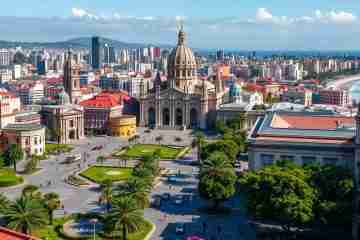
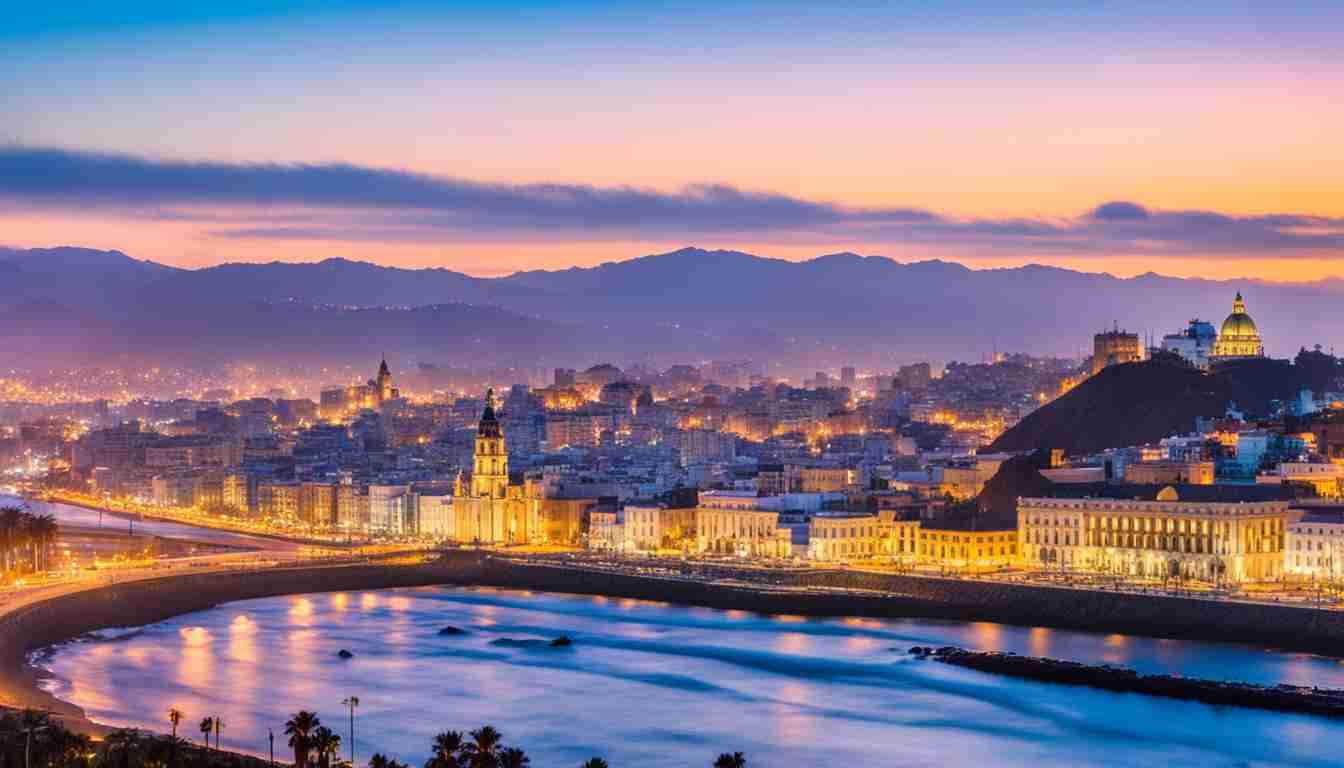
Lima, the captivating capital of Peru, is full of fascinating sights. It mixes ancient Andean cultures with colonial Spanish architecture. You’ll find historic plazas, cathedrals, world-class museums, and lively neighborhoods.
This city invites you to explore its rich history and diverse culture. Start your journey through Lima’s top attractions. Dive into the city’s captivating essence.
Key Takeaways









- Explore Lima’s historic landmarks, including the iconic Plaza de Armas and the Convento de San Francisco
- Discover the city’s fascinating museums, like the Museo de Arte de Lima and the Museo de la Nación
- Experience the mesmerizing Circuito Mágico del Agua, the world’s largest fountain complex
- Enjoy the coastal vibes and upscale shopping in the vibrant neighborhood of Miraflores
- Uncover the pre-Columbian treasures housed in the renowned Larco Museum
Plaza de Armas: The Heart of Historic Lima
At the center of Lima’s historic district is the Plaza de Armas. It’s a UNESCO World Heritage site and the city’s core since 1535. This 140-square-meter plaza was made by Spanish conquistador Francisco Pizarro. He set it up as the main square of the city he founded.
Visitors can see the grand Cathedral of Lima, the ornate Archbishop’s Palace, and the stately Palacio de Gobierno. This is the official home of the Peruvian president. Near the plaza, the Jiron de la Union is a pedestrian street with shops, restaurants, and the beautiful La Merced church. This church shows off colonial Baroque architecture.
“The Plaza de Armas is the oldest public space in Lima, dating back to the city’s founding in 1535. It remains a vibrant hub of activity and a must-see for anyone exploring the historic center.”
The Plaza de Armas has a rich history and well-kept colonial landmarks. It lets visitors see Lima’s past and feel the heart of this UNESCO-recognized historic area.
| Landmark | Significance |
|---|---|
| Cathedral of Lima | The city’s main cathedral, featuring Baroque architecture and the tomb of Francisco Pizarro |
| Archbishop’s Palace | The official residence of the Archbishop of Lima, also serving as a museum |
| Palacio de Gobierno | The official residence of the Peruvian president, located on the Plaza de Armas |
| Jiron de la Union | A pedestrian-only street lined with shops, restaurants, and the La Merced church |
Convento de San Francisco: Eerie Catacombs and Colonial Art
In the heart of historic Lima, the Convento de San Francisco is a key part of Peru’s culture. It includes the Basilica and Convent of San Francisco, the Sanctuary Nuestra Señora de la Soledad, and the Chapel del Milagro. These places draw visitors from all over the world.
Unraveling the Mysteries of the Catacombs
Under the church, a network of tunnels holds the remains of over 10,000 people. These catacombs, once Lima’s first cemetery, are the biggest in South America. They are well-preserved and show the past in a unique way.
Exploring the Artistic Treasures
The Convento de San Francisco is not just historic; it’s also a treasure trove of religious art. The sacristy has a portal by Lucas de Meléndez and paintings by Francisco de Zurbarán Workshop. The convent’s cloister has 39 paintings from 1671, showing Saint Francis of Assisi’s life.
A mural of the Last Supper stands out in the convent. It shows the Apostles eating roasted guinea pig, a Peruvian dish. This mural, by Diego de la Puente, mixes European and Andean traditions.
In 1991, the Convento de San Francisco and the Historic Centre of Lima were named a UNESCO World Heritage site. This complex, with its spooky catacombs, beautiful art, and colonial history, is a top spot in Lima.
Cathedral of Lima: Historic Grandeur and Pizarro’s Tomb
The Cathedral of Lima stands tall on the east side of the Plaza de Armas. It’s a beautiful example of Baroque colonial architecture. Work started in 1535, and it got bigger in 1564, inspired by Seville, Spain. Despite damage from earthquakes, it’s been carefully fixed up. Now, it shows off its detailed choir and altars in the Spanish Baroque style.
The Cathedral of Lima is also home to the tomb of Francisco Pizarro. He was the Spanish conquistador who started Lima in 1535. His tomb honors his lasting impact on the city.
At the Cathedral of Lima, you can see amazing Baroque architecture. It mixes Spanish and Andean styles beautifully. The cathedral also has a great art collection. This includes a mural of the Last Supper with guinea pig, showing the mix of cultures in Lima.
“The Cathedral of Lima is a true testament to the enduring legacy of Lima’s Baroque architecture, a captivating fusion of Spanish and Andean influences that has stood the test of time.”
Visiting the Cathedral of Lima costs S/.10 (About US$3.20). You also get to see the Religious Art Museum. It’s a great place to learn about Lima’s history and art. Whether you’re looking at the choir or visiting Francisco Pizarro‘s tomb, it’s a spot you shouldn’t miss in Lima.
Circuito Magico del Agua: Mesmerizing Fountain Displays
In the heart of Lima’s Parque de la Reserva, the Circuito Magico del Agua awaits. This 19-acre water fountain complex is the largest in the world. It’s a place where water, light, and music come together to amaze visitors from all over.
Discover the World’s Largest Fountain Complex
Since its opening in 2007, after a $13 million makeover, the complex has wowed with 13 stunning fountains. The Fuente Mágica stands out, shooting water over 80 meters high. There’s also the Fuente Túnel de las Sorpresas, a 35-meter tunnel where you can walk through water.
At sunset, the show gets even better. The Fuente de la Fantasia lights up with lasers and music. This mix of water, light, and sound makes for a magical visit.

The complex is right between Avenida Arequipa and Paseo de la Republica. It’s easy to get to for both locals and tourists. Open from Wednesday to Sunday, 3:00 pm to 10:30 pm, it’s perfect for enjoying the fountains and laser shows at night.
Since opening, over 2 million people have visited the Circuito Magico del Agua. Entrance fees have helped fix the Municipal Theatre of Lima. It’s a top spot in Lima, a must-see for anyone visiting.
Parque del Amor: Romantic Cliffside Park
Perched on cliffs above the Pacific Ocean in Lima’s Miraflores district, Parque del Amor is a top spot for couples. It’s known for its stunning sunset views and mosaic walls that remind one of Antoni Gaudí’s style. This park is perfect for those looking for a romantic escape.
The park’s centerpiece is the “El Beso” sculpture by Peruvian artist Victor Delfín. It’s a large bronze piece showing a couple embracing. This sculpture captures the park’s romantic vibe, symbolizing love and affection in a peaceful setting.
Visitors can walk along the park’s paths, enjoying Peruvian poetry on the mosaic walls. They can also take in the beautiful views of the Pacific Ocean. Parque del Amor is a magical spot where love, art, and nature meet, offering an experience you won’t forget.
“The Parque del Amor is a magical place where the beauty of Lima’s coastline and the passion of its people come together in perfect harmony.” – Juana Valderrama, Lima resident
Miraflores: Shopping, Dining, and Coastal Vibes
Miraflores sits by the Pacific Ocean and is known for its lively culture. It’s famous for trendy shops, top restaurants, and beautiful parks. Visitors can enjoy the scenic Malecón promenade, shop at chic boutiques, and feel the seaside vibe.
Exploring Miraflores’ Shopping and Dining Scene
Miraflores is a dream for shoppers with its variety of trendy boutiques and artisan markets. The Larcomar shopping mall is a hit, offering shops, restaurants, and a cinema. The neighborhood’s streets are filled with cozy cafés, fancy eateries, and bars, showing off Lima’s food scene.
Coastal Parks and Landmarks
The area’s coastal beauty is a big draw, with parks and landmarks that offer stunning ocean views. Parque del Amor is a romantic spot with the “El Beso” sculpture and amazing sunsets. Nearby, Parque de la Reserva has the Circuito Mágico del Agua, a show of fountains and laser lights. The Huaca Pucllana, an ancient site, adds to the area’s cultural depth and history.
Miraflores is a top spot for anyone visiting Lima. It blends modern style with coastal charm. Whether you like shopping, dining, or parks, this lively area gives you a full taste of Lima’s coastal neighborhoods.
| Landmark | Description | Annual Visitors |
|---|---|---|
| Larcomar | Oceanfront shopping mall in Miraflores | Approx. 500,000 per month |
| Huaca Pucllana | Pre-Columbian archaeological site in Miraflores | Over 90,000 since 2014 |
| Parque del Amor | Romantic cliffside park with “El Beso” sculpture | N/A |
“Miraflores offers a perfect respite from the hustle and bustle of downtown Lima, with its relaxed coastal vibe and vibrant culinary scene.”
Museo de la Nacion: Uncovering Peru’s Ancient History
The Museo de la Nacion is the biggest museum in Lima. It’s the top spot for learning about Peru’s ancient history and cultures. It started in 1822, right after Peru became independent from Spain. Since 1930, it has been in the old mansion of the Counts of Quinta Alegre.
This museum has a huge collection that covers all of Peru’s history, from the first people to the Inca Empire. You can see ceramics, textiles, and stone carvings. There are also scale models of famous sites like Machu Picchu. It gives a full view of Peru’s rich culture, helping visitors understand the country’s history better.
Exploring Peru’s Diverse Cultures
The museum shows different time periods, like the Lithic Period and the Inca Empire. You can see the Paracas textiles and Moche ceramics. There are also displays about the Nazca Lines.
The museum has guided tours, special events, and places for photos. Tickets are $10 for adults and free for kids under 12. It’s a great place for both locals and visitors.
“The Museo de la Nacion is a treasure trove of Peru’s ancient history, showcasing the country’s diverse cultures and the extraordinary achievements of its ancestors.”
If you like archaeology, art, or Peru’s culture, you should visit the Museo de la Nacion. It’s in the center of Lima. You’ll be amazed by the huge collections and exhibits that tell the story of Peru’s ancient past.
Lima points of interest: Larco Museum
The Larco Museum is in the lively Pueblo Libre district. It’s a key spot for exploring Peru’s rich culture. With over 40,000 items, it’s a treasure trove of pre-Columbian ceramics, gold, and textiles. The museum is in an 18th-century mansion, right where a pre-Columbian pyramid once stood.
Visitors can dive into Peru’s ancient history at the museum. The collection includes Moche and Chimú ceramics. These pieces show the art and skill of Peru’s old cultures. You’ll see pottery, gold, and textiles that tell stories of 3,000 years of art and history.
Uncovering Peru’s Artistic Heritage
The museum started in 1923 with a Moche portrait vessel. Over time, it grew thanks to Rafael Larco Hoyle’s work. He found many pieces between 1933 and 1941. By 1933, the museum had 45,000 items, including pottery and textiles.
Rafael Larco wanted to save Peru’s culture. He collected artifacts from all over the country. In the 1950s, the museum moved to Lima and was updated. Now, it’s a top Lima museum for pre-Columbian art and Peruvian ceramics.

“The Larco Museum’s collection offers a captivating glimpse into the artistic legacy of Peru’s ancient cultures, from the intricate ceramics to the stunning gold work and vibrant textiles.”
Santo Domingo Monastery: Historic Charm and Relics
In the heart of Lima’s historic area, the Santo Domingo Monastery is a gem. Founded in 1534, it’s one of the oldest and most charming religious spots. The monastery mixes 16th-century Baroque architecture with vibrant cloisters and houses relics of famous Peruvian saints.
Here, you’ll find the final resting places of three important Peruvian saints: San Juan Macías, Santa Rosa de Lima, and San Martín de Porres. You can honor these saints and discover how they shaped Peru’s spiritual history.
The monastery’s Baroque-style church is a sight to behold. It’s filled with detailed carvings, beautiful altars, and a vast collection of religious art and artifacts. The peaceful cloisters, with their colorful tiles and arches, offer a quiet escape from the city’s noise.
If you love history, are a religious pilgrim, or just looking for something different, don’t miss the Santo Domingo Monastery. Dive into its historic beauty and learn about the Peruvian saints who rest here.
“The Santo Domingo Monastery is a testament to Lima’s rich religious heritage, a place where the past and present converge in a celebration of Peruvian spirituality and history.” – Emma Gonzalez, travel writer
Museo de Arte de Lima: Fine Arts and Pre-Columbian Treasures
The Museo de Arte de Lima (MALI) is a key cultural spot in Peru. It’s in a beautiful Beaux-Arts palace and has art from over 3,000 years. This museum celebrates Peru’s artistic past.
At MALI, you’ll see everything from ancient textiles and ceramics to modern paintings. The museum takes you on a journey through Peru’s art history. You’ll see how art has changed over time.
MALI also has temporary exhibits by local and international artists. These shows keep the museum fresh and exciting. They let you see the wide range of art that makes Peru special.