Peru is a vibrant, complex, and amazing place to visit. You can hike the Andes Mountains or explore the Amazon. Or, you can enjoy pisco sours and ceviche in Lima. This guide will give you all the essential tips for planning your trip to Peru. It will make your journey unforgettable.
Key Takeaways









- Discover the diverse landscapes of Peru, from the Machu Picchu ruins to the vibrant Lima city tours and the lush Amazon rainforest tours.
- Explore the rich cultural heritage of Peru through Inca Trail hiking, Cusco sightseeing, and immersing in Peruvian cuisine and handicrafts.
- Learn about the essential travel tips and information to plan your Lake Titicaca excursions and Nazca Lines flights.
- Understand the diverse climate and weather patterns across Peru’s regions to prepare for your trip.
- Ensure you have the necessary travel documents and insurance coverage for a safe and worry-free adventure.
Top Travel Tips for Peru
Exploring Peru needs careful planning for a smooth and memorable trip. From picking the best tour operator to packing the right things, our tips will help you enjoy your Peruvian adventure.
Choosing the Right Operator
Choosing a good Peru travel operator is key. Look for companies like TOUR IN PERU, which offer unique, personalized tours. They have years of experience and focus on sustainable tourism, making your Machu Picchu tour or other Peru trips unforgettable.
Preparing for Your Trip
Getting ready for Peru travel is crucial for a worry-free trip. This video shares important tips, like what to pack and how to handle altitude sickness. These tips will help you enjoy the ancient sites and vibrant culture of Peru.
With the right tour operator and good preparation, your Peru trip will be amazing. You’ll love the rich culture, beautiful landscapes, and friendly people of Peru.
Money Matters in Peru
Getting around with money in Peru is easy with some planning. The peru currency exchange uses the Nuevo Peruvian Soles and US Dollars. But, you might pay a bit more when using USD. In cities like Lima, Cusco, and Arequipa, ATMs let you take out up to $300 USD or soles per day.
When using atms in peru, remember that foreign credit cards might have limits. Some ATMs only give up to $200 USD or soles per pull. To get the best deal, skip street money changers or airport exchange offices. They often have bad rates.
Tipping in Peru
Tipping in peru is expected, especially in tourism spots. A good tip is 10-15% of your bill at restaurants. You can give more if the service is great. For tours and porters, S/. 10-20 per person is right.
Credit cards are widely used, especially in fancy hotels and high-end restaurants. VISA and MASTERCARD are most accepted, with AMEX becoming more popular in upscale places.
Always carry cash and credit cards for your trip to Peru. This way, you’re ready for anything.
“Cash is King” in Peru, although the use of credit cards is becoming more prevalent in certain sectors of the tourism industry.
Peru’s Diverse Climate and Weather
Peru is a land of breathtaking diversity, and its climate is no exception. From the sun-kissed coastal deserts to the snow-capped peaks of the Andes, and the lush, tropical Amazon rainforest, each region has its own unique weather. Knowing the weather in Peru is key to planning your trip and packing right.
The coastal region of Peru gets very hot, up to 45°C (110°F), from December to April. The rest of the year is cooler, with temperatures between 20°C to 25°C (68°F to 77°F) during the day. The Andes offer a more temperate climate, with temperatures between 20°C and 25°C (68°F and 77°F) by day and around 15°C (59°F) at night from April to October.
The Andean region gets most of its rain from December to March, with January and February being the wettest months. In contrast, the Amazon region stays hot all year, with temperatures between 30-32°C (85-90°F) by day and 20°C (68°F) at night. The Amazon gets more humid and rainy from December through March.
| Region | Climate Highlights | Best Time to Visit |
|---|---|---|
| Coastal | Hot and dry, with temperatures reaching 45°C (110°F) from December to April | December to April for warmer weather |
| Andes | Temperate with a dry season from April to October and a rainy season from December to March | April to October for milder weather and clear skies |
| Amazon | Hot and humid year-round, with increased rainfall from December through March | April to October for the dry season |
When planning your Peru weather by region trip, think about what you want to do and where you want to go. The best time to visit Peru varies by activity and region. For the packing for Peru climate, bring versatile clothes. Include lightweight items for the coast, warm jackets for the Andes, and rain gear for the Amazon.
“Peru contains 27 of the 32 known climates, distributed across 11 ecological regions within the country.”
Packing Essentials for Peru Travel
Getting ready for your Peru trip means packing smart to have everything you need. This guide gives you the best tips for what to pack for peru and peru travel luggage advice. It helps you enjoy your time in Peru.
Tips on Luggage and Packing
When packing for packing for machu picchu or other places in Peru, remember the luggage limits. Domestic flights in Peru allow only 50 pounds (23 kg) per person for checked bags. Trains like the one from Cusco to Machu Picchu let you bring one medium-sized piece and a carry-on. Pack light and use packing cubes to organize your peru travel clothing well.
Tips on Clothing
The what to wear in peru depends on the season and where you go. Peru’s packing for peru climate varies, with warm coasts, cool highlands, and wet Amazon areas. Dress in layers with lightweight, moisture-wicking clothes and heavier items like sweaters and jackets for the changing weather.
Tips on Shoes for Trekking
Good shoes are key for exploring Peru, especially for visiting places like Machu Picchu or hiking. Choose best shoes for peru and trekking shoes for machu picchu with strong traction and support. Wear closed-toe footwear for peru for safety, but bring sandals for city walks.
| Clothing Essentials | Hiking and Outdoor Gear | Accessories |
|---|---|---|
|
|
|
Follow these packing tips for peru to be ready for Peru’s diverse landscapes and cultures.
Important Travel Documents
Understanding the peru visa requirements and peru passport information is key for a smooth trip to Peru. You must have a valid passport for international travel to Peru, valid for at least 6 months after you leave. The visa needs vary by your country of origin.
Citizens of the United States, Canada, and the European Union don’t need a visa for stays up to 90 days. But, always carry your passport with you. You might need to show it for checks in towns, hotels, or other places.
Tips on Documents and Travel Insurance
Along with your passport, getting travel insurance for peru is a smart move. Look for coverage for trip cancellation, lost documents, medical costs, and emergency help. This can offer great protection and peace of mind while traveling.
- Make photocopies of your passport and keep them in different bags to protect your documents.
- Check if your passport needs renewal before your trip, as some countries have specific rules.
- Make sure your travel insurance covers the risks you might face in Peru.
Get to know the peru visa requirements, peru passport information, and get the right travel insurance for peru. This way, you can enjoy your trip to this amazing South American country without worries.
Staying Nourished on the Go
Exploring Peru’s vibrant food scene is exciting, but finding healthy snacks for the road can be tough. Whether you’re hiking in the Andes or walking Lima’s busy streets, having the right snacks is key. They keep your energy up and help you stay healthy.
Tips on Snacks
For healthy snacks for peru, choose whole foods that give you lasting energy and important nutrients. Think about taking food bars for peru travel like Vega, Lara, Raw Organic Food bars, or Salba. These bars have nuts, seeds, and dried fruits, keeping you full and energized.
Stay away from sugary granola bars or those with chocolate, as they can make your blood sugar go up and then crash. Instead, pick nutrition for altitude in peru with a mix of protein, healthy fats, and complex carbs. Whole meal replacement shakes, such as Vega or Living Fuel, are great too. They mix well with water and are easy to eat on the move.
- Pack natural, whole-food bars like Vega, Lara, Raw Organic Food bars, and Salba
- Steer clear of sugary, nutrient-poor granola and chocolate-based bars
- Consider portable whole meal replacement shakes for a nutrient-dense option
Plan ahead and pack the right healthy snacks for peru. This way, your body stays fueled and nourished, letting you enjoy your Peruvian journey to the fullest.

Peru travel info
Getting ready for your trip to Peru means learning about the country’s languages, culture, money, safety, politics, and economy. Peru is usually safe for both solo and group travelers. But, it’s good to know a few things before you go.
The main language in Peru is Spanish, and the money is called the nuevo sol. With about 33 million people, Peru has a rich culture and lots of places to see.
Navigating Safety and Security
Knowing about safety in Peru is key. Some areas, like the Valley of the Apurímac, Ene, and Mantaro Rivers (VRAEM), are not safe due to crime and terrorism. You might face petty theft, carjackings, muggings, and violence, even in crowded places.
- Demonstrations and strikes often block public transport and tourist spots.
- The U.S. government can’t help much in some areas because of travel limits.
- It’s a good idea to sign up for the Smart Traveler Enrollment Program (STEP) and check the Bureau of Consular Affairs for travel updates.
Navigating Immigration and Entry Requirements
You’ll need a passport that’s good for at least six months to get into Peru. Most tourists can stay for 90 days when they arrive. But, there are extra rules for kids traveling without both parents or guardians.
| Requirement | Details |
|---|---|
| Passport Validity | At least 6 months |
| Approved Stay | 90 days for tourists |
| Minor Travel Authorization | 30-day travel authorization needed for minors with Peruvian citizenship traveling without both legal parents or guardians |
| Entry Stamp Transfer Fee | About US$8.00 or S/.21.00 |
Learning these Peru travel guide tips and knowing what to expect will make your trip better. It’s all about being prepared and informed.
Budgeting for Your Peru Adventure
Exploring Peru’s vibrant culture, stunning landscapes, and ancient wonders doesn’t have to be expensive. With some planning, you can have an amazing time in Peru without spending a lot. Let’s look at the costs and tips to save money for your trip.
Low-budget travelers can spend about $15-40 per day. This covers transport, where you stay, and what you eat. For a mid-range trip, plan for $50-90 a day. If you want luxury, set aside $100-200 daily.
| Expense Category | Average Daily Cost (S/.)) | Average Daily Cost ($) |
|---|---|---|
| Accommodation (Double Occupancy) | S/.188 | $50 |
| Local Transportation | S/.31 | $8.33 |
| Food | S/.60 | $16 |
| Entertainment | S/.86 | $23 |
| Tips and Handouts | S/.7 – 20 | $2 – 5 |
| Alcohol | S/.17 – 52 | $5 – 14 |
Planning your Peru trip doesn’t have to be hard. Knowing the costs, planning early, and using local transport and food options can help you save. This way, you can enjoy Peru without spending too much.
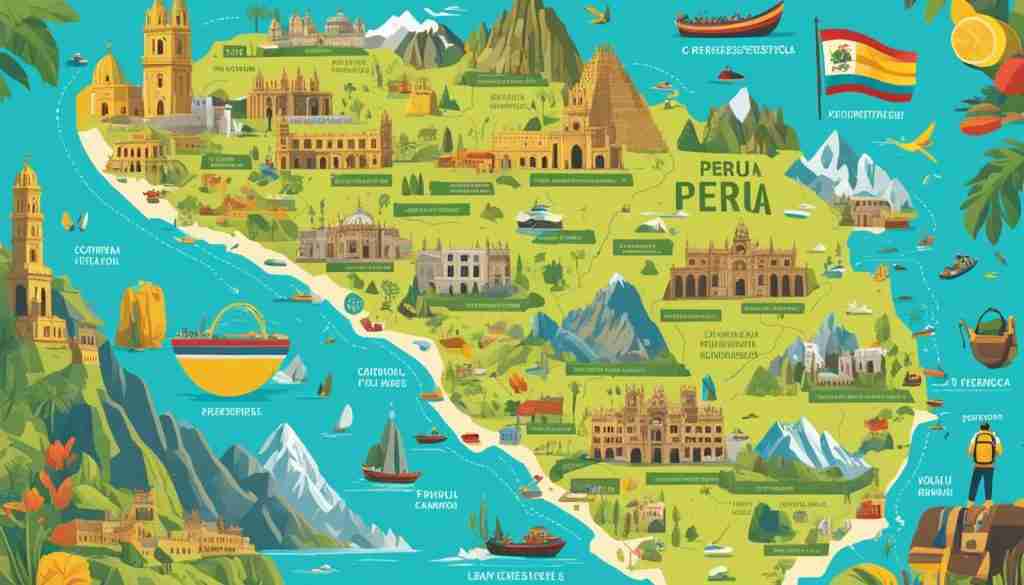
“Peru ranks in the top 25% of countries for affordability, making it a reasonably affordable destination.”
Safety Tips for Travelers in Peru
Peru is generally safe for travelers, but you should still take steps to avoid theft. This is a big issue in cities like Lima, Trujillo, and Arequipa. Always keep your belongings safe to prevent pickpocketing and other petty crimes in tourist spots.
Precautions Against Theft
Dealing with theft is a big challenge in Peru. Pickpockets are skilled and you need to stay alert. Keep your important items like tickets, passport, and money in a hidden money belt or holder. Don’t show off expensive items, as this attracts unwanted attention.
When using ATMs, try to do so in daylight and with a friend. Muggers often target people at ATMs, especially at night. Also, be careful about theft from vehicles, especially in Lima. Don’t leave valuables in your car and park in well-lit areas. It’s best to return to your lodging before midnight to avoid theft or other risks.