Spanning 6.7 million square kilometers, the Amazon is Earth’s largest tropical rainforest. Often called the “Lungs of the Planet,” it produces 20% of the world’s oxygen and shelters 10% of all known species. This biodiverse wonder captivates travelers with its lush landscapes, rare wildlife, and cultural depth.
Our expert guide simplifies travel planning for this iconic destination. Learn when to visit for ideal weather, how to navigate remote regions, and which lodges blend comfort with sustainability. Discover hidden gems like canopy walkways, pink river dolphins, and indigenous community tours.
Balancing adventure with practicality, this resource ensures a seamless journey. Whether trekking through dense foliage or cruising the Amazon River, travelers gain insights to explore confidently. Every tip reflects decades of on-ground expertise and a passion for preserving this ecological treasure.
Key Takeaways
- Covers 6.7 million km², making it the world’s largest tropical rainforest.
- Home to 10% of Earth’s documented species, including unique flora and fauna.
- Provides actionable advice on timing, lodging, and must-see attractions.
- Combines luxury accommodations with immersive cultural experiences.
- Emphasizes sustainable travel practices to protect fragile ecosystems.
Overview of the Amazon Rainforest Experience
Stretching across nine South American nations, this vast ecosystem covers 40% of the continent’s landmass. Its labyrinth of rivers and greenery houses 10% of Earth’s documented species, from vibrantly plumed macaws to stealthy jaguars. Visitors often describe it as “nature’s greatest theater”—a living showcase of interconnected habitats.
Key Facts and Biodiversity Highlights
The region’s wildlife thrives in distinct layers: flooded river basins, dense understories, and towering canopies. Iconic residents include:
- Howler monkeys, whose calls echo for miles
- Pink river dolphins gliding through murky water
- Over 1,300 bird species, like scarlet macaws
Seasonal floods transform landscapes, creating dynamic environments where caimans hunt and giant water lilies bloom.
What Makes This Region a Must-Visit Destination
Few places offer such primal encounters. Glide along the river at dawn to spot capybaras grazing. Trek through mist-shrouded trails where bioluminescent fungi glow. Sustainable lodges provide front-row seats to these wonders while supporting conservation.
Adventurers gain more than memories—they witness nature’s delicate balance firsthand. Every rustle in the foliage or splash in the water reinforces why protecting this biome matters.
Planning Your Trip to the Amazon Rainforest
Effective preparation is key to unlocking the wonders of this vast ecosystem. Most travelers begin their journey through Manaus, Brazil’s gateway city, accessible via Eduardo Gomes International Airport. From there, ferries and regional flights connect visitors to remote lodges and river hubs.
Flight, Ferry, and Local Transportation Options
Direct flights from Miami or São Paulo land in Manaus daily, while Santarém offers smaller-scale access. River travel dominates here—“The highways are made of water”, as locals say. Choose between:
- Speedboats for time-sensitive itineraries
- Traditional boat ferries with overnight cabins
- Guided cruises with wildlife-spotting decks
Land transfers often involve 4×4 vehicles during dry months. Pack patience—schedules adapt to weather and river conditions.
Trip Duration and Itinerary Suggestions
Allocate 4-5 days minimum to experience jungle hikes and river excursions. For deeper immersion, 8-10 days allow exploration of multiple zones. Consider these routes:
- 3-Day Express: Manaus city tour, Meeting of Waters boat trip, jungle lodge stay
- 7-Day Explorer: Add Anavilhanas Archipelago visits and piranha fishing
- 10-Day Adventurer: Include remote indigenous community exchanges
Morning hours deliver optimal wildlife activity. Align your time visit with seasonal highlights—low water periods reveal hidden beaches, while rains boost waterfall flows.
Essential Tips for Exploring the Amazon Rainforest
Smart preparation transforms a challenging expedition into a seamless adventure. Packing the right gear ensures comfort in humid climates while choosing accommodations shapes your connection to this vibrant ecosystem.
Packing Essentials and Gear Recommendations
Lightweight, moisture-wicking clothing forms the foundation of any jungle wardrobe. Opt for quick-dry pants, long-sleeved shirts, and waterproof hiking boots. A compact rain jacket proves indispensable during sudden downpours.
Essential items include:
- DEET-based insect repellent for round-the-clock protection
- Waterproof dry bags to safeguard electronics
- High-lumen headlamp for nocturnal wildlife spotting
Selecting the Right Jungle Lodge or Cruise
Lodges nestled deep in the wilderness offer immersive access to dawn chorus walks and nocturnal safaris. Look for properties with Rainforest Alliance certification and solar-powered amenities. River cruises, meanwhile, let travelers cover more ground while enjoying air-conditioned cabins.
Key considerations when booking:
- Lodge proximity to prime wildlife corridors
- Cruise itineraries with expert-guided excursions
- Operator partnerships with indigenous communities
Both options deliver unforgettable encounters when paired with reputable tour companies. Prioritize operators employing local guides—their expertise turns ordinary hikes into masterclasses in ecology.
Best Time to Visit the Amazon: Dry Season vs. Rainy Season
Choosing when to visit this biodiverse region hinges on understanding its two distinct climatic phases. Each season reshapes landscapes and activities, offering unique advantages for travelers. “Your experience depends entirely on when you arrive,” notes a seasoned jungle guide.

Pros and Cons of Each Season
The dry season (August–December) brings lower humidity and receding rivers. Trails become hikeable, revealing hidden clay licks where macaws gather. Wildlife concentrates around shrinking water sources, boosting spotting chances. However, mosquitoes thrive in stagnant pools, requiring vigilant repellent use.
During the rainy season (January–July), downpours swell rivers, allowing boats to navigate narrow tributaries. Canopy kayaking and flooded forest tours become possible. Yet heavy rain limits trekking routes and washes out beaches. Aquatic species like pink dolphins dominate sightings.
Consider these factors when planning:
- Wildlife Focus: Dry months favor land mammals; wet periods highlight aquatic life
- Activity Access: Hiking peaks in drought, boating excels in rains
- Crowd Levels: June–August sees higher tourist traffic
The best time balances personal priorities. Photographers often prefer transitional months (July or December) for dramatic skies and active fauna. Adventure seekers might embrace rainy weather for canoe expeditions few travelers witness.
Navigating Transportation in the Amazon
Reaching the heart of this biodiverse region requires mastering its unique transport network. Manaus serves as the primary gateway, with direct flights from Miami and São Paulo landing daily. From this bustling city, travelers transition to water-based routes that unlock remote areas.
Flying into Manaus and Secondary Hubs
Eduardo Gomes International Airport connects visitors to jungle lodges via regional carriers. Secondary hubs like Santarém offer smaller-scale access, ideal for avoiding crowds. “Our boats become your highways here,” explains a local ferry operator.
River navigation dominates travel plans. Speedboats zip travelers to lodges in 2-3 hours, while traditional ferries provide overnight journeys with cabin berths. Pre-book transfers through lodges to ensure seamless connections between rivers and landing strips.
Three tips streamline regional travel:
- Schedule buffer days for weather-related delays
- Pack waterproof bags for boat transfers
- Verify lodge pickup services when booking flights
Guides familiar with seasonal rivers prove invaluable. They navigate changing water levels to maintain access to wildlife-rich zones. With smart planning, even first-time visitors move confidently through this fluid transportation web.
Must-See Attractions and Excursions in the Amazon
Venturing into this biodiverse realm reveals unforgettable experiences blending adventure with discovery. Guided tours unlock hidden wonders, from twilight wildlife encounters to serene river journeys. Below are curated highlights that showcase the region’s magic.
Jungle Walks, River Cruises, and Wildlife Spotting
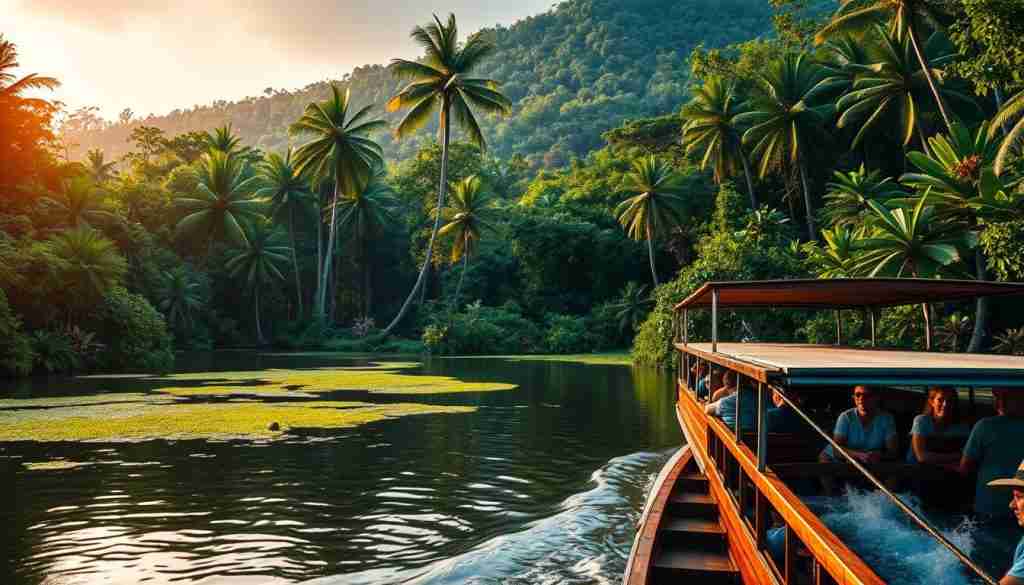
Dawn jungle walks reveal capuchin monkeys foraging and toucans darting through canopy gaps. Expert-led hikes teach survival skills like identifying medicinal plants. Evening cruise excursions spotlight caimans’ glowing eyes and pink dolphins breaking the water’s surface.
| Activity | Highlights | Best Time |
|---|---|---|
| Guided Jungle Trek | Spot rare poison dart frogs | Early morning |
| Sunset River Cruise | Photograph scarlet macaws | Dry season |
| Night Safari | Observe nocturnal animals | After dusk |
Iconic Locations: Alter do Chão and Beyond
Known as the “Caribbean of the Amazon,” Alter do Chão dazzles with ivory sands flanked by emerald waters. Kayak to secluded lagoons or join cultural tours led by indigenous guides. Nearby Lago Verde offers swimming spots frequented by playful dolphins.
When booking excursions, prioritize operators with certified naturalists. Small-group tours ensure personalized encounters while minimizing ecological impact. These experiences transform visits into meaningful connections with the wildlife and landscapes.
Cultural Encounters and Responsible Tourism
Engaging with the Amazon’s cultural heritage transforms trips into meaningful journeys. Visitors gain profound insights while supporting preservation efforts. This region hosts over 400 indigenous groups, each with distinct traditions tied to the land.
Interacting with Local Communities
Community-led tours offer authentic exchanges, like learning ancestral fishing techniques or creating traditional crafts. The Matsés people near Iquitos share medicinal plant knowledge, while the Yagua near Leticia demonstrate blowgun craftsmanship. These experiences directly fund schools and healthcare initiatives.
Travelers should seek operators collaborating with village councils. “Our partnerships ensure 80% of fees stay within communities,” explains a Manaus-based tour director. Always ask permission before photographing people or sacred sites.
Practicing Ethical Wildlife Tourism
Responsible wildlife travel prioritizes animal welfare over photo ops. Avoid attractions offering direct contact with wild species. Instead, choose guides who enforce distance protocols during jaguar sightings or macaw clay-lick visits.
| Practice | Ethical Approach | Impact |
|---|---|---|
| Wildlife Interaction | Observe from 30+ feet | Reduces stress on animals |
| Tour Group Size | Limit to 8 travelers | Minimizes habitat disruption |
| Guide Certification | Local experts only | Ensures accurate education |
Look for tour companies with Rainforest Alliance certification or WWF partnerships. These operators often fund reforestation projects, turning each visit into a conservation contribution.
Safety and Health Considerations
Prioritizing health safeguards transforms challenging expeditions into worry-free adventures. Guides emphasize proactive measures against tropical diseases and unpredictable wilderness conditions. Preparation begins weeks before departure, ensuring travelers meet medical requirements and understand risk mitigation strategies.
Required Vaccinations and Mosquito Protection
Visitors must consult healthcare providers for yellow fever immunizations—mandatory for entry in some regions. Hepatitis A and typhoid vaccines are strongly recommended. Anti-malarial medications remain critical, as mosquito-borne illnesses pose year-round risks.
Combat insect bites with DEET-based repellents and permethrin-treated clothing. Long sleeves and pants provide physical barriers during dawn/dusk outings. Lodges typically supply bed nets, but packing a travel-sized version adds security in remote reserve areas.
Travel Insurance and Emergency Protocols
Comprehensive insurance covering medical evacuations is non-negotiable. Verify policies include treatment for snakebites or allergic reactions. Reputable tour operators maintain satellite phones and know nearest clinics—ask about these protocols when booking.
Guides enforce strict rules around wildlife interactions:
- Maintain 20-foot distance from wild animals
- Avoid touching plants without expert verification
- Store food securely to deter curious creatures
Even seasoned adventurers benefit from guided reserve tours. Local experts recognize venomous species and swiftly address hazards like sudden weather changes or unstable terrain. Their knowledge turns potential crises into manageable incidents.
Insider Tips to Enhance Your Amazon Adventure
Unlocking the full potential of your visit demands strategic planning and local expertise. Savvy travelers blend cost-conscious decisions with immersive experiences, creating journeys that resonate long after departure. Balancing practicality with discovery ensures every moment counts.
Budgeting, Local Guides, and Custom Tours
Opt for community-run lodges instead of international chains—they often provide authentic stays at lower rates while directly supporting residents. Mid-week bookings and shoulder-season travel (April or November) can slash costs by 20-30% without sacrificing comfort.
Local guides transform standard tours into personalized adventures. “Our knowledge turns hidden waterfalls into private swimming holes,” shares a Manaus-based naturalist. These experts navigate lesser-known trails where giant otters hunt and rare orchids bloom, tailoring excursions to your pace and interests.
Custom itineraries thrive on flexibility. Pair sunrise birdwatching with afternoon village visits, or swap crowded boat tours for private canoe trips. Operators like Amazon Nature Tours offer modular packages, letting travelers add activities like nocturnal wildlife walks or photography workshops.
Prioritize operators with transparent pricing and sustainable practices. Small-group tours maximize interaction while minimizing environmental impact. This approach elevates your trip from a checklist visit to a deeply connected experience.
Conclusion
Embarking on a journey to Earth’s largest tropical wilderness requires thoughtful preparation and respect for its delicate ecosystems. This guide has outlined essential strategies—from seasonal timing to ethical wildlife encounters—that empower travelers to experience the Amazon rainforest responsibly. With its unmatched biodiversity, this region remains a living classroom where towering plants and rare animals thrive in harmony.
Key insights include prioritizing certified lodges, aligning visits with dry or rainy season advantages, and engaging local guides for authentic cultural exchanges. The rainforest’s role as the world’s ecological cornerstone cannot be overstated—it’s home to species found nowhere else and vital to global climate balance.
Armed with practical tips on transportation networks, health precautions, and community-led tours, adventurers can confidently navigate this natural wonder. Every visit supports conservation when travelers choose sustainable operators and minimize their footprint.
Ready to witness nature’s grandeur? Start planning your expedition today. Let this guide serve as your compass to one of the world’s most extraordinary destinations—where every trail and tributary reveals why protecting this home for future generations matters.