Peru’s identity thrives through ancient rituals, colorful celebrations, and living history. From the Andean highlands to Amazonian villages, this land blends pre-Columbian roots with Spanish colonial influences. Travelers seeking meaningful connections will find endless opportunities to engage with ancestral practices still shaping daily life.
This guide, informed by cultural anthropologist Nadia Vizcarra and regional experts, unlocks authentic ways to explore historic sites, savor regional cuisines, and participate in community-led initiatives. Learn how to respectfully interact with artisans in Cusco’s markets or decode the symbolism behind Inti Raymi festivals.
True immersion goes beyond sightseeing. It involves understanding Quechua phrases, recognizing sacred geography in landscapes, and supporting heritage preservation efforts. These connections create transformative journeys while helping sustain traditions for future generations.
Key Takeaways
- Peru’s living heritage combines indigenous roots with colonial influences
- Festivals and markets offer direct engagement with artistic traditions
- Learning basic local phrases enhances community interactions
- Regional dishes tell stories of agricultural history and fusion
- Respectful participation supports cultural preservation
Explore the Rich Tapestry of Peru’s Heritage
Peru’s heritage unfolds like a woven tapestry, blending millennia-old traditions with evolving practices. From towering stone citadels to vibrant textile markets, every thread tells stories of resilience and creativity.
Historical Landmarks and Ancient Civilizations
Sacsayhuamán and Ollantaytambo stand as testaments to Incan engineering brilliance. These sites reveal sophisticated stonework techniques still puzzling modern architects. Guided tours through these ruins, like the Cusco city tour, connect visitors with ceremonial spaces where celestial events guided agricultural cycles.
Colonial churches built atop Incan foundations showcase cultural layering. The Cathedral of Cusco displays both Spanish Baroque elements and subtle indigenous symbolism in its artwork.
Cultural Evolution through the Centuries
Highland communities preserve weaving techniques unchanged since pre-Columbian times. Using natural dyes and backstrap looms, artisans create textiles encoding ancestral knowledge. “Our patterns map sacred landscapes,” explains Quechua weaver Elena Quispe. “Each color represents mountain ranges or rivers.”
Coastal populations developed distinct art forms influenced by seafood abundance. Nazca pottery designs evolved into the intricate caballitos de totora reed boats still used by northern fishermen. These adaptations demonstrate how diverse landscapes shaped regional identities while maintaining shared artistic roots.
Essential Tips for Experiencing the Peruvian Culture
Delving into Peru’s living traditions requires curiosity and thoughtful participation. Start by learning basic Quechua phrases like “Allillanchu” (How are you?) to show respect for ancestral roots. Pair iconic destinations with hidden treasures—explore Machu Picchu at dawn, then venture to lesser-known sites like Choquequirao’s terraced ruins.
Cultural Immersion Strategies
Time visits around June’s Inti Raymi festival, where Cusco transforms into a stage for Incan solar rituals. Local guide Rómulo Ttito advises:
“Arrive early to witness offerings to Pachamama—these moments reveal our connection to the earth.”
Book community-led tours to remote villages, where weaving demonstrations and potato harvests unfold naturally.
Interacting with Locals and Gaining Insider Insights
Markets like Pisac offer more than textiles—ask artisans about symbolism in their designs. Share a pachamanca meal cooked underground, and listen to stories about mountain spirits. Prioritize homestays in the Sacred Valley to experience daily rhythms, from tending alpacas to brewing muña tea.
Balance iconic sites with spontaneous interactions. A Quechua-language greeting at Machu Picchu might spark conversations about ancestral engineering secrets. Remember: genuine interest in traditions fosters deeper connections than any checklist.
Discover Traditional Festivals and Vibrant Ceremonies
South America’s most captivating celebrations come alive through rhythmic movements and ancestral pageantry. These events blend spiritual reverence with artistic mastery, offering travelers windows into living traditions shaped over centuries.
Inti Raymi Festivities and Ritual Celebrations
Each June, Cusco hosts Inti Raymi, a nine-hour reenactment of Incan sun worship. Thousands gather at Sacsayhuamán fortress to witness priests in golden robes make offerings to Pachamama (Earth Mother). Elaborate processions feature dancers in tunics adorned with sacred geometric patterns.
Local communities spend months preparing ceremonial pottery for corn beer rituals. Artisans from San Blas district craft qeros (ritual cups) using pre-Columbian techniques. “These vessels connect us to our ancestors,” explains potter Marco Quispe.
Marinera Dance and Other Cultural Events
Trujillo’s Marinera Festival showcases Peru’s national dance through elegant handkerchief twirls and horseback choreography. Couples perform this courtship tradition in embroidered outfits reflecting Spanish-Moorish influences. Live creole music ensembles fuel the festive energy with guitars and cajón drums.
During preparations, artisans display ceramic cantaros used for decorating parade floats. Workshops in Moche Valley demonstrate how ancient pottery designs inspire modern festival décor.
| Festival | Key Elements | Community Role |
|---|---|---|
| Inti Raymi | Sun rituals, ceremonial pottery | 500+ local participants |
| Marinera | Courtship dance, creole music | 30+ neighborhood troupes |
Music forms the heartbeat of these celebrations. Andean panpipes during Inti Raymi echo mountain spirits, while coastal vals criollo songs narrate colonial-era stories. Both festivals demonstrate how communities preserve heritage through shared artistic expression.
Experience Peruvian Cuisine and Culinary Delights
Peru’s culinary landscape weaves ancestral stories into every bite. From highland stews to coastal ceviche, flavors mirror the nation’s diverse ecosystems and living heritage. Local chefs transform heirloom ingredients into edible art, preserving techniques passed through generations.
Savoring Local Dishes and Street Food Adventures
Lima’s street carts serve crispy anticuchos (grilled skewers) marinated in panca chili. In Arequipa, rocoto relleno peppers burst with spiced beef and raisins. Adventurous eaters can try Amazonian juane—rice wrapped in bijao leaves with wild game.
For authentic finds, visit markets like Mercado de Surquillo. Look for stalls with handwritten menus and steady local traffic. Always carry small bills and ask “¿Qué recomienda?” (What do you recommend?) to uncover hidden gems.
Exploring Traditional Markets and Cooking Classes
Cusco’s San Pedro Market offers rainbow displays of native potatoes and dried ají peppers. Join a guided tour to learn about medicinal herbs like maca root. Many vendors share family stories tied to their products.
Lima cooking classes teach ceviche mastery using leche de tigre marinade. Chef María Limaco advises:
“Balance acidity with sweetness—just like our ancestors did using local limes and choclo corn.”
| Dish | Key Ingredients | Linked Festival |
|---|---|---|
| Ceviche | Fresh corvina, limo chili | Festival del Mar (Trujillo) |
| Lomo Saltado | Beef, soy sauce, aji amarillo | Día de la Canción Criolla |
| Pachamanca | Marinated meats, hot stones | Inti Raymi Celebrations |
Food becomes theater during festivals. At June’s Corpus Christi in Cusco, bakers craft elaborate bread sculptures honoring saints. These edible artworks reflect centuries of religious syncretism and agricultural gratitude.
Uncover Authentic Art and Craft Experiences
Visitors find living history in the Sacred Valley’s workshops, where ancient techniques shape modern creations. Hands-on sessions reveal how ancestral knowledge survives through vibrant textiles and ceremonial pottery. These immersive experiences connect travelers to generations of artistic mastery.
Textile Weaving Workshops and Indigenous Techniques
Local cooperatives like Centro de Textiles Tradicionales teach backstrap loom methods unchanged for 800 years. Artisans demonstrate spinning alpaca wool using pre-Hispanic tools while explaining pattern meanings. “Our designs map sacred mountains,” says weaver Luzmila Huamán. “Each color comes from plants our ancestors cultivated.”
Pottery classes in Urubamba showcase Moche civilization influences. Participants mold clay using techniques depicted on 2,000-year-old ceramics. Workshops often link crafts to daily life—learn how communities use these vessels for traditional dishes like chuño cola stew.
| Workshop Type | Key Features | Historical Roots |
|---|---|---|
| Backstrap Weaving | Natural dyes, symbolic patterns | Incan record-keeping system |
| Ceramic Painting | Moche iconography | Pre-Columbian funeral art |
| Basket Crafting | Amazonian fibers | Shipibo-Conibo cosmology |
Modern tours balance preservation with innovation. Dye workshops now incorporate organic chemistry lessons about colorfastness. This way of teaching ensures traditions adapt without losing their essence. Many artisans fund children’s education through workshop fees, creating sustainable ways to protect their heritage.
Visitors leave not just with souvenirs, but with experiences that rewrite their understanding of Andean history. As one participant noted: “Touching the same tools used centuries ago makes the past feel vividly present.”
Journey Through Peru’s Iconic Landscapes and Hidden Sites
Cloud-kissed peaks cradle valleys where ancient stonework meets living traditions. This dramatic geography forms the landscape’s heart, shaping rituals and artistic expressions for millennia. Terraced slopes tell stories of agricultural ingenuity, while hidden trails lead to archaeological wonders beyond guidebooks.
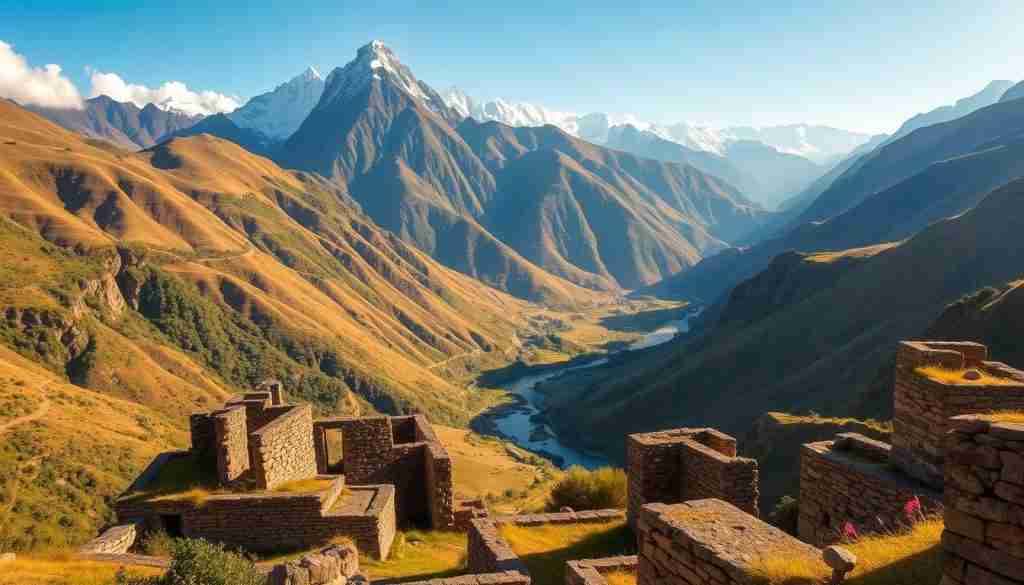
Where Stones Speak and Spirits Dance
The Sacred Valley remains the heart of Incan cosmology. Guides like Puma Quispe explain:
“These terraces aren’t just farms—they’re lunar calendars. Their curves mirror the Urubamba River below.”
Morning mists reveal Moray’s circular agricultural labs, where microclimates helped breed 3,000 potato varieties.
Ritual dances still animate villages near Machu Picchu. In Ollantaytambo, performers enact Qhapaq Qolla—a harvest dance honoring mountain spirits. Footwork patterns mimic terrace contours, blending movement with geography.
| Site | Cultural Significance | Hidden Feature |
|---|---|---|
| Chinchero | Inca weaving capital | Underground salt pans |
| Tipón | Water temple complex | Functional aqueducts |
| Choquequirao | “Sister Citadel” | Llama-shaped terraces |
Lesser-known sites offer ways to explore without crowds. The Qhapaq Ñan trail network winds past forgotten shrines where locals leave coca leaf offerings. These paths form an integral part of Andean spiritual customs, connecting modern communities to ancestral ways.
Agricultural customs thrive in Maras, where families still farm pink salt using pre-Columbian methods. Nearby, the circular Pumamarca ruins showcase how Incas aligned structures with solstice sunrises. Each discovery reveals new ways to honor Peru’s living heritage.
Engage with Local Communities for Deep Cultural Connections
True cultural understanding blossoms when travelers step beyond observation into participation. Community-led initiatives offer rare access to daily rhythms preserved across generations. These encounters transform tourists into temporary neighbors, fostering exchanges that benefit both visitors and hosts.
Community-Based Tourism and Traditional Living
In the Andean highlands, families welcome guests to harvest potatoes using ancient time-tested methods. Visitors learn to read the land’s signals—from cloud patterns predicting rain to soil colors indicating crop readiness. “We farm as our ancestors did,” shares Quechua host Julia Mayta. “The earth remembers.”
Textile cooperatives reveal artistry beyond market stalls. Tourists join master weavers in Chinchero to spin wool dyed with cochineal insects. Workshops often coincide with local festivals, where patterns woven months earlier debut in ceremonial attire.
| Experience | Location | Cultural Insight |
|---|---|---|
| Potato Farming | Sacred Valley | Incan agricultural calendar |
| Salt Harvesting | Maras | Pre-Columbian mining techniques |
| Weaving Retreats | Taquile Island | Symbolic knit caps (chullos) |
Homestays prioritize quality over quantity—families host only two guests at a time. Evenings might involve grinding maize for tomorrow’s chicha brew or hearing legends about mountain spirits. This land shares its stories through those who’ve nurtured it for centuries.
By participating rather than spectating, travelers help sustain traditions. As one visitor noted: “Learning to weave from Rosa wasn’t about making a scarf—it was understanding how textiles carry her family’s history.” These moments create lasting bonds far deeper than typical tourist interactions.
Immerse Yourself in Peru’s Living Traditions
Rhythmic panpipe melodies echo across cobblestone plazas as elders recount tales older than Machu Picchu’s stones. These living traditions form the heartbeat of local communities, where artistic expressions bridge ancient wisdom and modern life.
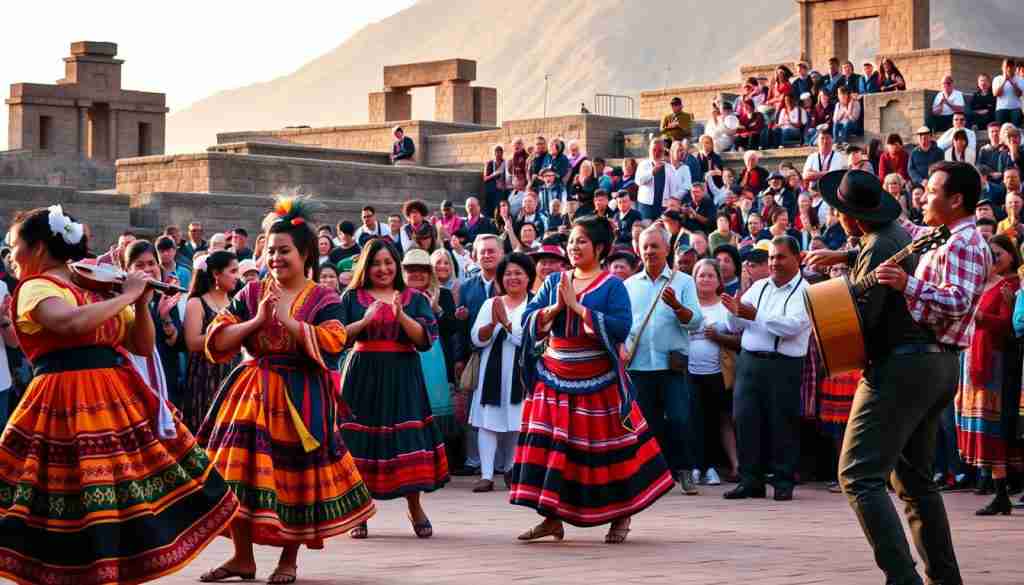
Traditional Music, Dance, and Oral Stories
Andean villages pulse with huayno music during weekly cultural immersion gatherings. Flutes crafted from condor bones harmonize with charango strings, recreating soundscapes from Incan times. In the Sacred Valley, the Danza de Tijeras (scissors dance) mesmerizes audiences with acrobatic leaps symbolizing mountain deities’ power.
Storytelling remains vital for preserving history. Quechua elders host rimanakuy sessions, sharing legends about constellation-guided harvests. “Our stories map the land’s memory,” explains Cusco guide Túpac Mayta. “They teach how to read clouds and honor apus (mountain spirits).”
Travelers can experience Peru’s artistic soul through:
- Moonlit Marinera dance lessons in Trujillo’s colonial courtyards
- Andean storytelling nights with Chinchero weavers
- Qhapaq Qolla ritual performances near Ollantaytambo’s terraces
Festivals like Paucartambo’s Virgen del Carmen showcase how music dance traditions evolve. Masked dancers reinterpret colonial-era stories through indigenous symbolism. Communities in the Sacred Valley often invite visitors to join rehearsals, offering rare backstage access.
To deepen connections, attend local communities’ weekly peñas (music gatherings). These informal jam sessions reveal how traditional melodies adapt to new instruments while maintaining ancestral rhythms. Many families in Calca district host intimate cultural immersion dinners paired with ballad performances.
By engaging with these living art forms, travelers help sustain heritage. As one Ayacucho musician notes: “When outsiders value our traditions, it inspires younger generations to keep them alive.”
Conclusion
Journeys through Peru’s living heritage leave indelible marks on curious travelers. By embracing expert strategies—learning Quechua greetings, joining harvest rituals, or mastering backstrap weaving—visitors unlock deeper connections with ancestral wisdom.
Prioritize encounters beyond guidebooks. Attend traditional dances where footwork mirrors mountain contours, or share meals with families preserving heirloom recipes. These moments transform trips into meaningful exchanges that support vibrant culture.
Peru’s rich mosaic thrives when explored with respect and curiosity. Wander salt pans tended since Incan times, decode textile patterns in remote villages, or trace celestial alignments at lesser-known ruins. Each interaction weaves personal stories into the nation’s enduring narrative.
Let this land’s rhythms inspire future adventures. Whether planning a return for Inti Raymi’s sun ceremonies or artisan-led treks, travelers ’ll find endless ways to engage with living traditions. Authentic experiences await those ready to listen, learn, and step gently into Peru’s rich tapestry.


