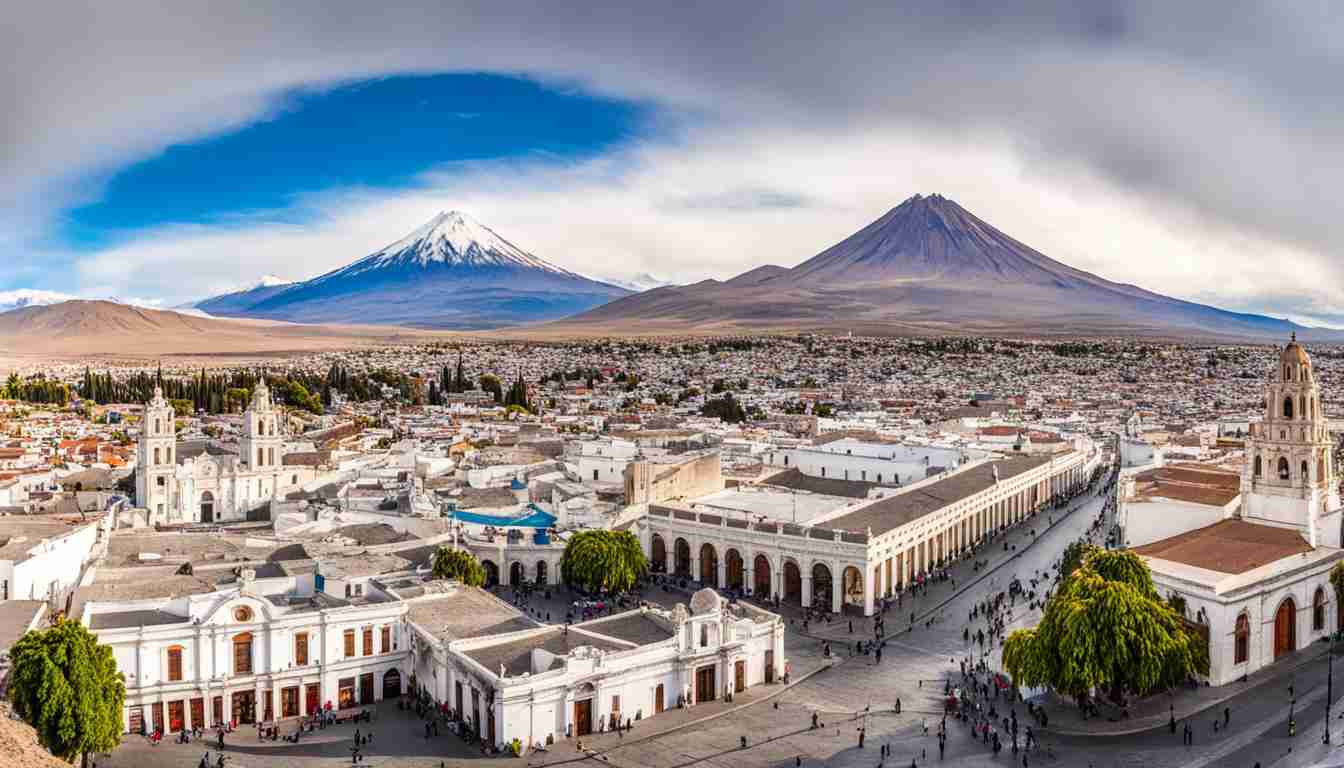
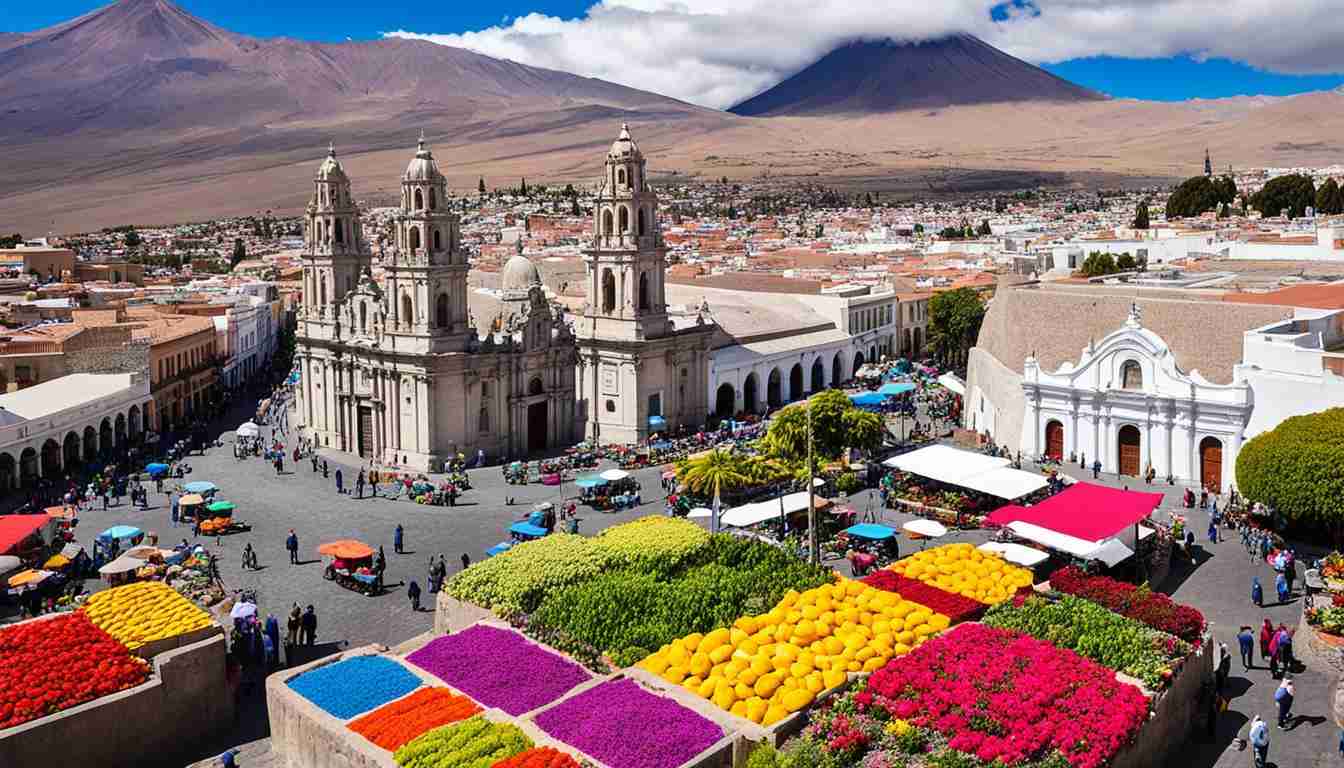
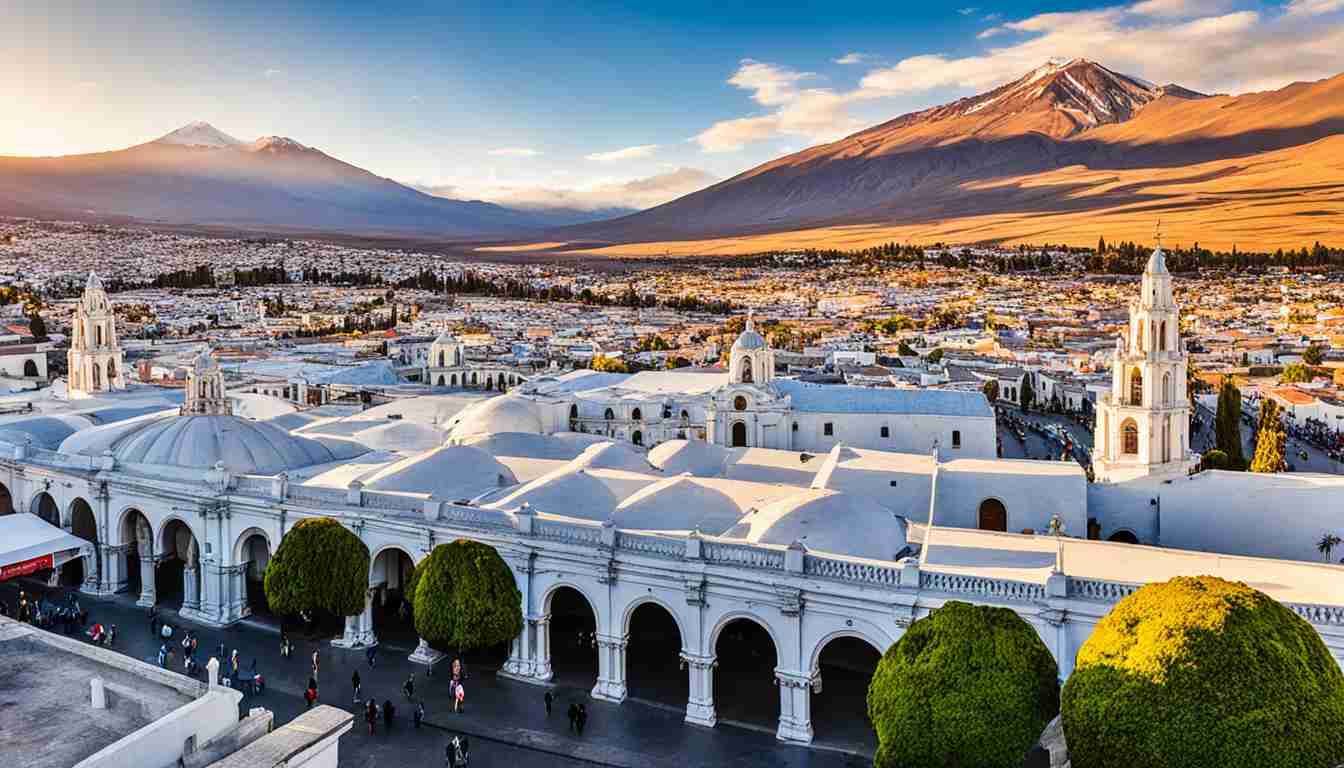
Arequipa is Peru’s second-largest city, known for its mix of old and new vibes. It sits at 7,660 feet high, under the Misti Volcano’s shadow. This “White City” is perfect for travelers wanting to see the southern Andes. With lots of sunshine and a nice climate, it’s great for enjoying the local culture, history, and food.
Walking through Arequipa, you’ll see beautiful plazas with palm trees and old buildings made of white sillar rock. Places like the Basilica Cathedral and Monasterio de Santa Catalina show off the city’s stunning architecture. These spots have made Arequipa a UNESCO World Heritage site.
There’s more to see outside the city too. Arequipa is close to the Colca Canyon and other volcanoes like Chachani and Pichupichu. It’s a great place for adventures or just relaxing. This guide will help you discover Arequipa’s hidden treasures.
Key Takeaways









- Arequipa is known as the “White City” for its distinctive architecture made from volcanic sillar rock
- The city enjoys a pleasant climate with around 300 days of sunshine per year
- Arequipa’s historic center is a UNESCO World Heritage Site, featuring colonial-era plazas and churches
- Proximity to natural wonders like Colca Canyon and various volcanoes make Arequipa an ideal base for outdoor adventures
- Arequipa offers a rich cultural heritage, diverse cuisine, and a variety of arequipa hotels and accommodation options
Introduction to Arequipa
Overview
Arequipa sits between the Andes mountains, offering a mix of history, stunning views, and lively culture. It’s known as the “White City” for its volcanic stone buildings. This city is a treasure in Peru’s heart.
Geography & Map
Arequipa stands high at 7,660 ft (2,335 m), among the highest cities in Peru. It’s surrounded by three grand volcanoes – Misti, Chachani, and Pichu Pichu. These volcanoes frame the city beautifully.
The valleys around Arequipa are green thanks to water from these volcanoes. The city has a population of about 1 million. It’s a bustling place where history and nature meet. Arequipa is perfect for visiting the Colca Canyon and other beautiful spots.
| Statistic | Value |
|---|---|
| Elevation | 7,660 ft (2,335 m) |
| Population | Around 1 million |
| Nearby Volcanoes | Misti, Chachani, Pichu Pichu |
Best Time to Visit Arequipa
Climate & Weather
Arequipa has a lovely climate with lots of sunny days. It’s in a high desert area. The city sits at 7,660 feet, which makes the weather nice.
Days are usually around 65°F, but it doesn’t get too hot or cold. Nights can get down to 45°F. This makes the weather perfect for being outside.
The rainy season is from December to March. February is the wettest month. But, Arequipa gets a lot of sun, about 300 days a year.
This means you can visit any time and enjoy the sun. The dry season, from April to November, is best for seeing the city and nature.
Remember to drink lots of water to avoid getting sick from the high altitude. The best time to see Arequipa is from April to November. The weather is great for outdoor fun.
“Arequipa experiences consistent clear skies and sunshine throughout the year, making it a delightful destination no matter the season.”
History of Arequipa
Arequipa’s story goes back over a thousand years before the Inca Empire was famous. The Aymara people lived there as early as 1,000 years ago. They called their settlement “summit behind the peak,” named after the Misti Volcano.
In 1300 AD, Mayta Capac, the fourth Sapa Inca, came to the area with his group from Cusco. This was the start of Inca rule in the region. Later, when the Spanish arrived in Peru, Garcí Manuel de Carbajal officially founded the city of Arequipa in 1540.
From the 16th to the 18th centuries, under Spanish rule, Arequipa became a key spot for the silver trade. This was when the city’s unique look started to form. The white sillar stone from the area was used for grand buildings like the mansions of the wealthy, beautiful churches, and the famous Monasterio de Santa Catalina.
| Key Dates in Arequipa’s History | Event |
|---|---|
| 1,000 years ago | Aymara indigenous groups inhabited the Arequipa region |
| 1300 AD | Arrival of the Inca Mayta Capac and his entourage |
| 1540 | Re-founding of the city by the Spanish settler Garcí Manuel de Carbajal |
| 16th-18th centuries | Arequipa flourished as a hub for the silver trade under Spanish colonial rule |
Arequipa’s history has deeply influenced the city. It has shaped its culture and architecture, which visitors can still see today.
What to Pack for Arequipa
When planning your trip to Arequipa, Peru, think about the area’s varied climate and landscapes. It’s important to wear layers that you can easily add or remove. This way, you can stay comfortable as the temperature changes during the day.
Travel Tips
For your visit to Arequipa, make sure to bring these must-haves:
- Sun hat or cap to protect against the intense solar radiation
- Sunglasses to shield your eyes from the glare
- Light, breathable layers like a jacket or sweater for cooler mornings and evenings
- Comfortable, closed-toe walking shoes or hiking boots for city exploration and day trips
- High SPF sunscreen to safeguard your skin
For trips to the mountains and highlands near Arequipa, get ready for strong sun and winds during the day. Nights can be much cooler. So, consider packing:
- Warm, insulating layers such as a down jacket or fleece
- Gloves, scarf, and a warm hat to protect against the chill
- Waterproof and windproof outerwear to shield you from the elements
- Sturdy, broken-in hiking boots or shoes with good traction
Remember, no matter your plans, bring a portable charger, camera, and any important travel documents. This will help make your what to pack arequipa trip both smooth and unforgettable.
“Proper packing is crucial for successful trips to Peru due to its diverse landscapes and climates.”
How to Get to Arequipa
Arequipa is easy to reach by air and land. You can fly in or take a bus to get there. There are many options to choose from.
By Plane
Arequipa’s Manuel Ballon International Airport (AQP) has flights to Lima and Cusco. The flight from Lima to Arequipa is about 1 hour and 30 minutes. The trip from Arequipa to Cusco takes around 1 hour.
By Bus
Arequipa has two big bus stations, Terminal Terrestre and Terminal Terrapuerto. They are close to the city center. For trips to places like Cusco, Puno, or Lima, choose non-stop overnight buses with companies like Cruz del Sur, Oltursa, or Exclusiva.
Getting from Arequipa to Colca Canyon
The drive from Arequipa to Chivay is about 100 miles (160 km) and takes 3 hours with a private car. It’s longer with a public bus. Booking a tour with roundtrip van transport from Arequipa makes visiting the canyon easy and comfy.
The road to Colca Canyon goes through the La Salinas and Aguada Blanca National Reserve. This area is full of volcanoes, lagoons, and wild vicuñas.
arequipa travel info
Arequipa sits in the heart of Peru’s Southern Andes. It’s a place where food lovers, history buffs, and nature enthusiasts come together. The city is the second-largest in Peru and offers a real taste of local life.
The Plaza de Armas is a key spot in Arequipa. It’s a beautiful square with the Basilica Cathedral and old buildings around it. The historic center is a UNESCO site, known for its ashlar architecture from white volcanic stone.
Arequipa is 2,335 meters (7,660 feet) high. Most people won’t get altitude sickness, but it’s wise to take it easy for a day or two. This helps your body adjust to the high altitude.
For a good place to stay, the Arequipa old town is best. It’s near the main sights but can be more expensive. If you’re watching your budget, consider Selva Alegre Park. It’s a bit outside the old town but still close to the city’s main attractions.
| Key Arequipa Travel Information | Details |
|---|---|
| Altitude | 2,335 meters (7,660 feet) above sea level |
| Best Time to Visit | May to September (dry season) |
| Transportation |
|
| Accommodation |
|
Arequipa is perfect for those who love food, history, or nature. It’s a place that offers a memorable trip with something for everyone.
Top Attractions in Arequipa
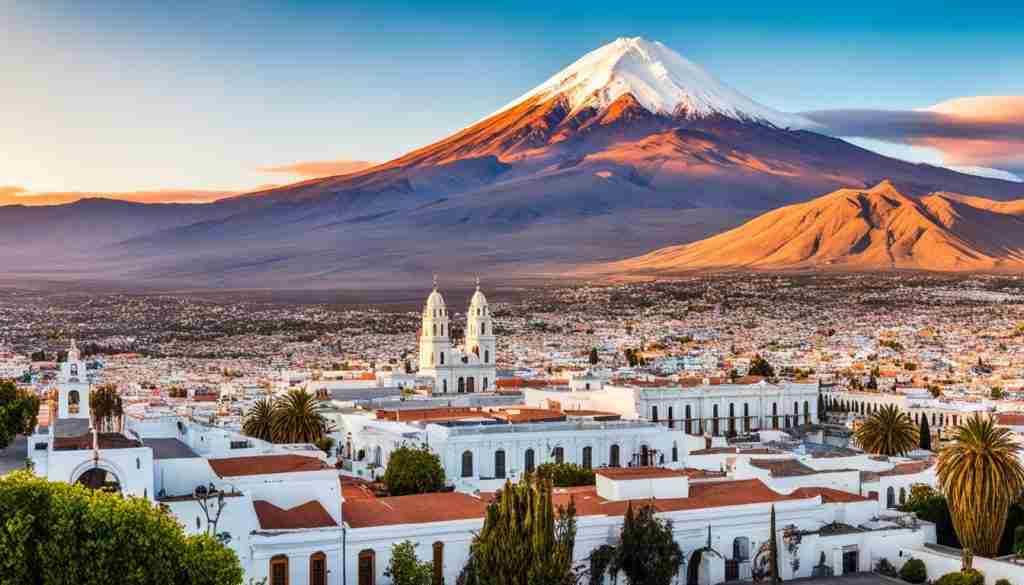
Arequipa is a city in the Andes of southern Peru. It’s known for its beautiful colonial buildings and lively culture. Visitors love the Plaza de Armas, the Basilica Cathedral, and the Monasterio de Santa Catalina.
Plaza de Armas
The Plaza de Armas is one of Peru’s most stunning main squares. Locals meet here, read under palm trees, and watch birds. Tourists come to see the Basilica Cathedral and make wishes at the Tuturutu Fountain.
Basilica Cathedral
The Basilica Catedral, or Catedral de Arequipa, stands at the Plaza de Armas’ northeast corner. It’s over 500 years old, rebuilt after earthquakes. Inside, you’ll find a neo-Gothic pulpit, a Belgian organ, and an English clock tower.
Monasterio de Santa Catalina
The Monasterio de Santa Catalina is a 16th-century convent complex. It’s famous for its bright colors, narrow streets, and old architecture. Visitors can see the nuns’ quarters and learn about the convent’s history.
“Arequipa is a captivating city nestled in the Andes of southern Peru, renowned for its stunning colonial architecture and vibrant cultural heritage.”
Food & Dining in Arequipa
Arequipa is a city in southern Peru that’s a food lover’s dream. It has many great restaurants and a lively food scene. You can try traditional dishes and new gourmet foods here.
Local Cuisine
Arequipa is famous for its picanterías. These places serve chicharrón, which is crispy fried pork with corn. You get a soup, a main dish, and it’s affordable, costing between S/. 10 to S/. 30.
Don’t miss the ceviche either. It’s a fresh fish dish marinated in citrus juices.
Best Restaurants
Arequipa also has many gourmet spots with new takes on local food. La Capitana is known for its amazing chicharrón. Cafe Verde is great for vegetarians and has become a hit with visitors.
El Buda Profano offers a unique mix of Peruvian and Japanese flavors. It’s a dining experience you won’t forget.
If you love meat, Zig Zag Restaurant is the place to go. They serve top-quality steaks, including beef, lamb, and alpaca. Try their Albondigas de tres carnes or Trio especial de carnes for a treat.
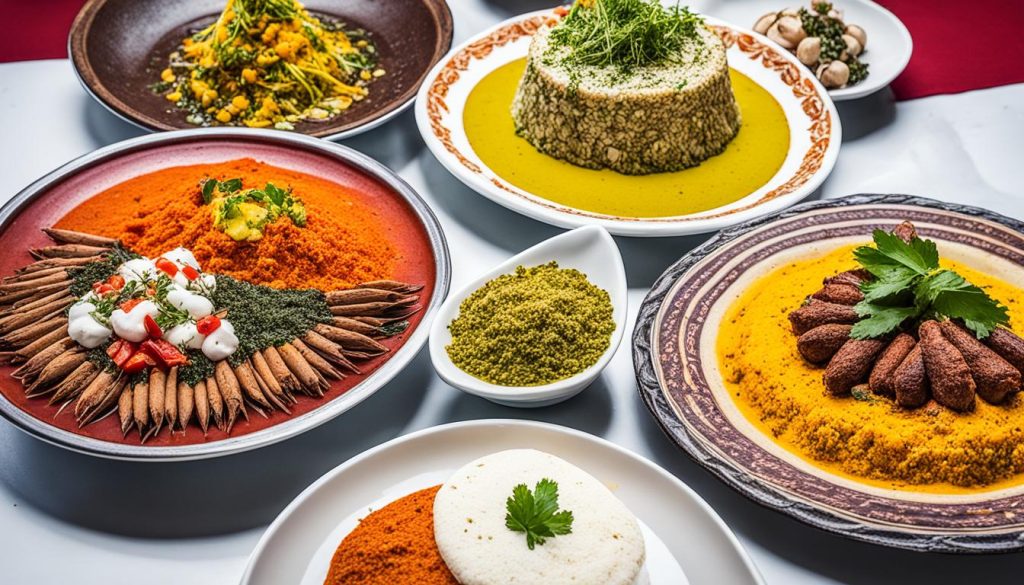
“Arequipa’s restaurant industry supports thousands of jobs and accounts for a significant portion of the city’s GDP, emphasizing the economic importance of the food and dining sector in the area.”
Arequipa has something for everyone, from traditional Peruvian dishes to modern cuisine. Its food scene and culture make it a must-visit for food lovers.
Where to Stay in Arequipa
The historic old town of Arequipa is the best place to stay. It’s near the Plaza de Armas and Basilica Cathedral. Hotels here are convenient but pricey.
For a budget-friendly option, check out the area around Selva Alegre Park. It’s just outside the old town but still close to the action.
La Quinta and Mango Hostel B&B are top choices in Selva Alegre. La Quinta has great WiFi, a tasty breakfast, and modern rooms. Mango Hostel B&B offers a cozy stay with a homey feel. These spots let you enjoy Arequipa without spending too much on lodging.
| Hotel | Location | Amenities | Pricing |
|---|---|---|---|
| La Quinta | Selva Alegre | – Excellent WiFi – Great breakfast – Modern, clean rooms |
Moderate |
| Mango Hostel B&B | Selva Alegre | – Comfortable stay – Homey atmosphere |
Budget-friendly |
Choosing to stay in the historic district or near Selva Alegre Park puts you close to Arequipa’s best spots. You’ll be able to easily check out the city’s hotels and attractions.
Conclusion
Arequipa, known as the “White City” of Peru, is a top spot for travelers in South America. It boasts beautiful colonial architecture made from volcanic ash. The city is full of culture and amazing food, making it a great place to visit.
The city has many things to see, like the Plaza de Armas and the Monasterio de Santa Catalina. You can also explore the stunning Colca Canyon nearby. Arequipa is a great place to stay before going to higher places like Cusco because of its good climate and many places to stay.
Even though you should take care of yourself, Arequipa is safe for tourists. It’s a mix of culture, history, and nature. Arequipa is a special part of Peru, letting visitors dive into the country’s traditions and beauty.