Discover Lima’s mix of old-world charm and modern culture. The city is full of sights and activities for visitors. You can explore historic landmarks, ancient civilizations, or enjoy the famous food scene.
Key Takeaways






- Lima is home to a third of Peru’s population, making it a bustling metropolitan hub.
- Explore the historic Plaza de Armas and the Convento de San Francisco’s catacombs.
- Discover the rich cultural heritage at museums like the Larco Museum and Museo de Arte de Lima.
- Experience Lima’s vibrant neighborhoods and indulge in the city’s renowned culinary offerings.
- Don’t miss the mesmerizing Circuito Magico del Agua, a must-see attraction in the city.
Explore Colonial Architecture in the Historic Center
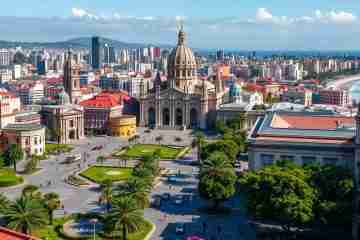
Start your Lima adventure in the city’s historic core, a UNESCO World Heritage site full of historic spots. At its heart is the stunning
Plaza de Armas
, also known as the Plaza Mayor. This large square was the heart of the 16th-century city founded by Spanish conquistador Francisco Pizarro.
Many of the original buildings were lost in the 1746 earthquake. But today, the plaza is flanked by beautifully rebuilt structures. They show off the historic architecture of Lima. Look for the Baroque details and the wooden balconies with their intricate carvings.
The Palacio de Gobierno, the Archbishop’s Palace, and the Cathedral of Lima stand out. They show the beauty and grandeur of Peru’s capital. Walking through this area feels like stepping back in time. You’ll experience the deep history of Lima.
“The Plaza de Armas in Lima is a true embodiment of the city’s colonial past, where the past and present coexist in harmonious splendor.”
Discover the Catacombs at Convento de San Francisco
Lima’s historic Convento de San Francisco is a key spot for those interested in the city’s past. This Franciscan monastery and church dates back to the 17th century. Underneath the church, a network of catacombs holds the remains of about 70,000 people. They were buried here when it was Lima’s first cemetery.
Visitors can wander through the catacombs’ narrow paths. They’re filled with bones and skulls arranged in detailed patterns. This vast underground space is part of a larger complex. It also has a big library with over 25,000 books in Spanish, English, and Quechua from the 16th to the 20th centuries. Plus, there’s a collection of valuable religious art, including a mural of the Last Supper with guinea pig.
The Convento de San Francisco was blessed in 1673 and finished in 1774. It’s one of Lima’s oldest and most important historic places. In 1989, it was the first site in the city to be named a World Heritage Site by UNESCO. Now, it attracts visitors worldwide with its Baroque architecture, beautiful artwork, and the fascinating catacombs.
“The Catacombs are a major attraction at the Monastery, drawing a significant number of visitors.”
Guided tours let visitors see the church, convent, and catacombs. They offer a special look into Lima’s colonial history and the lasting impact of the Franciscan order.
Marvel at Museums Showcasing Peru’s Ancient Civilizations
Lima, the vibrant capital of Peru, is filled with museums that show off the country’s rich culture and ancient past. The Museo Larco is a top spot, with a huge collection of pre-Columbian ceramics.
The Museo Larco is in an 18th-century mansion. It has over 45,000 pieces, focusing on the Moche and Chimú cultures. You can see over 30,000 more artifacts in the Visible Storage section.
Lima has more museums to explore Peru’s ancient history. The Museo de la Nación gives a broad view of the country’s cultures. The Museo Nacional de Arqueología, Antropología e Historia is the oldest and biggest museum in Peru, filled with archaeological treasures.
These museums in Lima let you see Peru’s history up close. You’ll find everything from Moche ceramics to Inca traditions. They’re perfect for art lovers, history fans, or anyone curious about Peru’s past.
Lima sightseeing recommendations: Explore Historical Sites
Lima is not just about colonial landmarks. It’s also a place with many pre-Columbian archaeological sites. These sites show us the city’s ancient history. The Huaca Pucllana is one such site, dating back to around AD 400. It was part of the Lima culture.
Visitors can see the ruins and learn how important this place was. It was a sacred site for the pre-Inca people who lived there.
There are more historical sites in Lima, like the Lugar de la Memoria museum. It honors the victims of Peru’s difficult past. And there’s the Fortaleza del Real Felipe, a fort from the 18th century. These places let you dive into Lima’s history and see how different cultures have shaped the city.
Huaca Pucllana
Huaca Pucllana is a key pre-Columbian site that shows us the Lima culture. This civilization lived from AD 200 to 700. The site has adobe and clay pyramids, plazas, and ceremonial areas.
These ruins are well-preserved, giving us a peek into the past. We can see how the people lived and what they believed in.
- Explore the ruins and learn about their importance in the daily life and rituals of the Lima culture.
- See the amazing adobe and clay work of the pre-Inca people.
- Find out why different structures like the main pyramid and ceremonial platforms were built.
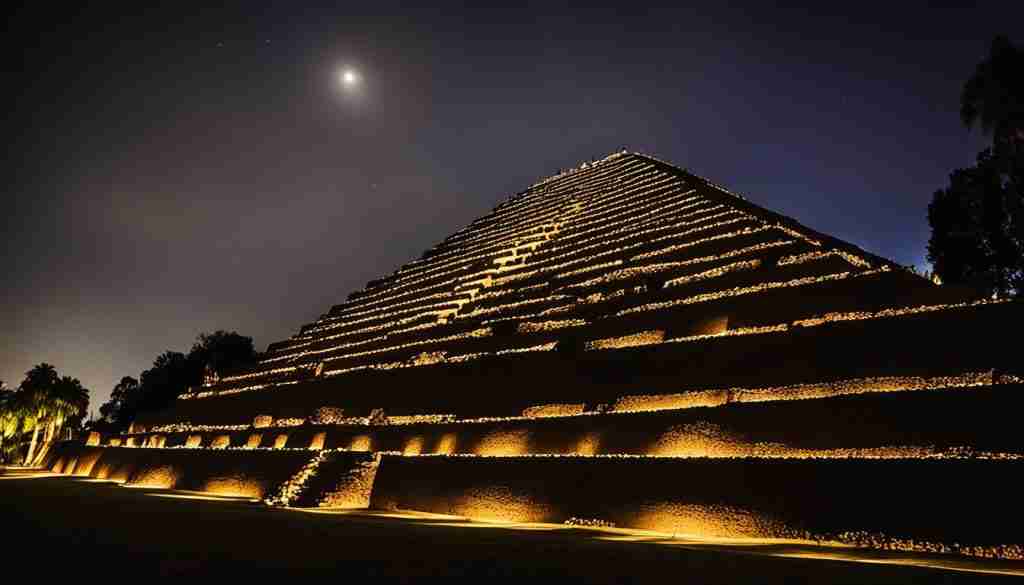
Going to Huaca Pucllana is key to exploring Lima’s history. It’s a chance to see the culture of the ancient people who lived there. This pre-Columbian ruin lets you experience the past in a unique way.
Experience Lima’s Vibrant Neighborhoods
Beyond the major landmarks, exploring Lima’s diverse neighborhoods is a great way to dive into the city’s culture. The upscale Miraflores district is known for its parks, restaurants, and lively shopping scene. It’s located on cliffs above the Pacific Ocean.
Wander through the Parque del Amor, admiring the mosaic-lined walls and the iconic sculpture El Beso. Or explore the charming streets of the bohemian Barranco neighborhood.
For a taste of Lima’s local life, visit the Parque Kennedy in Miraflores. It’s beloved by both locals and visitors for its lush gardens and many cats. Barranco, often called the “SoHo of Lima,” has hidden courtyards linked to old colonial mansions and famous families.
This gives you a peek into the neighborhood’s history. Wander through the Barranco Arts District. It’s full of art galleries and studios showing off the talents of Peruvian artists in a lively, bohemian setting.
“Barranco is known for its hidden courtyards associated with old colonial mansions and prominent families, offering a glimpse into the neighborhood’s history.”
| Neighborhood | Highlights |
|---|---|
| Miraflores | Parque del Amor, Larcomar shopping center, ocean views |
| Barranco | Bohemian arts district, historic colonial mansions, vibrant nightlife |
| Surquillo | Mercado de Surquillo, a bustling local market |
Exploring Lima’s neighborhoods lets you experience the local culture and find hidden gems. Whether you’re walking through Barranco’s charming streets or trying the food in Miraflores, you’ll be drawn to the city’s energy and diversity.
Indulge in the Culinary Scene
Lima, the vibrant capital of Peru, is known as one of the world’s top food destinations. It’s a mix of indigenous ingredients, traditional techniques, and global tastes. This mix has created the famous “New Peruvian” cuisine loved by food lovers everywhere.
When you visit Lima, you’ll find a wide range of flavors at its restaurants. Skilled chefs use the country’s rich agricultural resources and culinary traditions. You can choose from fancy restaurants to casual spots to try the city’s food.
Try the famous ceviche, a dish with fresh seafood marinated in citrus juices. It’s full of vibrant flavors. Or, enjoy the hearty stews that have fed Peruvians for years. You can also explore new fusion dishes that show off the creativity of Lima’s chefs.
In 2023, four restaurants in Lima were named among the World’s Best Restaurants. Mayta, Kjolle, Maido, and Central are known for their unique Peruvian dishes. They’ve gained fame worldwide.
Mayta combines traditional Peruvian tastes with modern cooking methods. Chef Jaime Pesaque uses the country’s wide range of ingredients. Kjolle, run by chef Pía León, focuses on using local ingredients that are often overlooked.
Maido mixes Japanese and Peruvian flavors for a unique Nikkei experience. Central, led by chef Virgilio Martínez, takes diners on a journey through Peru’s different regions and ecosystems.
Mater Iniciativa, led by Malena Martínez at Central, is dedicated to exploring and preserving Peru’s food heritage. Their work highlights Lima’s commitment to its culinary traditions.
Whether you want a fancy dining experience or a casual food adventure, Lima has it all. The city’s food scene is full of flavors that have made Peru a top food destination.
Witness the Mesmerizing Circuito Magico del Agua
The Circuito Magico del Agua, or the “Magic Water Circuit,” is a top attraction in Lima. It’s in the beautiful Park of the Reserve. Since 2007, it has been a series of 13 fountains that light up. It’s the biggest fountain complex in a public park, as noted in the Guinness Book of World Records.
The main attraction is the Fuente Mágica, a fountain that shoots water over 80 meters high. There’s also the Fuente Túnel de las Sorpresas, a 35-meter tunnel of water. It offers a unique and mesmerizing experience.
The Fuente de la Fantasia is the highlight of the Circuito Magico del Agua. It features a laser and light show that matches the music. This turns the park into a magical place, making it a top spot in Lima.
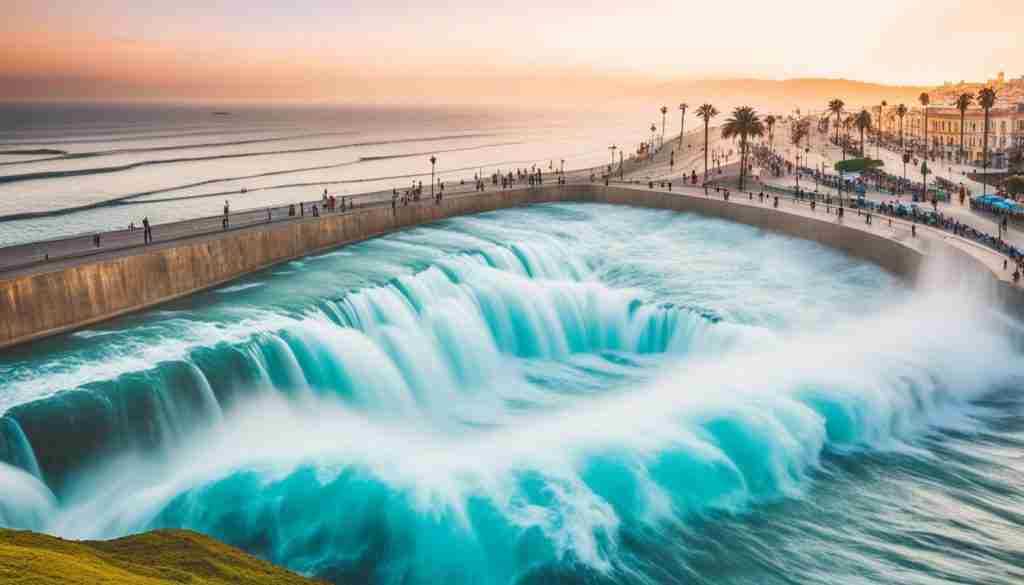
This park is designed for families and offers fun for all ages. Visitors can see Lima’s fountains, light and water shows, and the beautiful Park of the Reserve. Its amazing displays and unique vibe will surely impress everyone who goes.
Explore Other Notable Attractions
Lima has more than just famous landmarks and museums. It has many other attractions worth seeing. The Museo de Arte de Lima (MALI) is a key art museum in the city. It’s in a beautiful Beaux-Arts building and has over 3,000 years of art history.
There’s also the Monumental Callao, brought back to life by graffiti artists. And don’t miss the Museo Oro del Peru with its amazing ancient gold pieces. Other places include the historic San Pedro Church, the National Museum of Archaeology, Anthropology, and History, and the peaceful Parque El Olivar with its old olive trees.
Museo de Arte de Lima
The Museo de Arte de Lima (MALI) is perfect for those who love art and culture. It’s in a stunning Beaux-Arts building and has a collection over 3,000 years old. You’ll see everything from pre-Columbian textiles to modern paintings.
“The Museo de Arte de Lima is a true gem, offering a comprehensive look into the artistic brilliance of Peru’s past and present.” – Jenna, art enthusiast
Conclusion
Planning a visit to Lima, Peru, means getting ready for an amazing adventure. You’ll explore vibrant neighborhoods, rich culture, and top museums. From the historic city center to ancient sites, there’s a lot to see.
Marvel at the stunning Circuito Magico del Agua fountains. Enjoy the famous “New Peruvian” food. Dive into the local culture for a trip you won’t forget.
With great tips and recommendations, you can make the most of your visit. See the colonial architecture, ancient sites, and museums. This will give you a deep look into Peru’s history and today.
Lima is a city full of life and culture. It’s perfect for exploring and making memories. So, get ready to dive into the local scene and enjoy everything Lima has to offer.