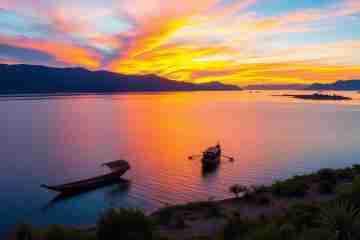
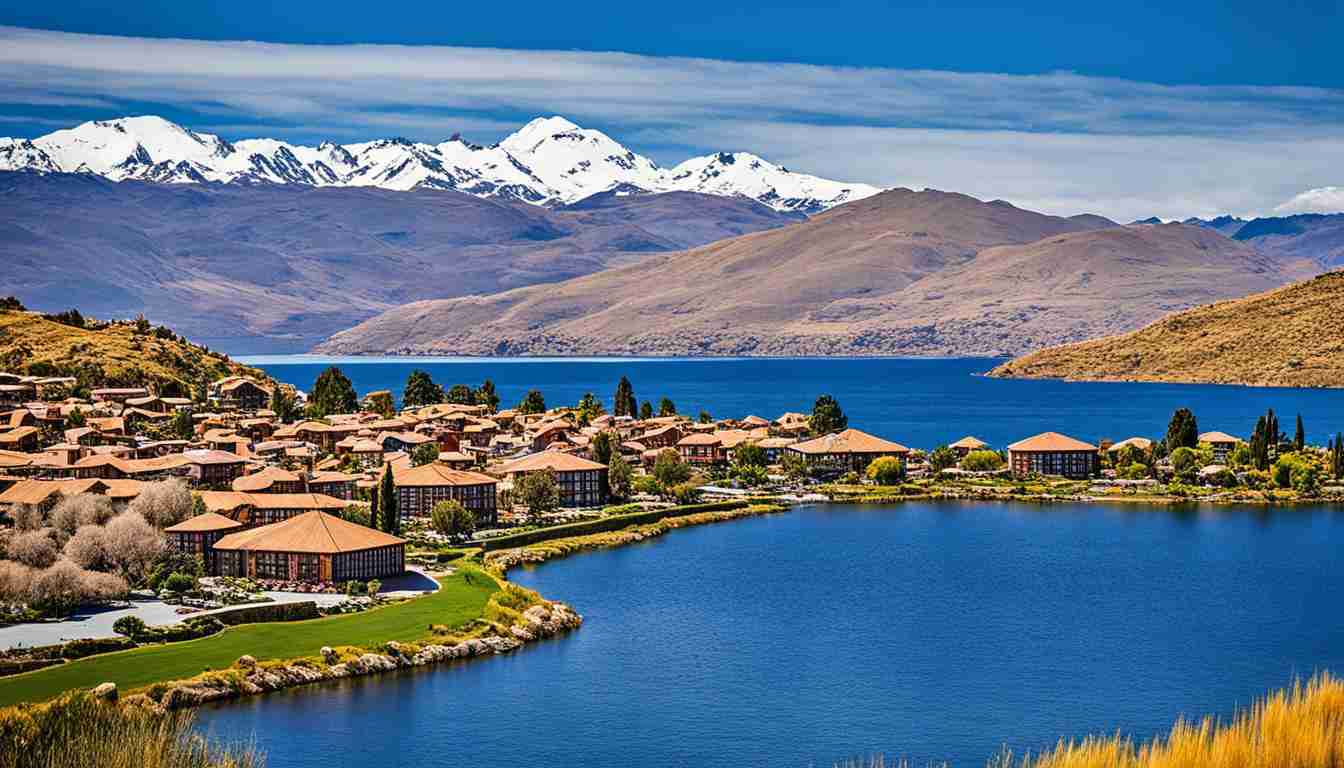
Lake Titicaca is the highest navigable lake in the world, located in South America. Its deep blue waters seem to blend with the sky. A ring of snow-capped mountains makes it feel like you’re floating on the highest spot on earth.
You can visit the lake from its shores in Peru and Bolivia. Many travelers start in Puno, on the Peruvian side of Lake Titicaca. Puno is famous for its Fiesta de la Virgen de Candelaria, an annual celebration.
From Puno, you can take a speedboat to island-hop. This offers a unique chance to connect with local families. The islands of Taquile, Amantani, and Isla del Sol are full of ancient traditions and pre-Inca ruins.
The Uros Islands are made of reeds and float on the lake. They are built by hand and are a sight to behold.
Key Takeaways








- Lake Titicaca is the world’s highest navigable lake, shared between Peru and Bolivia
- Explore the floating Uros Islands and other islands like Taquile and Amantani
- Discover ancient Inca ruins and experience traditional Aymara culture
- Take a boat tour from Puno to island-hop and immerse in the lake’s natural beauty
- Puno is the main hub to access Lake Titicaca, known for its annual Fiesta de la Virgen de Candelaria
Overview of Lake Titicaca
Lake Titicaca sits high in the Andes, on the border of Peru and Bolivia. It’s the world’s highest navigable lake, at 12,500 feet above sea level. This makes it a natural wonder.
The lake’s blue waters are surrounded by snow-capped mountains. This creates a stunning view that has amazed people for years. Lake Titicaca is not just beautiful; it’s also a place of rich culture. The Aymara and Quechua communities keep their traditions alive on the lake’s islands.
Island-Hopping Experience
Visiting Lake Titicaca lets you explore its island-hopping experience. You can go to the famous Uros floating islands. Here, the Uros people live in homes made of reeds.
Taquile Island is known for its skilled weavers. They make colorful clothes with secret messages about the wearer’s life. Amantani Island was once part of the Inca Empire. It’s a place to really dive into local culture, with no running water and cold summers.
“Lake Titicaca is a true natural wonder, a place where the ancient and the modern coexist in perfect harmony.”
Climate and Weather
Lake Titicaca sits high in the Altiplano, with a semi-arid climate. It has dry and rainy seasons. The lake’s high altitude means temperatures are moderate, averaging 60°F to 65°F (15°C to 18°C) all year. But, nights get very cold, so it’s important to bring warm clothes.
Dry Season
The dry season at Lake Titicaca is from April to November. This time is sunny and pleasant, making it the best time for visitors. The weather is clear, and days are warm.
Rainy Season
The rainy season at Lake Titicaca is from December to March. This season brings more clouds, showers, and sometimes thunderstorms. January and February see the most rain.
The lake titicaca climate and lake titicaca weather stay fairly consistent all year. This makes it a great place to visit any time to see its beauty and culture.
Best Time to Visit Lake Titicaca
Nestled high in the Andes Mountains, Lake Titicaca is a stunning spot with rich culture. The best time to visit depends on the season. Each season offers something special.
The peak season is from June to August. This is when the weather is sunny and dry. It’s the busiest time, but it’s perfect for seeing the lake and its islands.
The shoulder season is from April to May and September to November. It’s a great time to visit with fewer people around. You’ll see the area in bloom after the rains.
| Season | Months | Weather Conditions | Crowds |
|---|---|---|---|
| Peak Season | June – August | Sunny, minimal rainfall | Higher |
| Shoulder Season | April – May, September – November | Pleasant, lush landscapes | Lower |
| Rainy Season | December – March | Frequent rainfall, lush surroundings | Lowest |
The rainy season is from December to March. It’s a time to see the lake with lush greenery and fewer people. But, it might rain a lot, making outdoor activities harder.
Choosing the best time to visit Lake Titicaca depends on what you like. If you want sunny days and fewer people, go during the dry season. For lush landscapes and fewer crowds, the rainy season is great.
“Lake Titicaca is a stunning natural wonder that offers visitors a unique and unforgettable experience. The best time to visit depends on your preferences, but the dry season and shoulder season are excellent choices for those seeking optimal weather and fewer crowds.”
Geography and Map
Lake Titicaca is a stunning natural wonder in the Andes mountains. It spans across southern Peru and western Bolivia. This majestic lake is the highest navigable lake in the world, sitting at 12,500 feet above sea level.
It has a surface area of about 3,200 square miles. This makes it the second-largest lake in South America, after Brazil’s Maracaibo.
Location and Elevation
Lake Titicaca lies on the border of Peru and Bolivia. It stretches 120 miles from northwest to southeast. The lake’s width reaches up to 50 miles.
Its depth ranges from an average of 460 to 600 feet. The deepest point is 920 feet.
Population
The Titicaca National Reserve in southern Peru’s Puno region is home to a vibrant population. Puno city, the region’s capital, has about 121,000 people. The Puno Province has around 228,000 inhabitants.
These communities, both indigenous and modern, live in the unique ecosystem around Lake Titicaca.
| Metric | Value |
|---|---|
| Lake Area | 3,200 square miles (8,300 square km) |
| Lake Elevation | 12,500 feet (3,810 meters) |
| Lake Length | 120 miles (190 km) |
| Lake Width | 50 miles (80 km) |
| Lake Depth | 460 to 600 feet (140 to 180 meters) |
| Puno City Population | 121,000 |
| Puno Province Population | 228,000 |
History of Lake Titicaca
The history of Lake Titicaca goes back centuries to the Kolla people who lived in the high plains around it. Before the Inca Empire rose, the Kolla built special tombs called “chullpas”. These tombs show their lasting cultural mark.
Pre-Inca Civilizations
The Inca people saw Lake Titicaca as sacred. They thought it was where their god Viracocha and their first leader, Manco Capac, were born. This shows how deeply the people connected with the lake’s spiritual side.
Inca Empire
At the peak of the inca empire lake titicaca, the lake was key to their culture and economy. The Inca saw its value and made it a key spot in their trade and politics.
Spanish Colonization
In the 16th century, Spanish settlers changed the pre-inca civilizations lake titicaca and spanish colonization lake titicaca. Puno became a major port and mining center. Spanish missionaries brought Christianity, mixing it with local traditions.
Lake Titicaca’s history is rich, showing the lasting effects of indigenous cultures, empires, and colonial rule. It still draws visitors worldwide, offering a peek into its long history and traditions.
Lake Titicaca Islands
Lake Titicaca is home to islands that offer a peek into local culture. The Uros Islands and Taquile Island are famous for their traditions. They show off the Aymara and Quechua communities’ rich heritage.
Uros Islands, Peru
The Uros Islands, or “Floating Islands,” are man-made islands from totora reeds. They float on Lake Titicaca. Visitors can see the Uros people’s homes and learn about their life on the lake.
They can also see how the islanders weave and live off the lake.
Taquile Island, Peru
Taquile Island is close to the Uros Islands and is known for its textiles. It’s a UNESCO-protected site for its knitting and weaving. Here, you can meet the Taquile people, check out the markets, and enjoy views of Lake Titicaca.
Amantani Island, Peru
Amantani Island is one of the most remote Lake Titicaca islands. It’s a place where you can truly experience traditional life. You can stay with local families and see ancient ruins.
It’s a chance to connect with rural communities and see how they keep their traditions alive.
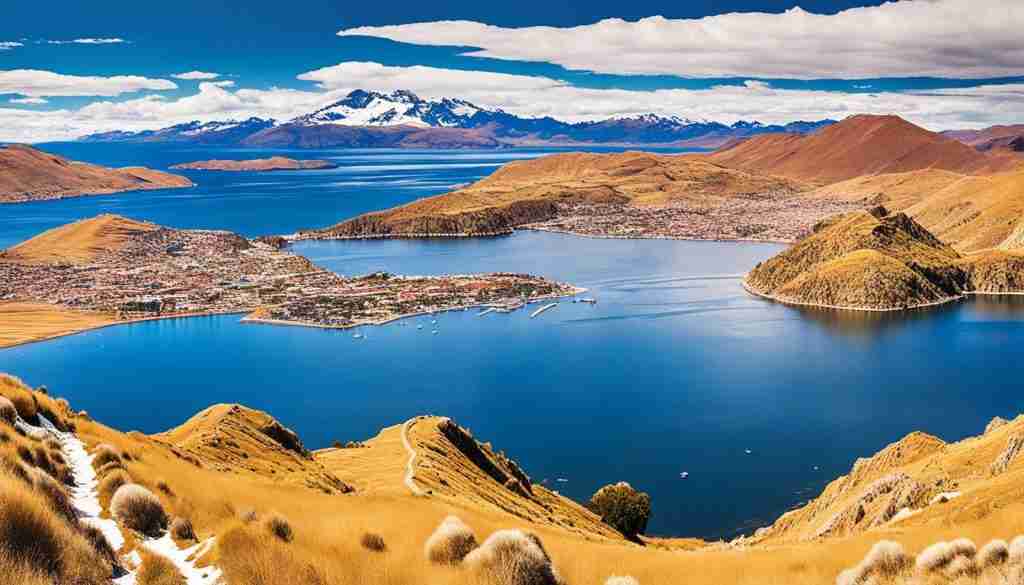
Lake Titicaca’s islands are full of stories and traditions. Each island gives a special look into the lives of the indigenous people. They’ve lived by the lake for many generations.
titicaca travel guide
High in the Andes, Lake Titicaca sits on the border of Peru and Bolivia. It’s the highest lake you can sail on. This lake is full of culture and nature, making it a top spot for travelers.
In Puno, Peru, you’ll find a lively city by the lake. There are quiet villages and islands too. The Titicaca travel guide shows you the best sights and experiences. It’s perfect for anyone wanting to dive into local cultures, see ancient ruins, or enjoy the views.
The guide gives you all the practical info you need. It tells you the best time to visit, how to get around, and what to keep in mind for your health. With this guide, you’ll really get to know Lake Titicaca, whether it’s your first time or you’re coming back.
| Key Facts about Lake Titicaca | Details |
|---|---|
| Elevation | 12,500 ft (3,810 m) |
| Average Water Temperature | 55°F (14°C) |
| Largest Lake in South America | By volume of water |
| Highest Navigable Lake | In the world |
| Dry Season | April to November |
| Rainy Season | December to March |
The Titicaca travel guide is perfect for any trip length. It’s your go-to for exploring Lake Titicaca. You’ll see floating islands of the Uros people and beautiful towns by the lake. This place will leave you amazed by its beauty and culture.
“Lake Titicaca is a place of great spiritual significance, where the ancient cultures of the Andes come alive.” – Anthropologist, Dr. Maria Fernandez
Travel Tips
Planning a trip to the stunning Lake Titicaca needs some thought and prep. From packing the right things to finding your way there, these lake titicaca travel tips will make your trip memorable.
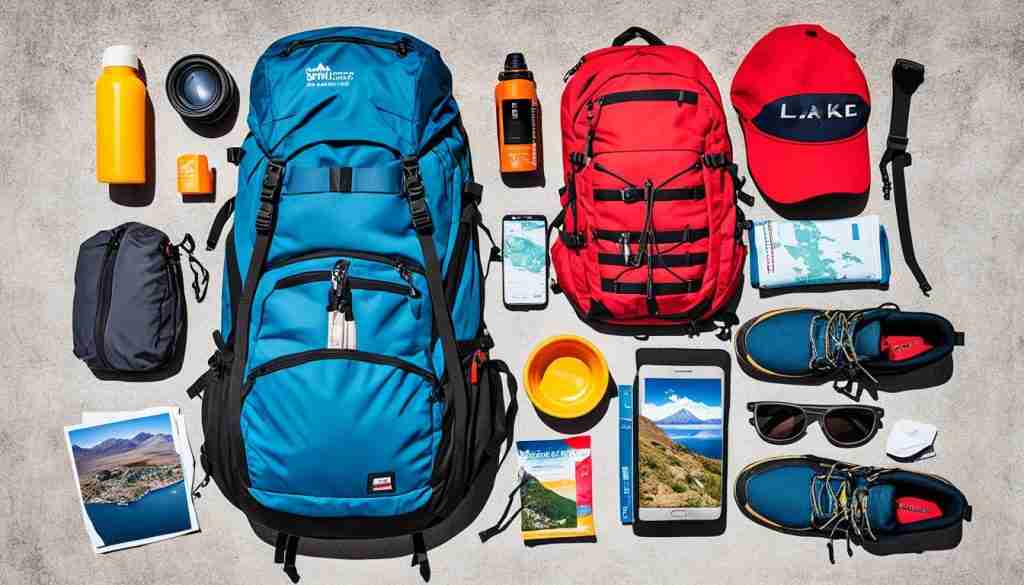
Packing List
Don’t forget these items when you visit Lake Titicaca:
- Comfortable, breathable clothing for the semi-arid climate
- Warm layers, like a jacket or sweater, for cold nights
- Sturdy, well-broken-in hiking boots or shoes
- Sun protection, including a hat, sunglasses, and high-SPF sunscreen
- Reusable water bottle to stay hydrated
- Any necessary medications and personal care items
How to Get to Lake Titicaca
Getting to the lake titicaca area is easy. The closest airport is in Juliaca, about 30 miles from Puno, with flights from big cities like Lima and Cusco. Or, take a scenic bus ride from Puno to Cusco, Arequipa, or other major cities in Peru.
For a fancy trip, think about the Andean Explorer train from Cusco to Puno. It shows off the Andes’ beauty. If coming from Bolivia, cross the border at Yunguyo. There, get a visa and pay any fees before heading to places like Copacabana.
“Lake Titicaca is one of the highest navigable lakes in the world, situated at an elevation of approximately 3,812 meters (12,507 feet) above sea level.”
Health Concerns
Visiting Lake Titicaca, the world’s highest navigable lake, is an amazing experience. It’s located at 12,500 ft (3,800 m) above sea level. But, you should be aware of a few health issues to have a safe trip.
Altitude sickness and sunburn are the main concerns. These can affect your experience on the lake.
High Altitude
The high altitude of Lake Titicaca can cause altitude sickness. This happens when there’s less oxygen in the air. To avoid this, take it easy for the first 24-48 hours.
Eat light meals, drink plenty of water, and don’t do hard activities. This lets your body adjust to the thinner air.
Sunburn
The sun’s rays are very strong at Lake Titicaca’s high altitude. This increases the risk of sunburns. Make sure to bring and use high-SPF sunscreen.
Also, wear a wide-brimmed hat and stay in the shade to protect your skin from the sun.
By being careful and taking steps to protect yourself, you can enjoy Lake Titicaca’s beauty and culture safely.
Conclusion
Lake Titicaca is a place of stunning beauty and deep culture. It sits high in the Andes, on the border of Peru and Bolivia. This lake is perfect for those who want to dive into Andean traditions and landscapes.
There’s much to do here, like visiting ancient ruins, joining in local festivals, or just enjoying the views. The Titicaca Travel Guide has everything you need to plan a trip you’ll never forget. With its lively festivals, tasty food, and chances to connect with local culture, Lake Titicaca will touch your heart.
For the best experience, book tours with trusted companies like TOUR IN PERU. They offer tours to the Uros Floating Islands, Taquile, and Amantani. These places show you the unique beauty of Lake Titicaca.