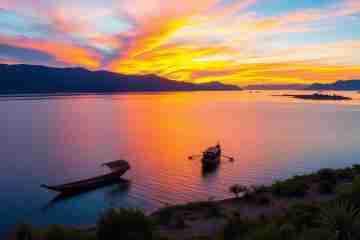
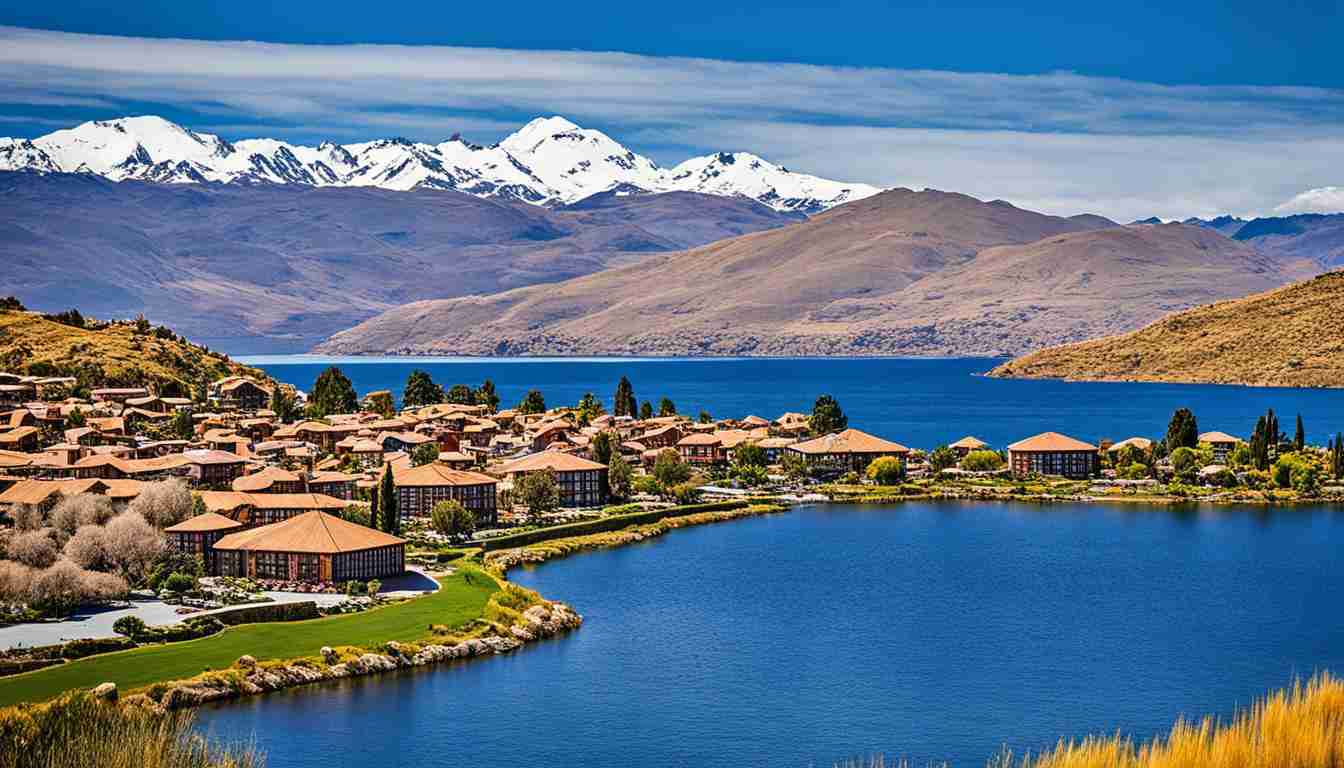
Lake Titicaca is the highest navigable lake in the world, located in South America. Its deep blue waters seem to blend with the sky. Around it, snow-capped mountains make it feel like you’re floating on the earth’s highest peaks.
You can visit the lake from Peru or Bolivia, but many start in Puno, Peru. Puno is famous for its Fiesta de la Virgen de Candelaria. It’s where you catch a speedboat for island-hopping and cultural experiences with local families.
On the lake, you’ll find islands like Taquile, Amantani, and Isla del Sol. These islands are home to ancient traditions and pre-Inca ruins. They offer a glimpse into a world untouched by time.
Key Takeaways










- Lake Titicaca is the highest navigable lake in the world, located at over 12,000 feet high.
- Puno, Peru is a popular starting point for exploring Lake Titicaca and its surrounding islands.
- The Uros Floating Islands and Taquile Island offer unique cultural experiences for visitors.
- Multiday kayaking tours and homestays with local families are recommended for adventurous travelers.
- Lake Titicaca is considered a sacred place for many Peruvians, with ancient Andean mythology linking it to the origins of the Incan Empire.
About Lake Titicaca
Overview
Lake Titicaca sits high in the Andes Mountains. It’s the world’s highest navigable lake and a stunning natural wonder in South America. This deep blue lake blends with the sky, making a breathtaking view with snow-capped mountains around it. People often start their journey to the lake from the Peruvian city of Puno.
Geography and Location
Lake Titicaca stretches across southern Peru and western Bolivia. It’s in the high Altiplano region, at 12,500 feet above sea level. The area is mostly grass and shrubs, with few trees because of the strong winds.
“Lake Titicaca is the world’s highest navigable lake and one of South America’s stunning natural wonders.”
Lake Titicaca is on the border of Peru and Bolivia. It’s a special place that shows off the amazing nature and culture of the Andes.
Titicaca Travel Info: When to Visit
Climate and Weather
Lake Titicaca sits high in the Altiplano and has a semi-arid climate. Daytime temperatures are between 60°F to 65°F (15°C to 18°C). But, it gets much colder at night because of its high location. So, bring layers and a jacket for the cool evenings.
The dry season is from April to November, with sunny and nice weather. The rainy season is from December to March, bringing clouds, showers, and storms, especially in January and February.
Best Time to Visit
The best time to visit Lake Titicaca is in June, July, and August when it’s dry and nice. But, April to May and September to November are also great. The weather is nice, and there are fewer people, making it peaceful.
April and May are beautiful in Puno because of the flowers. No matter when you go, remember it’s high up. Pack right to enjoy your trip to Lake Titicaca.
| Season | Months | Weather Conditions | Advantages |
|---|---|---|---|
| Dry Season | April to November | Sunny and pleasant | Ideal for outdoor activities and sightseeing |
| Rainy Season | December to March | Cloudy, afternoon showers, and thunderstorms | Lush, green landscapes |
| Peak Season | June to August | Dry and sunny | High tourist numbers, but optimal weather |
| Shoulder Season | April to May, September to November | Pleasant weather, fewer tourists | Quieter experience, blooming landscapes in spring |
“The best time to travel to Lake Titicaca is considered to be from April to October due to less rain and clear skies.”
History and Culture
Lake Titicaca has a long history, even before the Spanish took over the Inca Empire. The ancient people of Pukara, Tiahuanaco, Colla, Lupaca, and Inca lived by its shores. They believed the creation god Viracocha came from the lake, starting the Inca Empire.
The Spanish conquest happened from 1531 to 1533. This led to the colonization of southern Peru around Lake Titicaca. The Spanish brought Catholicism, seen in Puno’s grand churches today. Yet, the local culture thrives, blending Christian beliefs with Aymara and Quechua dances and traditions.
- Lake Titicaca is a famous 3,200-square-mile lake straddling the border of Peru and Bolivia.
- The Uros community have been living on 120 floating reed islands on Lake Titicaca for hundreds of years.
- Isla del Sol, a five-square-mile island in Lake Titicaca, is a remote place rich in Andean mythology.
The history and culture of Lake Titicaca are deeply connected. They offer visitors a unique look into the region’s ancient past and lively present.
“Lake Titicaca was sacred to the Inca. According to legend, Viracocha, the Inca god of creation, emerged from the depths of Lake Titicaca and created the sun, the moon, the stars, and mankind, marking the birth of the Inca Empire.”
Exploring the Lake Titicaca Islands
Step into the heart of Lake Titicaca and explore unique cultures on its islands. See the famous uros floating islands and the colorful textiles of Taquile Island. This place shows us the ancient traditions of the area.
Uros Floating Islands
Long ago, the Uros people left the mainland to live on floating islands in Lake Titicaca. Now, they invite visitors to their uros island reed homes. They show how they make these homes from torta reeds.
On the soft, springy surface, guides explain how they weave the reeds. They use this method to build homes, furniture, and boats.
Taquile Island
Visit Taquile Island, a UNESCO World Heritage Site, to see its ancient textile traditions. Both men and women here weave taquile island textiles by hand. Their work tells stories of their community.
Their hats and clothes show their weaving skills. This shows the island’s deep cultural roots.

“Exploring the Uros floating islands and Taquile Island was a truly immersive cultural experience. I was captivated by the ingenuity of the Uros people in building their reed homes and the vibrant textiles of Taquile Island.”
Puno: Gateway to Lake Titicaca
Puno is a vibrant city in Peru, known as the “folklore capital of Peru.” It’s over 3,800 meters above sea level. The city is famous for its cultural heritage and the Fiesta de la Virgen de Candelaria.
The city is near Lake Titicaca, the largest freshwater lake in South America. This lake is the world’s eighteenth-largest natural lake. It’s huge, covering almost 5,000 square kilometers in Peru and 3,372 square kilometers in Bolivia.
Puno mixes Christian beliefs with Aymara and Quechua dances. The town is home to the Uros floating islands. These islands are made of totora reeds by the Aymara people.
Another place to visit is Taquile Island. It’s known for its weaving and knitting. The island gets about 40,000 visitors a year and is a UNESCO Masterpiece of Oral and Intangible Heritage of Humanity.
Visiting Puno means exploring the Uros islands, Taquile Island, and Lake Titicaca. It’s a trip full of culture and beauty. Puno is a must-see for anyone wanting to experience Peru’s magic.
| Fact | Value |
|---|---|
| Altitude of Puno | More than 3,800 meters above sea level |
| Size of Lake Titicaca (Peruvian part) | Almost 5,000 square kilometers |
| Size of Lake Titicaca (Bolivian part) | 3,372 square kilometers |
| Number of rivers flowing into Lake Titicaca | Over 25 |
| Number of Uros inhabitants | About 2,000, with only a fraction still living on the floating islands |
| Population of Taquile Island | Around 2,000 Quechua inhabitants |
| Size of Taquile Island | 6 square kilometers |
| Annual overnight visitors to Taquile Island | Approximately 40,000 |
Puno is known as the “folklore capital of Peru.” It offers a unique experience with its culture and beauty. From the Uros floating islands to Taquile Island’s textiles, Puno is a great place to visit.
Travel Tips and Getting Around
Exploring Lake Titicaca and the lively city of Puno needs some planning. But, it’s totally worth it. Let’s look at how to get there and get around easily.
How to Get to Lake Titicaca
The nearest airport is Inca Manco Cápac International Airport in Juliaca, about 30 miles from Puno. You can fly directly from Lima or Cusco to Juliaca. Or, take a bus or the PeruRail Andean Explorer train from Cusco. This train ride takes about 6-7 hours to Puno.
Getting Around Puno and the Lake
In Puno, you can walk to see the main sights, like restaurants and shops, around the main plaza. If your hotel is outside the city center, a 15-minute taxi ride will get you there. To see Lake Titicaca and its islands, take a boat tour from Puno or your hotel pier.
| Transportation Options | Details |
|---|---|
| Flight | Fly to Juliaca Airport, then take a bus, taxi, or private transport to Puno |
| Bus | Take a bus from Cusco to Puno, a journey of 6-7 hours |
| Train | Ride the luxurious PeruRail Andean Explorer train from Cusco to Puno |
| Boat Tours | Explore Lake Titicaca and its islands by booking a boat tour from Puno or your hotel pier |
| Taxi | Hail a taxi to get around Puno, especially from the outskirts to the city center |
| Walking | Navigate the main attractions, restaurants, and shops in Puno’s city center on foot |
With these tips and options, you’re set for an amazing trip to Lake Titicaca and Puno. Get ready for an unforgettable adventure!

Titicaca Travel Info: Health Considerations
Lake Titicaca sits at an amazing 12,500 ft (3,800 m) above sea level. It’s a place that draws travelers from all over the world. But, the high altitude brings health challenges that visitors should know about before they go.
Altitude Sickness
Visiting Lake Titicaca means you might face altitude sickness. How your body reacts to high places can differ a lot, no matter your fitness level. To help your body adjust, take it easy on the first day. Avoid hard physical work and eat light meals.
Common symptoms like headaches, shortness of breath, and feeling less hungry are normal. But, watch out for serious signs and get medical help if needed.
Sun Protection
The sun’s rays are very strong at Lake Titicaca’s high altitude. This means you can get sunburned quickly. Make sure to bring sunscreen with a high SPF, wear protective clothes, and stay in the shade when you can.
General Health Tips
- Drink plenty of water to stay hydrated
- Avoid alcohol, which can make altitude sickness worse
- Pack any needed medicines and talk to a doctor before your trip
- Think about taking medicine to prevent altitude sickness if advised
- Know the signs of altitude sickness and get medical help if you need it
Being ready and careful about the health risks of Lake Titicaca’s high altitude will help you have a safe and fun trip to this beautiful place.
Conclusion
Lake Titicaca is a top spot for travelers in Peru. It’s a high-altitude lake filled with cultural experiences. You can visit the Uros floating islands or Taquile Island to see their textile traditions.
Staying in Puno lets you explore the lake’s islands and shores. You’ll get to see the local communities’ traditional life. It’s the “folklore capital of Peru.”
Lake Titicaca is perfect for relaxing, hiking, or learning about Inca history and culture. The lake is home to unique birds and fish. Its high altitude and beautiful views make it a gem in South America.
When you finish your trip, you’ll appreciate the lake’s beauty and the local communities’ strength. You’ll also remember the traditions that keep this place special. These memories will make you want to come back and see more.