Traveling through Peru’s varied landscapes, from the Pacific Coast to the Amazon Rainforest and the Andes Mountains, can be challenging. The country’s infrastructure, with few paved roads and railways, forces travelers to use different ways to get around. Public transport, like micros (buses) and combis (vans), is affordable and common in cities.
For those looking for a better way to travel between regions, Peru’s coach services, such as Peru Hop, provide set routes and schedules. These services are designed for tourists. The types of transportation available change depending on the region, with buses, trains, planes, boats, and private cars all important for reaching different places.
Key Takeaways
- Peru’s diverse geography presents unique transportation challenges, with limited paved roads and railways.
- Public transport options, like micros and combis, are commonly used for city travel and can be economical.
- Organized coach services, such as Peru Hop, cater to the needs of tourists for interregional travel.
- Transportation methods vary significantly by region, with buses, trains, planes, boats, and private vehicles all playing important roles.
- Understanding the available transportation options is key to navigating Peru and exploring its diverse destinations.
Understanding Peru’s Diverse Transportation Landscape
Peru’s geography is amazing, with the Andes Mountains and the Amazon Rainforest. This affects how people get around. Travelers find many ways to move, each with its own story and challenges.
Geography Impact on Travel Options
The terrain in Peru is tough, with mountains and rainforest. Coastal areas have better roads and public transport. But, the highlands and jungle are harder to get to, with bad weather and fewer roads.
Overview of Available Transport Methods
Peru has many ways to travel. Buses are the most common, covering a lot of ground. Trains offer scenic views, like the Machu Picchu route. Flights connect cities fast, and boats are key for the Amazon.
Regional Transportation Differences
Transport varies by region in Peru. Cities like Lima and Cusco have good public transport. But, in remote areas, options are few and weather can be a big problem.
| Transportation Mode | Availability | Approximate Cost |
|---|---|---|
| Buses | Widely available across Peru | $2-35 USD for long-distance journeys |
| Trains | Limited, primarily for tourist routes like Machu Picchu | $33-150 USD per ticket |
| Domestic Flights | Connecting major cities, with baggage allowance of 10-16kg | $30-40 USD for flights between Lima and Cusco |
| Taxis and Ride-sharing | Available in cities, with varying levels of regulation | Varies by location and distance |
| Boat Transportation | Essential for travel in the Amazon region | Ranges from 12 hours to several days, depending on the route |
| Car Rental | Straightforward in major cities, with limited options in remote areas | Varies by rental company and duration |
Bus Travel: The Most Popular Way to Explore Peru
When it comes to getting around Peru, bus travel is the top choice. It’s both affordable and popular. Many bus companies offer services for both locals and tourists.
Peru Hop is a favorite for those wanting a special experience. It lets tourists hop on and off along routes in southern Peru. Other well-known companies include Cruz del Sur, Oltursa, and Movil Tours. They offer services similar to budget airlines, with amenities like checked baggage systems.
For short trips, local buses, or “colectivos,” are the cheapest. But, they stop often. For longer trips, bigger coach buses are better. They offer a more comfortable ride.
- Peru Hop and Cruz del Sur are the best for customer service in Peru.
- Peru Hop is known for their bilingual guides, quick phone calls, and fast email replies. They have all 5-star reviews on TripAdvisor.
- Peru Hop is owned by Europeans and focuses on safety and passenger experience.
Bus travel is generally safe, but picking a good company is key. Peru’s tough terrain and occasional accidents can be a worry. It’s smart to research and compare to find a safe and comfy ride.
“Travelling by bus in Peru can be significantly cheaper than flying, with some flights costing more than double the price of bus tickets to Cusco.”
In summary, bus travel is the best and cheapest way to see Peru’s varied landscapes and places. With many companies and services, travelers can easily get around and find the amazing sights Peru has to offer.
Transportation Options in Peru: A Complete Guide
Exploring Peru’s diverse landscapes requires knowing the transportation options. Peru has a range of choices for every traveler. Whether you prefer public systems or intercity travel, Peru has something for you.
Public Transportation Systems
Peru’s public transport includes buses, vans, and shared taxis. Micros and combis are common in cities and towns. They offer affordable travel. Colectivos, or shared taxis, run on set routes, making travel more affordable.
Intercity Travel Solutions
For longer trips, Peru has many options. Luxury coaches by Cruz del Sur, Oltursa, and Movil Tours offer comfort. Budget-friendly local buses provide a more authentic experience.
Cost Comparison of Different Options
Transport costs in Peru depend on the mode and distance. Local buses start at S/10 PEN for two hours. Luxury coaches and trains are pricier. Taxis and ride-sharing apps like Uber and Cabify vary in price. Lima, the capital, has the highest costs but they’re still affordable.
| Transportation Option | Average Cost | Travel Time |
|---|---|---|
| Local Bus | S/10 PEN | 2 hours |
| Luxury Coach | S/50-100 PEN | 4-8 hours |
| Taxi (Lima) | S/20-40 PEN | 30 minutes |
| Uber/Cabify (Lima) | S/15-30 PEN | 30 minutes |
In smaller towns, moto-taxis are a cheap and exciting way to get around. They offer a thrilling experience.
“Exploring Peru’s diverse transportation landscape is an adventure in itself, offering a unique glimpse into the country’s culture and way of life.”
Train Journey Adventures Through the Andes
For those seeking a memorable transportation experience in Peru, train travel through the Andes is a must. The Andean Explorer train is renowned for its stunning views. It runs on one of the highest railway routes in the world. This train connects Cusco, Puno, and Arequipa, offering a front-row seat to Peru’s beauty.
The Andean Explorer offers one- or two-night journeys. Cabins have private bathrooms, elegant decor, and oxygen systems. Onboard, you’ll find a dining car, spa, and modern comforts like air conditioning.
For a more personal experience, private charters are available. Choose from various itineraries like the Peruvian Highlands and Andean Plains & Islands of Discovery. The Andean Explorer promises an unforgettable train travel experience in Peru.
| Route | Duration | Luggage Allowance | Departure |
|---|---|---|---|
| Peruvian Highlands | 3 days, 2 nights | 2 pieces, 23 kg total | Every Saturday |
| Andean Plains & Islands of Discovery | 2 days, 2 nights | 2 pieces, 23 kg total | Every Saturday |
| Spirit of the Water | 1 day, 1 night | 2 pieces, 23 kg total | Every Tuesday |
| Spirit of the Andes | 1 day, 1 night | 2 pieces, 23 kg total | Every Wednesday |

Domestic Flights and Air Travel Tips
Traveling by air in Peru is now easier than ever. A growing number of domestic flights link major cities. This includes Lima and Cusco, making it easy to travel long distances.
Major Airlines and Routes
Top airlines in Peru are LATAM, Sky, JetSMART, and Star Peru. They offer many routes, with most going through Lima. Avianca, for example, mainly flies between Lima and Cusco.
Airport Information
The Jorge Chávez International Airport in Lima is Peru’s main entry point. It’s well-organized and handles most flights. Other key airports are in Cusco, Arequipa, and Juliaca, important for local travel.
Booking Strategies and Costs
- Budget airlines like Sky and JetSMART can be as cheap as buses.
- Book flights early, especially in busy seasons, to get the best prices.
- Flying in the morning can help avoid delays due to rain.
- Don’t forget to add baggage fees to your total cost.
With a bit of planning, airline flights peru and transportation options in peru can be easy. Knowing the domestic flight scene helps travelers make the most of their time in Peru.
Navigating Peru’s Cities: Taxis and Ride-sharing
Exploring Peru’s cities is easier with taxis and ride-sharing apps. Uber, Cabify, and Easy Taxi are big in Lima, Arequipa, and Cusco. They make city travel reliable and easy.
Public taxis are cheap but can be unreliable. Private taxis are safer and more trustworthy. Always agree on the fare before you get in and check for official taxi stickers.
In smaller towns, moto-taxis are a fun and cheap way to get around. They are three-wheeled vehicles that zip through neighborhoods. No matter the taxi, keep your things safe and stay alert.
Taxis in Lima are pricey but still cheap by global standards. A ride inside the city usually costs less than $4 USD. Uber and other apps make Lima’s busy streets easier to manage.
“Peru’s diverse transportation options, from taxis to ride-sharing apps, offer a seamless way to explore the country’s vibrant cities.”
Boat Transportation in the Amazon Region
Exploring the Peruvian Amazon’s waterways is key to any visit. Boat travel connects jungle communities and reaches the rainforest’s heart. It’s the main way to see this magical place.
River Routes and Options
The Peruvian Amazon has many river routes for boat travel. From Iquitos, you can take a “slow boat” journey. These boats let you see river life up close, passing by beautiful landscapes and towns.
For a quicker trip, try the “lancha rapida” (speedboats). They go from Iquitos to places like Pucallpa and Yurimaguas. Speedboats are fast and exciting, covering more ground in less time.
Safety Guidelines
- Make sure the boat has safety gear like life jackets and emergency equipment.
- Choose a captain with lots of safe navigation experience.
- Know the boat’s layout and emergency plans.
- Listen to the crew’s advice, especially during loading and docking.
Booking Information
You can book boat trips in the Peruvian Amazon through local tour operators or travel agencies. Or, you can book directly with captains in major ports. Think about the trip’s length, what’s included, and the cost to pick the right one for you.
Boat travel is also available on Lake Titicaca, between Peru and Bolivia. Ferries and tourist boats are great for seeing the lake’s islands and communities.
Car Rental and Private Transportation
Peru’s vast landscapes and remote spots are easy to explore with a car rental. Major companies like Hertz are everywhere, giving you freedom to travel when you want. This is perfect for reaching rural areas and small towns that public transit can’t access.
But, Peru is huge, like Texas, so expect long drives. Renting a car might cost more because of these long distances. Also, driving rules here are different, with bigger vehicles getting the right of way. Make sure you’re okay with driving a manual and handling mountain roads.
Think about getting a car with GPS for better navigation. This is especially helpful in Peru’s varied terrain. Avoid driving in big cities like Lima because of the traffic. Instead, hire a taxi for day trips for a more relaxed experience.
Rental Options and Costs
In Peru, you can find many car rental options, from sedans to vans. Prices vary, from $100 USD for short trips to $1,570 USD for longer ones. This covers different group sizes and travel needs.
For a more personal touch, some companies offer English-speaking drivers for $30 USD a day. This helps with language barriers and makes your trip smoother.
Whether you drive yourself or get a private transfer, car rental in Peru is convenient. It lets you explore the country’s beauty and hidden spots at your own speed.
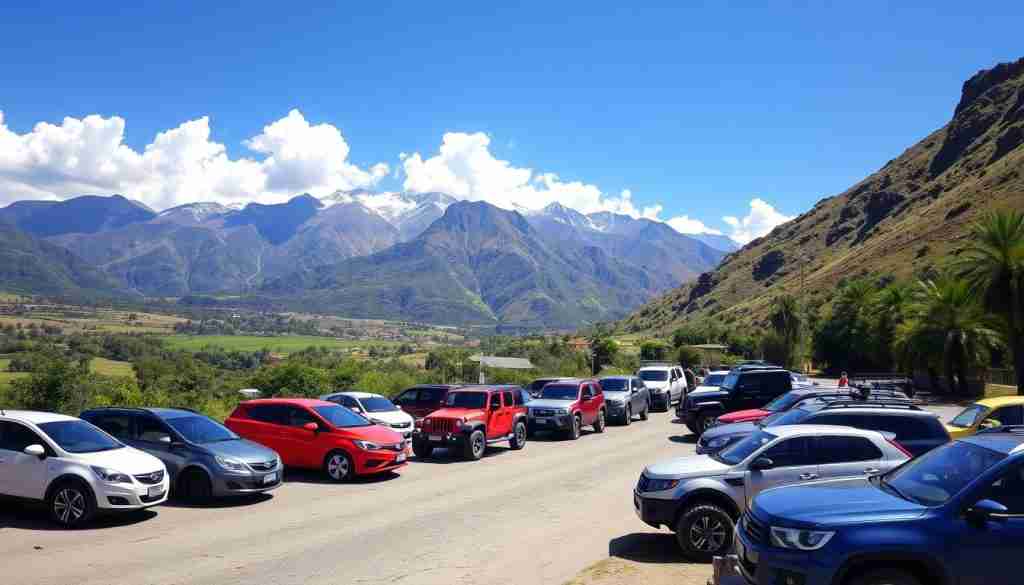
“The driver was extremely careful and courteous, making our journey a truly enjoyable experience. Highly recommend this service for your transportation needs in Peru.”
– July 31, 2007 RENT A CAR REPORT
Budget-Friendly Transportation Options
Traveling in Peru on a budget doesn’t mean missing out. You can use local buses, colectivos, cycling tours, and boat travel. These options are affordable and let you see the country’s beauty.
For city trips, public transport like micros and combis is cheap. These buses and vans are everywhere. They let you meet locals and see the city like a local. For longer trips, economy class buses from Cruz del Sur, Oltursa, and Movil Tours are great. They offer comfort and good prices.
- Opt for local buses and colectivos for short-distance travel within cities
- Choose economy-class buses for cost-effective intercity transportation
- Consider cycling tours as an adventurous and budget-friendly way to explore certain regions
- Explore the Amazon by booking budget-friendly boat travel on local lanchas
Adventure lovers can try cycling tours to see Peru’s beauty. Cycling is cheap and lets you really experience the country. For a special Amazon trip, take a local boat. It’s a cheap and exciting way to see the Amazon.
When using these cheap ways to travel, always stay safe. Mixing different transport can save money and time. This way, you’ll have a fun and affordable trip in Peru.
Conclusion
Peru has many ways to get around, fitting every traveler’s needs. You can take a scenic train ride through the Andes or hop on a bus to reach cities. Domestic flights are fast for long trips, and Amazon boat trips offer a thrilling adventure.
Peru has something for everyone, whether you’re on a tight budget or looking for luxury. Knowing your options, like buses, taxis, and car rentals, helps you plan better. This way, you can enjoy all that Peru has to offer.
Even with Peru’s varied landscapes, you can easily get around with some planning. Think about your time, budget, comfort, and where you want to go. This helps you make the most of your trip and create lasting memories in Peru.