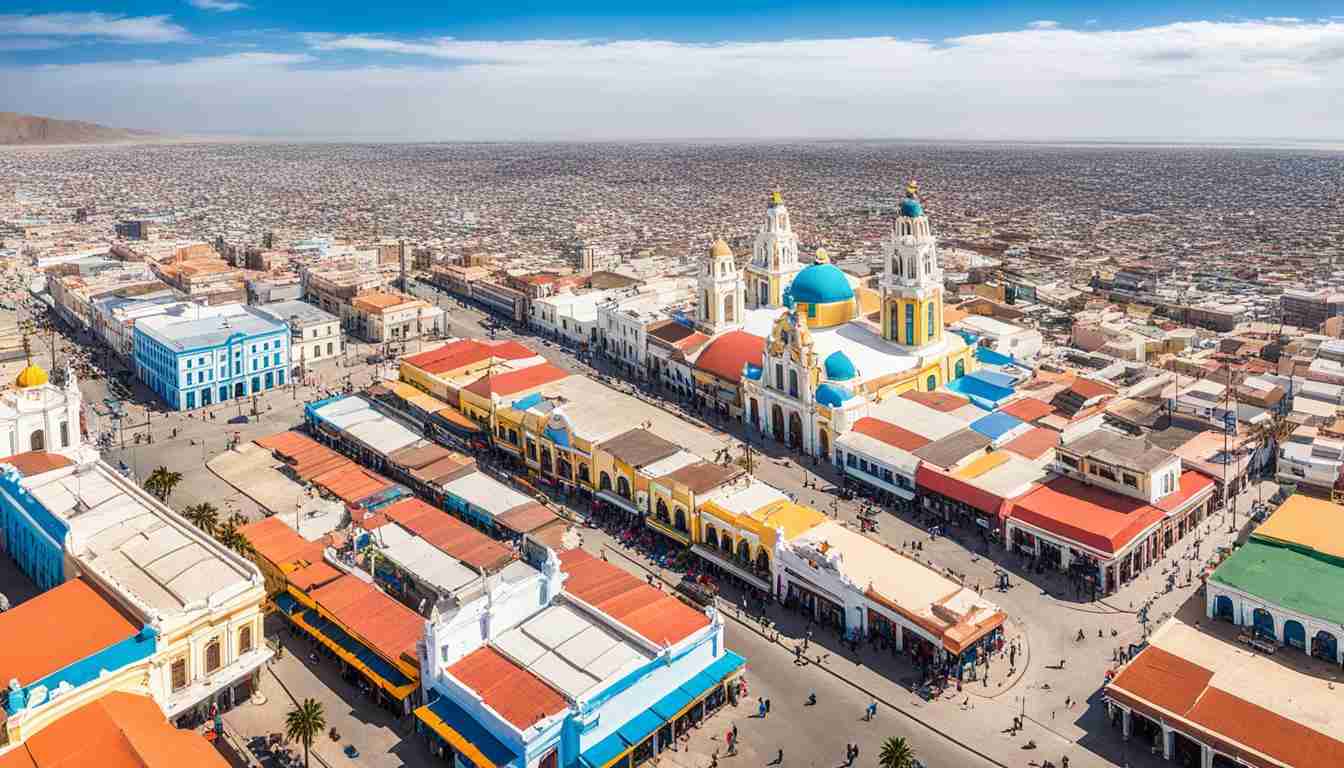
Chan Chan is in the Moche Valley of Peru. It shows off the amazing skills of the ancient Chimu people. This huge adobe city is the biggest mud-brick place in pre-Columbian America. It invites us to learn about its fascinating history.
It’s a UNESCO World Heritage Site. The ruins of Chan Chan let us see how smart and creative the Chimu were. They lived from 1200 to 1465 AD.
Chan Chan covers 20 square kilometers and is a wonder of pre-columbian civilization and ancient ruins. Everything in the city is made of adobe. It has big citadels, palaces, and walls up to 15 meters high. These show how good the Chimu were at building and decorating.
Key Takeaways








- Chan Chan was the largest mud-brick city in pre-Columbian America, capital of the powerful Chimu civilization.
- Designated as a UNESCO World Heritage Site, Chan Chan’s ruins offer a glimpse into the architectural marvels and advanced civilization of the Chimu people.
- The city’s expansive network of citadels, palaces, and enclosures showcase the Chimu’s mastery of monumental architecture, using adobe as the primary construction material.
- Chan Chan’s intricate designs and ornate decorations reflect the advanced artistic and engineering capabilities of the Chimu civilization.
- Visitors can explore the ancient ruins of Chan Chan, a captivating CHAN CHAN peru tourism destination in the heart of the moche valley.
Overview of Chan Chan: Peru’s Majestic Mud City
In the Moche Valley, near Trujillo in northern Peru, lies Chan Chan. This ancient city was the heart of the Chimú civilization. It took 650 years to build and covers about 20 square kilometers.
Location and Climate
Chan Chan is in a warm and humid area. The warm season is from January to March, and it gets cooler from April to December. This climate and its location by the Pacific Ocean made it perfect for the Chimú people.
Significance as a UNESCO World Heritage Site
Chan Chan is a UNESCO World Heritage Site since 1986. It’s known for its large, well-kept adobe buildings. Back then, it was home to 60,000 to 100,000 people and had 140 water wells.
Today, Chan Chan shows the Chimú people’s skill and creativity. It’s a key CHAN CHAN peru tourism spot. Being a UNESCO site means it will be kept safe for everyone to see in the future.
The Fascinating History of Chan Chan
Chan Chan is in the heart of Peru’s northern coast. It shows the amazing work of the Chimu civilization. This culture was powerful from the 12th to the 15th centuries. Chan Chan was their main city.
Rise of the Chimu Civilization
The Chimu came from the Moche and Huari cultures. They kept their skills in engineering and making ceramics and metal. Chan Chan became a big city, with up to 30,000 people living there.
Architectural Marvel of Pre-Columbian Peru
Chan Chan was a city wonder, covering 20 square kilometers. It had all the important buildings of the Kingdom of Chimor. The Chimu used adobe and smart city planning to make a beautiful and organized city.
The city had big temples and walls with designs. Chan Chan is a great example of pre-Columbian architecture. It shows the Chimu’s creative building skills.
“Chan Chan is the world’s largest adobe city, a true testament to the Chimu civilization’s architectural prowess and enduring legacy.”
Chan Chan faced problems like natural disasters and the Inca Empire’s takeover. But the Chimu’s legacy lives on through Chan Chan. It’s a UNESCO World Heritage Site and a peek into Peru’s past.
CHAN CHAN peru tourism: A Journey Through Peru’s Adobe City of Wonders
Visiting the ancient ruins of CHAN CHAN takes you back to the Chimu civilization’s peak. It’s the biggest mud-brick city in pre-Columbian America. CHAN CHAN’s adobe structures and designs show the advanced engineering and art of this culture. It’s a UNESCO World Heritage Site, perfect for those wanting to dive into Peru’s history.
CHAN CHAN grew between 850 and 1470 AD and was home to about 30,000 people at its peak. The city’s buildings were in a 20 km2 area, and the Chimú people’s legacy lived on after the conquistadors arrived around 1470 AD. The Peruvian government works to protect CHAN CHAN from damage by El Niño and extreme weather.
CHAN CHAN has nine to twelve rectangular areas called ciudadelas, which were the Chimú kings’ palaces. The Tschudi ciudadela, a key part of CHAN CHAN, is almost fully restored and draws many tourists. It had over 10,000 homes and had many urban features like wells, canals, and temples.
Visiting CHAN CHAN usually takes half a day. If you visit the museum, add three to four more hours. The museum, near the site, is closed on Mondays. You can also see other sites like the Royal Tombs of Sipan and Kuelap Fortress on a tour.
“Exploring the ancient adobe city of CHAN CHAN is a truly captivating experience, transporting you back to the height of the Chimu civilization. The intricate designs and engineering marvels of this UNESCO World Heritage Site are a testament to the ingenuity and cultural richness of Peru’s pre-Columbian past.”
Exploring the Ruins of Chan Chan
Chan Chan in Trujillo, Peru, is a place full of history and architecture from before Columbus. It’s a UNESCO World Heritage site on the North Coast. Here, you can see the grandeur of the Chimu culture. The ruins tell the stories of three amazing complexes that show the Chimu’s skill and meaning.
Chayhuac: The Oldest Complex
The Chayhuac complex is the oldest part of Chan Chan, from the 9th century AD. It started for ceremonies and later for burials. It shows how the Chimu’s culture and buildings changed over time. The adobe ruins of Chayhuac highlight the amazing skill and care in pre-Columbian architecture.
Uhle: Monumental Architecture
The Uhle complex is a big deal for the Chimu’s monumental architecture. Built in the 11th century, it has huge adobe walls and detailed designs. These show the Chimu culture’s amazing building skills. Visitors can see the well-kept structures and be amazed by their size and detail.
Tschudi Complex: Water Worship and Symbolism
The Tschudi complex, named after a Swiss archaeologist, shows the Chimu’s love for water. From the 15th century, it has murals and symbolic representations about water. This lets visitors understand the Chimu culture’s spiritual views and water’s importance in their lives.
Walking through Chan Chan’s ruins takes you back in time. The Chayhuac, Uhle, and Tschudi complexes show the amazing architecture, culture, and history of Chan Chan. It’s a true gem of pre-Columbian architecture.
Chan Chan’s Intricate Adobe Designs
The ancient Chimu people of Chan Chan were experts in adobe building. They used local materials to make their amazing buildings. The city was huge, covering over 20 square kilometers and had up to 60,000 people.
It’s famous for its detailed adobe wall designs.
Ingenious Use of Local Materials
The Chimu architects were very creative with the adobe. This material is made from mud, sand, and straw. They made the adobe bricks and used them in big buildings.
These included the nine big palace areas called ciudadelas. These places had plazas, rooms for storing things, and places for burying the Chimu leaders.
Artistic Representations and Symbolism
The walls of Chan Chan have many artistic designs. These designs show the Chimu’s deep connection to nature and their culture. You can see zoomorphic figures, wave patterns, and geometric shapes.
These designs tell us about the Chimu’s beliefs and way of life.
The big archaeological site of Chan Chan shows the Chimu’s skill in adobe building. It also shows the deep symbolism in their buildings.
Visiting Chan Chan from Trujillo
Chan Chan is just 6.8 km from Trujillo, making it easy to visit. It’s a UNESCO World Heritage site and a must-see. You can get there by different ways, making it simple for everyone.
Transportation Options
For a cheap trip, take the local bus. It costs about 2 soles and takes 20 minutes. Or, you can hire a taxi for 15 soles and get there in 10 minutes.
Entry Fees and Guided Tours
When you arrive, you’ll pay 10 soles to get into the visiting Chan Chan area. For a better experience, consider a guided tour. These tours cost either 60 soles or 40 soles, depending on the type.
| Transportation | Cost | Travel Time |
|---|---|---|
| Bus | 2 soles | 20 minutes |
| Taxi | 15 soles | 10 minutes |
With a guide, you’ll learn a lot about Chan Chan. They’ll tell you about its history and architecture. Whether you go alone or with a guide, Chan Chan is a key spot for culture lovers.

“Chan Chan is a testament to the ingenuity and resilience of the Chimu people, who built this incredible city out of adobe in the face of harsh coastal conditions.” – Archeologist, Dr. Maria Fernandez
Preservation Efforts and Challenges
Chan Chan, Peru’s ancient mud city, is fighting against time and nature. Once the biggest city in the Americas before Columbus, it now faces many challenges. Weathering, erosion, and El Niño’s effects threaten its existence.
The Peruvian Ministry of Culture is working hard to save Chan Chan. They have started restoration programs to keep the site safe. But, the site is fragile and the climate is tough. Heavy rainfall during El Niño storms can cause a lot of damage.
A 2007 report by UNESCO said Chan Chan is losing ground fast because of climate change. This leads to more drying and heavy rains. To fight this, the ministry has used many methods. They’ve put up tents, used special solutions, covered areas, and made panels for visitors.
Chan Chan also deals with illegal farming and urban growth. It was put on the List of World Heritage in Danger in 1986. Since then, the ministry has been working on a plan to protect it.
Even with efforts, saving Chan Chan is a big challenge. Climate changes and weathering keep causing problems. We need new ways to preserve and restore this UNESCO World Heritage site for the future.
“The erosion of Chan Chan is rapid and seemingly unstoppable due to climate change, leading to greater extremes of drying and heavy rainfall.”
– UNESCO, 2007
Chan Chan: A UNESCO World Heritage Gem
The ruins of Chan Chan in Peru were named a UNESCO World Heritage Site in 1986. This honor highlights the site’s value and its importance to the Chimu people’s advanced civilization. It’s a key spot for visitors to the Trujillo area, letting them see the architectural wonders and cultural heritage of the ancient city.
Chan Chan sits in northern Peru’s coastal desert. It was the capital of the Chimu kingdom, thriving from A.D. 900 to 1470. This site, the biggest pre-Columbian city in South America, is famous for its detailed adobe buildings, beautiful carvings, and smart water systems. These show the Chimu people’s creativity and skill.
As a Trujillo attraction, Chan Chan is a top spot for those wanting to dive into Peru’s ancient history and culture. The ruins, like the Chayhuac, Uhle, and Tschudi complexes, give a peek into the Chimu people’s lives and rituals. It’s a fascinating look back in time.
Being a UNESCO World Heritage Site also highlights Chan Chan’s global importance. It shows the need to keep this amazing example of pre-Columbian civilization alive. Thanks to conservation and education, the Chimu culture still moves and excites people worldwide.

If you love history, architecture, or just want a unique cultural trip, Chan Chan in Peru is a must-see. This UNESCO World Heritage gem opens a door to the past. It shows the creativity and lasting influence of the Chimu people on Peruvian heritage.
Conclusion
The ancient city of CHAN CHAN is a key example of the Chimu civilization’s brilliance in Peru. It shows off their architectural skills, engineering, and art. This UNESCO site gives us a unique look into their world.
The Peruvian government works hard to keep CHAN CHAN safe for the future. They use the Master Plan and conservation efforts to protect it. This shows their dedication to CHAN CHAN peru tourism and preserving ancient ruins.
CHAN CHAN is a top spot for those into Peru’s Chimu culture and pre-columbian architecture. It draws in travelers with its unique adobe city. Visiting here is an experience that brings Peru’s culture to life.