Cusco is a high-altitude city in the Andes Mountains. It’s a key part of the Incan heritage. At 11,155 feet, it’s a gateway to amazing historical sites that draw visitors from everywhere.
Cusco was once the Inca Empire’s capital. It offers a unique journey through history. You can see Incan ruins that tell tales of a complex civilization.
The city is close to Machu Picchu. It’s a must-visit for those who love history and adventure.
Cusco has over 100 historical sites in its historic center. It’s a mix of Incan and Spanish architecture. The city’s layout, shaped like a puma, still fascinates people today.
Key Takeaways
- Cusco sits at an elevation of 11,155 feet in the Andes Mountains
- The city features over 100 historical monuments in its historic center
- UNESCO World Heritage Site since 1983
- Gateway to Machu Picchu and other significant Incan sites
- Unique blend of Incan and Spanish architectural styles
- Population of approximately 430,000 residents
- Considered the archaeological capital of South America
The Inca Empire: A Brief Overview
The Inca civilization rose to power in South America. It grew from a small city-state to a vast empire. This empire changed the Andean region’s culture. It was centered in Cusco, a city that amazed historians and travelers.
The Inca’s heart, Tawantinsuyu, covered huge areas. Cusco was its stunning capital. Pachacutec led the empire’s biggest growth. He built a network of cities, roads, and wonders.
Key Contributions to Cusco’s Architecture
Pachacutec made Cusco a unique city. He used new design ideas:
- Rectilinear street layout
- City redesigned in the shape of a puma
- Strategic zoning for elite, agriculture, and industry
| Architectural Feature | Significance |
|---|---|
| Precise Stone Masonry | Demonstrated advanced engineering skills |
| Terraced Landscapes | Enabled agricultural production in challenging terrain |
| Complex Water Management | Sophisticated irrigation and drainage systems |
Cultural Significance of Cusco
Cusco was more than a capital. It was the philosophical and spiritual center of the Inca. It was called the “belly button of the world.” The city showed the Inca’s complex society.
“In Cusco, every stone tells a story of human achievement and cultural brilliance.” – Andean Historian
The Inca’s legacy inspires us today. Over eight million people speak Quechua. Archaeological sites show the Inca’s advanced culture.
Must-Visit Landmarks in Cusco
Cusco is a city full of history, showing the Inca and colonial eras. It offers a unique look into the ancient Inca civilization’s amazing buildings. The landmarks here give us a deep look into the Inca’s engineering and spiritual ways.
Sacsayhuamán: A Marvel of Incan Engineering
Sacsayhuamán is a true wonder of Inca building skills. It’s found just north of Cusco’s center. This site shows huge stones that fit together perfectly, without any glue. Some stones are as heavy as 361 tons, showing the Incas’ advanced building methods.
- Located 45 minutes from Cusco’s center
- Features intricate stonework and massive architectural structures
- Considered the most significant Inca ruins near Cusco
“The stones speak of an engineering genius that continues to mystify modern architects and historians.”
Qorikancha: The Temple of the Sun
Qorikancha was the Inca Empire’s most important temple. It was known for its beauty and spiritual importance. The walls were once covered in gold, showing the site’s wealth and importance.
| Historical Detail | Significance |
|---|---|
| Original Name | Qorikancha (Temple of the Sun) |
| Current Location | Converted to Santo Domingo Church |
| Entrance Fee | $6 for adult tourists |
After the Spanish took over, the temple became the Church of Santo Domingo. This shows Cusco’s rich history. Today, you can see the Inca stonework under the colonial church.
The Historical Importance of Plaza de Armas
Cusco’s Plaza de Armas is a stunning example of the city’s rich history. This lively square has seen many changes. It has been a key spot for culture and politics through different times.
Once known as Huacaypata and Auqaypata, the Plaza de Armas was a sacred place for the Incas. Now, it’s a mix of old, colonial, and new architecture.
Iconic Buildings Surrounding the Plaza
The plaza is surrounded by amazing buildings that show off Cusco’s colonial style. You can see:
- Cusco Cathedral – A beautiful example of colonial church design
- Church of the Society of Jesus – A grand Jesuit building
- Historic portals with elegant colonial arches
Events and Festivals Celebrated Here
Throughout the year, the Plaza de Armas comes alive with culture. It hosts many celebrations:
| Event | Date | Significance |
|---|---|---|
| Inti Raymi (Sun Festival) | June 21st | Ancient Inca celebration of winter solstice |
| Peru Independence Day | July 28th | National political celebration |
“The Plaza de Armas remains the beating heart of Cusco, where history and modern life intersect.” – Local Historian
The Plaza de Armas is now smaller than it used to be. Francisco Pizarro changed it, making it three squares. This changed Cusco’s look forever.
Today, you can find restaurants, coffee shops, and bars around the plaza. They offer a mix of history and modern life.
The Mystique of the Sacred Valley
The Sacred Valley is in the heart of the Peruvian Andes. It’s a breathtaking place that keeps the Inca civilization’s essence alive. This area is between Cusco and Machu Picchu, offering a deep dive into ancient history and vibrant culture.
The Sacred Valley is more than a place. It’s a living museum of Inca engineering, farming, and architecture. Visitors can see amazing sites that show the advanced civilization that once thrived here.
Ollantaytambo: A Living Inca Town
Ollantaytambo is a remarkable example of Inca urban planning. It’s a town where visitors can walk through streets unchanged since the Inca times. The site shows:
- Impressive terraced fortress structures
- Intricate stone masonry techniques
- Strategic military defensive positions
- Authentic Inca architectural principles
Pisac: Ruins and Market Experience
The Pisac ruins are another amazing spot in the Sacred Valley. They are high in the mountains, showing the Incas’ architectural skill through:
- Extensive agricultural terraces
- Complex temple structures
- Sophisticated water management systems
- Panoramic mountain views
“The Sacred Valley is not just a destination, but a journey through time and culture.” – Peruvian Cultural Heritage Foundation
Visitors can also enjoy Pisac’s lively market. Here, local artisans sell traditional textiles, ceramics, and crafts.
| Location | Key Highlights | Cultural Significance |
|---|---|---|
| Ollantaytambo | Preserved Inca town | Urban planning masterpiece |
| Pisac Ruins | Mountain archaeological site | Agricultural and religious center |
The Sacred Valley is a place that fascinates travelers. It has a rich history, stunning landscapes, and lasting cultural traditions.
Uncovering the Secrets of Coricancha
The ancient Inca temple of Coricancha is a stunning example of Inca architecture and spirituality. It’s located in the heart of Cusco. Here, visitors can see a deep part of Peru’s culture.
Coricancha was built in 1438 by Pachacutec Inca Yupanqui. It was more than a temple. It was the spiritual heart of the Inca Empire, dedicated to Inti, the Sun God.
Architectural Features and Layout
The temple’s architecture is amazing. Its walls were once covered in gold leaf. This showed the temple’s wealth and importance.
- Precise stone masonry without mortar
- Curved walls demonstrating advanced engineering
- Strategic alignment with astronomical observations
Spiritual Significance for Incas
Coricancha was a sacred place. It was where spiritual practices and astronomy met. The temple was the site of important rituals, like:
- Inti Raymi (Festival of the Sun)
- Qhapaq Raymi (Great Festival of the Sun King)
- Astronomical and agricultural ceremonies
“Coricancha represents the pinnacle of Inca architectural and spiritual achievement” – Peruvian Historian
After the Spanish conquest in 1553, the Santo Domingo Church was built on top of Coricancha. This shows the mix of Andean and European cultures.
| Historical Period | Significant Event | Impact |
|---|---|---|
| 1438 | Temple Construction | Established as primary religious center |
| 1553 | Spanish Invasion | Transformation into Catholic site |
| 1950 | Earthquake | Revealed original Inca walls |
Now, visitors can see the Coricancha museum. It has artifacts from before the Incas, the Incas, and the Spanish. It’s a deep dive into Peru’s history.
The Remarkable San Pedro Market
In the heart of Cusco, the San Pedro Market is a lively showcase of local culture and food. It’s known as one of the most genuine markets in Central and South America. Here, visitors can dive into the city’s deep heritage.
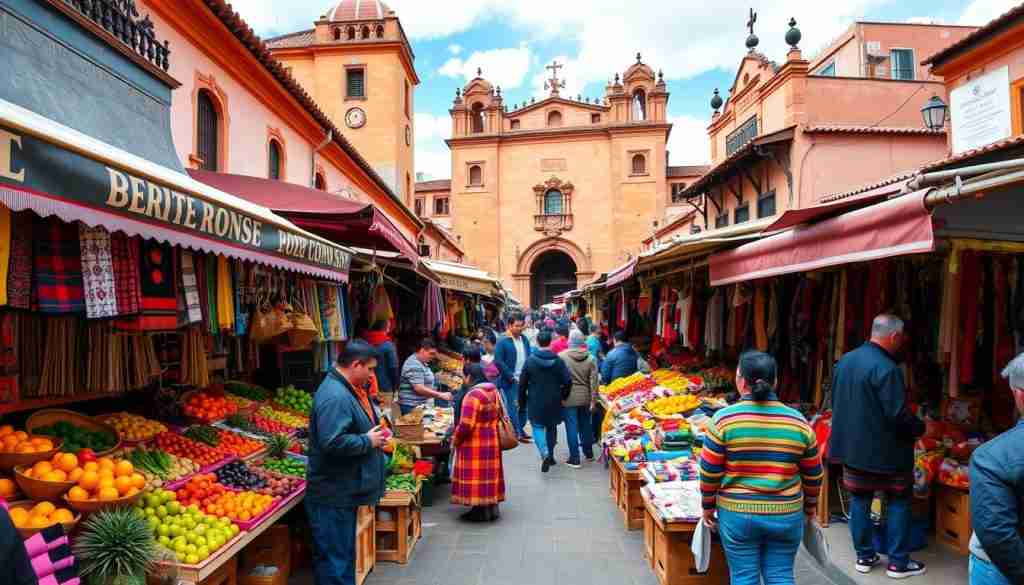
Just 10 minutes from Cusco’s main square, San Pedro Market has been a key part of local life since the early 1900s. It shows the changing spirit of Cusco’s food and the artisans who have lived here for years.
A Hub for Local Artisans and Agriculture
The market is filled with amazing local crafts and farm products. Visitors can find unique items that truly represent Peruvian culture:
- Handcrafted souvenirs
- Fruits unique to Peru
- Traditional textiles
- Artisanal handicrafts
Culinary Delights: What to Try
For those who love food, San Pedro Market is a dream come true. It offers a chance to try traditional dishes that are both surprising and delicious:
| Dish | Description |
|---|---|
| Cuy (Roasted Guinea Pig) | An Andean delicacy with 5,000 years of history |
| Trout Ceviche | Fresh seafood preparation typical of Peruvian cuisine |
| Aji de Gallina | Creamy chicken dish with distinctive Peruvian spices |
“San Pedro Market is more than just a marketplace; it’s a living museum of Cusco’s culinary and cultural heritage.” – Local Food Historian
The market is open from Monday to Saturday (6:30 am to 6:30 pm). It welcomes travelers to see its many stalls, meet local artisans, and taste the flavors that make Cusco’s food scene special.
Notable Colonial Architecture in Cusco
Cusco’s buildings tell a story of cultural mix. Here, colonial design meets Inca craftsmanship. The city is a living museum, showing how Spanish and Inca styles blend.
The colonial era changed Cusco’s look. Today, it has unique buildings that amaze visitors and scholars.
La Catedral de Cusco: A Masterpiece of Architectural Fusion
The Cusco Cathedral is a top example of colonial art. Built from 1560 to 1664, it uses stones from the Saksaywaman fortress. This shows the mix of Inca and Spanish cultures.
- Built on the site of an Inca palace
- Features remarkable religious artwork
- Demonstrates sophisticated architectural techniques
The Jesuit Church of La Compañía: A Stunning Colonial Landmark
The Church of La Compañía is next to the cathedral. Started in 1576, it was built on an Inca royal home. It shows the detailed designs of the colonial era.
| Architectural Feature | Historical Significance |
|---|---|
| Construction Date | Started in 1576 |
| Original Location | Inca Palace Foundations |
| Architectural Style | Colonial Baroque |
*”In Cusco, every stone tells a story of cultural transformation and architectural brilliance.”*
These buildings tell Cusco’s rich history. They show the city’s skill in keeping and celebrating its diverse culture.
Exploring Historic Streets: Hatun Rumiyoc
Cusco’s streets are filled with stories of architectural genius and cultural heritage. Travelers exploring Peru’s ancient capital will find Hatun Rumiyoc Street a journey through time. It showcases the amazing skill of Inca stonework.
The Significance of the Twelve-Angled Stone
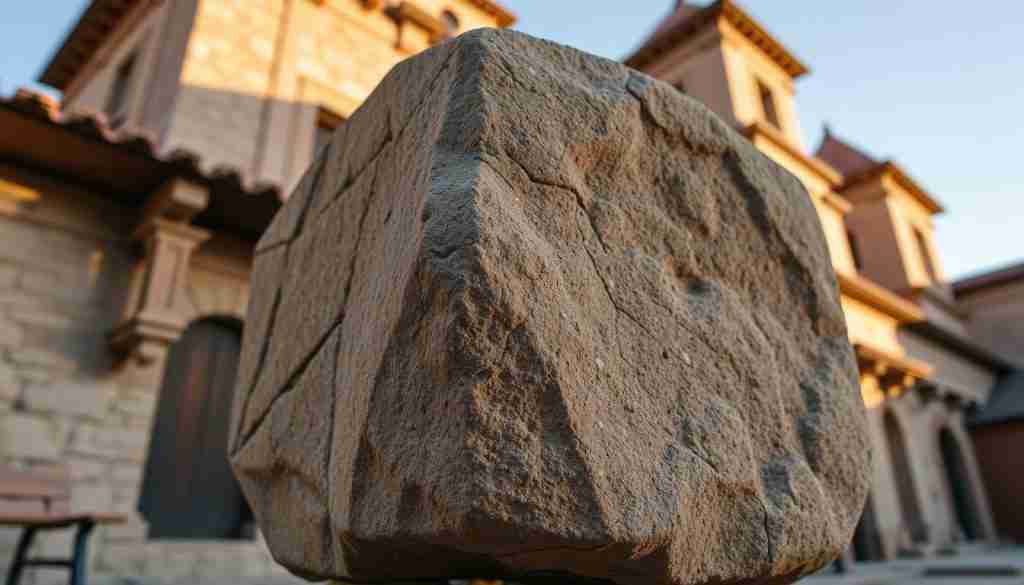
At the heart of Hatun Rumiyoc is the legendary Twelve-Angled Stone. It’s a masterpiece of Inca engineering that amazes visitors with its precision. This iconic stone shows the incredible masonry skills of pre-Hispanic architects, fitting perfectly with neighboring stones without mortar.
“The Twelve-Angled Stone represents the pinnacle of Inca architectural innovation.” – Cusco Historical Society
Architectural Wonders Along the Path
Walking along Hatun Rumiyoc reveals more than just the famous stone. Visitors can see many examples of exceptional Inca stonework, including:
- Intricate stone walls with multiple angular cuts
- Perfectly aligned stone blocks
- Remnants of ancient palace foundations
The street was once part of the palace of Inca Roca. It connected ceremonial and administrative centers. Today, it gives a glimpse into the sophisticated urban planning of the Inca civilization. Each stone tells a story of architectural brilliance.
Tips for Visiting Cusco’s Historical Sites
Planning a trip to Cusco needs careful thought to make it memorable and comfortable. First, understand the unique climate and altitude challenges. Cusco has two seasons: wet from November to April and dry from May to October. The dry season is best for visiting historical sites.
Altitude sickness is a big worry for many. Experts say to spend a few days getting used to the high altitude before seeing sights. Stay hydrated, avoid alcohol, and try coca tea to help with altitude sickness. It’s also important to pack layers because the weather can change a lot.
Best Times to Visit Each Landmark
The dry season (May to September) is the best time to see Cusco’s sites. You can find English-speaking guides who know a lot about places like Sacsayhuamán and Qoricancha. Even though it’s busy, the weather is clear and perfect for seeing these sites.
Cultural Etiquette and Recommendations
It’s important to respect local customs in Cusco. Dress modestly at religious sites, carry cash and credit cards, and think about joining tours for tough places like the Sacred Valley. Following these tips will help you have a rich and real experience of Cusco’s culture.


