Cusco, Peru, is a city surrounded by the Andes mountains. It’s a place where traditional textile arts are celebrated. The Centro de Textiles Tradicionales del Cusco (CTTC) is at the heart of this tradition. It was started in 1996 to help indigenous weavers and artisans.
CTTC works hard to keep Andean textile-making alive. It offers workshops and educational projects. These help visitors and locals learn about Peruvian textile craftsmanship.
At CTTC, you can learn to weave on a backstrap loom. You can also try spinning with a drop spindle. And, you can discover how natural dyes are used in these textiles. It’s a chance to connect with the Andes’ cultural legacy.
Key Takeaways
- CTTC, established in 1996, supports indigenous weavers in the Cusco region of Peru
- The center offers workshops in traditional Andean weaving, spinning, and natural dyeing techniques
- Participants can learn to weave using backstrap looms and create alpaca thread with drop spindles
- CTTC preserves Cusqueñan textile traditions through educational programs and community engagement
- The center’s main store is located in Cusco, next to the Qoricancha, a significant Inca archaeological site
The Rich History of Cusqueñan Textile Traditions
The peruvian textile heritage is deeply rooted in ancient inca textiles and andean weaving methods. These traditions have been passed down through generations. Textiles were key in Inca society, showing wealth and status.
Inca rulers valued weaving so much, they set up textile centers. This helped keep these ancient practices alive.
Today, 20th-century Peruvian artists draw inspiration from these traditional designs. Their work shows the natural world and important events in Cusqueñan culture.
The Role of Textiles in Inca Empire
Textiles were highly valued in the Inca Empire. The finest weavings were for the royal court and religious ceremonies. The Inca rulers set up weaving centers across their empire.
Evolution of Andean Weaving Practices
The andean weaving methods have changed over thousands of years. The Centro de Textiles Tradicionales del Cusco (CTTC) has helped recover over 110 ancient designs.
Cultural Significance Through Centuries
Traditional peruvian textile heritage is a big part of Cusqueñan culture. Designs show the natural world and important events. These textiles connect us to the region’s rich history and the resilience of its people.
| Community | Adult Members | Children Members | Textile Styles |
|---|---|---|---|
| Accha Alta | 40 | 35 | White and red designs with diamond motifs representing lakes |
| Acopia | 30 | 20 | Thin designs in the doble cara technique, featuring the distinctive organo q’enqo zig-zag pattern |
| Chahuaytire | 35 | 40 | High-quality weavings in dark maroon and white with compact warp-faced weaves and intricate border finishes |
The rich history of cusqueñan textile traditions still fascinates and inspires many. It keeps the cultural legacy of the Andes alive.
Understanding the Centro de Textiles Tradicionales del Cusco (CTTC)
The Centro de Textiles Tradicionales del Cusco (CTTC) is at the heart of Cusco’s textile heritage. It was founded in 1996 by skilled Chinchero weavers. Nilda Callañaupa Alvarez, a respected Quechua master weaver, leads the center.
The CTTC works to support Peruvian textile cooperatives and artisans. It helps them keep their cultural practices alive. The center works with ten weaving communities in the Cusco region, offering education and a fair-trade platform.
The CTTC focuses on reviving traditional techniques and designs. In 1999, it started using natural dyes again. This move honored the Andes’ ancient practices. Today, the CTTC has over 110 ancient textile patterns from antique weavings.
The CTTC also helps train the next generation of Cusco textile artisans. It offers weaving and spinning courses for kids as young as 6-8. This ensures the Peruvian textile heritage will thrive for years to come.
Visiting the CTTC’s main store in Cusco or its Textile Center in Chinchero is an experience. You’ll see vibrant displays of handwoven textiles. These textiles show the creative spirit of the Andes. The center’s focus on fair trade and sustainability makes it a key part of Cusco’s textile center.
Peruvian Textile Workshops: Learning Ancient Crafts
In the heart of Cusco, the Centro de Textiles Tradicionales del Cusco (CTTC) offers a unique chance to dive into the rich world of traditional Peruvian textile techniques. You can learn about backstrap loom weaving and drop spindle spinning. These workshops give a glimpse into the vibrant cultural heritage of the Andes.
Backstrap Loom Weaving Classes
At the CTTC, you can learn to make beautiful textiles like jakima (thin ribbons) and chumpi (belts) on a traditional backstrap loom. Skilled artisans guide you, showing you how to weave intricate patterns. These patterns have been passed down through generations.
Drop Spindle Techniques
The CTTC also teaches the art of drop spindle spinning. You’ll learn to make soft, luxurious alpaca thread using a pushka (drop spindle). This thread is then woven into the famous traditional Peruvian textiles.
Natural Dyeing Workshops
In 1999, the CTTC brought back the traditional art of natural dyeing. You’ll learn to make vibrant colors from flowers, leaves, vines, lichen, fungus, and the famous cochineal insect. This shows the ingenuity and resourcefulness of Peruvian artisans.
These workshops are a chance to connect with Cusco’s rich cultural heritage. You’ll also improve your artistic skills and appreciate the lasting legacy of traditional Peruvian textiles.
Traditional Weaving Communities and Their Unique Styles
In the Peruvian Andes, peruvian textile communities are filled with a rich variety of artisanal peruvian textiles. The Centro de Textiles Tradicionales del Cusco (CTTC) works with ten weaving communities. Each is known for its special patterns, techniques, and cultural background.
In Chinchero village, the CTTC’s founding weavers are famous for their lliclla (blankets). These are painted with indigo blue or rich red cochineal. In Chahuaytire, weavers are celebrated for their double-faced textiles. They show off their skill in mixing colors and creating detailed designs.
- The weavers in Patacancha, at 4,200 meters high, use llama, alpaca, and vicuña hair in their work.
- They dye their fabrics with natural colors from plants and insects, creating amazing shades.
- The Patacancha weavers are experts in belt-weaving. They show their speed and creativity in this skill.
Each weaving community has its own lively center. Here, artisans meet weekly to share, work together, and keep their traditions alive. These peruvian textile communities are the heart of artisanal peruvian textiles. They keep the Andes’ rich cultural heritage alive.
Natural Materials and Dyeing Techniques
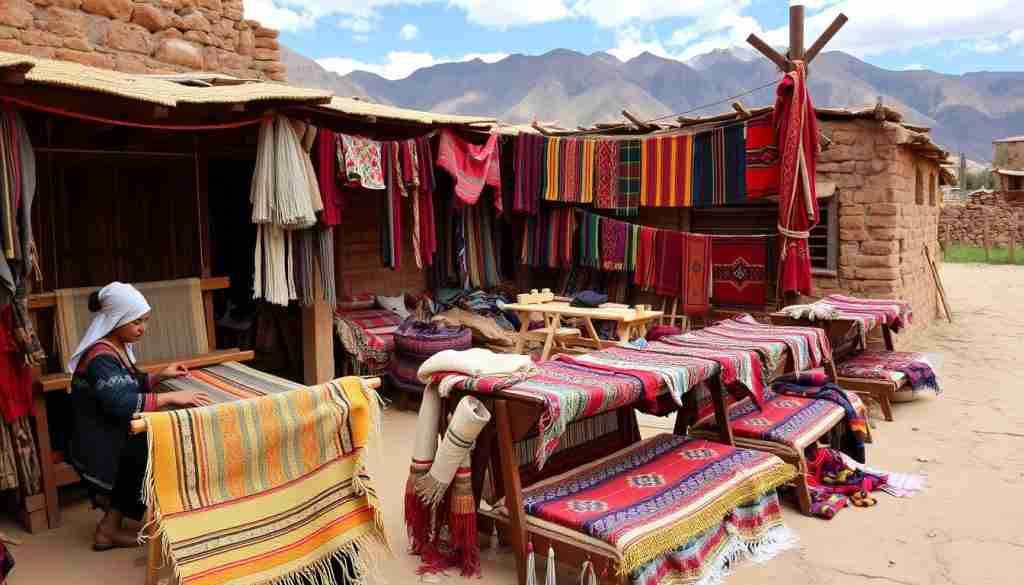
At the heart of Peruvian textile arts lies a rich tapestry of natural materials and traditional dyeing practices. Peruvian textile artisans have long harnessed the bounty of their Andean environment. They create vibrant, sustainable textiles that embody the spirit of their cultural heritage.
Indigenous Fiber Sources
The weavers of the Centro de Textiles Tradicionales del Cusco (CTTC) use natural fibers. They include the soft, silky alpaca, the sturdy llama, and the versatile sheep’s wool. Alpaca fiber comes in a range of natural tones, from stark white to rich shades of brown and gray.
Sheep’s wool is prized for its ability to take on bright, vivid colors.
Traditional Color Extraction Methods
To infuse their textiles with captivating hues, Peruvian natural dyes are extracted from local plants, insects, and other natural sources. Cochineal beetles provide a vibrant red, while indigo plants yield a rich blue. Annatto seeds lend a warm, golden yellow.
Various tree barks offer earthy browns and blacks.
Sustainable Practices in Textile Production
The use of natural dyes preserves traditional techniques and promotes sustainability. By avoiding harsh chemicals and synthetic dyes, Peruvian textile artisans reduce the ecological footprint of their craft. They maintain the integrity and authenticity of their textiles.
| Natural Dye Source | Color Produced |
|---|---|
| Cochineal Beetles | Vibrant Red |
| Indigo Plants | Rich Blue |
| Annatto Seeds | Warm Yellow |
| Tree Barks | Earthy Browns and Blacks |
The preservation of these time-honored techniques not only safeguards the cultural heritage of Peru. It also offers a sustainable path forward for textile artisans. This ensures the continued vibrancy and authenticity of their craft.
Preserving Ancient Patterns and Designs
The peruvian textile heritage shows the skill and creativity of Andean weavers. The Centro de Textiles Tradicionales del Cusco (CTTC) leads in saving these traditional textiles. They focus on the vast iconography of traditional peruvian textiles.
The CTTC works closely with local weavers. They aim to keep the unique patterns and designs alive. Weavers draw from nature, creating a wide range of styles. These styles show the identity of each village.
“The CTTC has been instrumental in reviving long-forgotten designs and reproducing ancient textiles, such as the iconic Aksu Inca dress, ensuring that these masterpieces continue to be celebrated and cherished.”
The CTTC is a key player in saving peruvian textile heritage. They document and archive these cultural treasures. This work protects the past and opens doors for future generations to be inspired.
The CTTC does more than just save textiles. They work with communities to bring back old techniques and designs. This way, traditional peruvian textiles stay alive, showing the lasting creativity of the Andean people.
The Role of Master Weavers and Knowledge Transfer
In Cusco, Peru, master weavers are key to keeping Andean weaving alive. They pass on their skills to the next generation. This helps protect the cultural heritage of Peruvian textile artisans.
Community Elder Mentorship Programs
The Center for Traditional Textiles of Cusco (CTTC) supports mentorship between elders and young weavers. This ensures the andean weaving methods are kept alive. It’s a way to honor and preserve this ancient craft.
Youth Education Initiatives
The CTTC also focuses on teaching young people about traditional textiles. They offer workshops and learning experiences. This helps the youth appreciate and carry on the legacy of Peruvian textile artisans.
In places like Chahuaytire, men are also learning to weave. This involvement helps keep the craft alive. It shows how andean weaving methods can evolve while staying connected to their roots.
Master weavers and knowledge sharing show the strength of Andean weaving. These efforts help the next generation of peruvian textile artisans. They ensure this art form will continue to amaze people everywhere.
Modern Applications of Traditional Textile Arts
In Cusco, the Centro de Textiles Tradicionales del Cusco (CTTC) is at the forefront. They mix old weaving ways with new designs. This creates products that are both useful and stylish, showing off Cusco’s textile heritage.
The CTTC makes everything from cozy pillow covers to trendy handbags. Their peruvian textile workshops give new life to old skills. Weavers keep true to their traditions, making sure these artisanal peruvian textiles reach people everywhere.
The CTTC finds a perfect balance. They meet today’s needs while keeping Andean weaving alive. This way, they protect cultural heritage and help weavers in Cusco’s communities.

The need for unique, handmade items is rising. Thanks to the CTTC and the artisans they support, Peruvian textiles are set for a bright future. These traditions will continue to amaze and inspire people for many years.
Conclusion: The Future of Peruvian Textile Heritage
The Centro de Textiles Tradicionales del Cusco (CTTC) has worked hard to keep Cusqueñan textile traditions alive. They mix old ways with new ideas. This helps indigenous artisans and keeps Peruvian textiles’ rich culture alive.
The world’s interest in peruvian textile heritage is growing. The CTTC shows how to blend old techniques with today’s needs. Their work inspires a future where traditional peruvian textiles thrive.
Peruvian textiles, like backstrap loom weaving and natural dyes, show the Andean people’s skill and creativity. As people look for real and meaningful cultural experiences, these crafts are more important than ever.